A South Korean court has jailed two Vietnamese nationals for using Tether (USDT) to power a cross-border money laundering scheme. The duo used the USD-pegged stablecoin to smuggle funds raised from voice phishing scams overseas. USDT Money Laundering Ring: Defendants Jailed for Two Years The South Korean media outlet Financial News reported that the Criminal Division of the Seoul Eastern District Court’s Presiding Judge Lee Jeong-hyeong sentenced the duo to two years in prison each on June 22. The Seoul Eastern District Court, in Seoul, South Korea. (Source: Pectus Solentis [CC BY-SA 4.0]) The defendants were identified as a college student surnamed Duong (23) and an unemployed individual surnamed Pham (also 23). The court found both individuals guilty of violating the Special Act on Prevention of Telecommunications and Financial Fraud and Refund of Damages. Prosecutors explained that Duong and Pham first made contact with the voice phishing scam ring in October last year. The ring recruited both via a Telegram open chat room. The ring’s organizers told Duong and Pham that they were to receive the proceeds of voice phishing scams in Korean won. The duo was then instructed to use this money to buy USDT, which they then sent to a crypto wallet held by a member of a voice phishing gang who was residing in Vietnam. The ring paid both Duong and Pham commission fees of 50,000 won ($36.44) to 100,000 won ($72.88) per 10 million won ($7,288) worth of USDT they sent. In a bold play to secure Korea’s position among the global AI elite, President Lee Jae Myung kicked off his term with a visit to the launch site of a mega-scale AI data center. #AIdatacenter https://t.co/gGHvfjNBvw — The Korea JoongAng Daily (@JoongAngDaily) June 22, 2025 ‘Hash Sentence Inevitable,’ Judge Explains The court heard that the voice phishing ring succeeded in duping South Korea-based victims out of thousands of dollars’ worth of cash transfers. The ring’s employees called people pretending to be credit card delivery workers, insurance company employees, National Tax Service staffers, and even public prosecutors. They usually told potential victims that they were calling to check the safety of their bank accounts. The ring used a range of money laundering techniques, using other accomplices from Uzbekistan and Vietnam. The judge said that the court had not handed out a harsher sentence because neither of the defendants had criminal records in South Korea. But Lee added: “Even if the defendants did not orchestrate the crime, they must be severely punished. They played an essential role in the crime, acting as intermediaries. They have also not made any special efforts to help compensate the victims for the damages incurred.” USDT-related crime is on the rise in South Korea, as the coin’s popularity in the nation continues to grow. This year has seen a sharp rise in bogus USDT-themed over-the-counter deals and related thefts .A South Korean court has jailed two Vietnamese nationals for using Tether (USDT) to power a cross-border money laundering scheme. The duo used the USD-pegged stablecoin to smuggle funds raised from voice phishing scams overseas. USDT Money Laundering Ring: Defendants Jailed for Two Years The South Korean media outlet Financial News reported that the Criminal Division of the Seoul Eastern District Court’s Presiding Judge Lee Jeong-hyeong sentenced the duo to two years in prison each on June 22. The Seoul Eastern District Court, in Seoul, South Korea. (Source: Pectus Solentis [CC BY-SA 4.0]) The defendants were identified as a college student surnamed Duong (23) and an unemployed individual surnamed Pham (also 23). The court found both individuals guilty of violating the Special Act on Prevention of Telecommunications and Financial Fraud and Refund of Damages. Prosecutors explained that Duong and Pham first made contact with the voice phishing scam ring in October last year. The ring recruited both via a Telegram open chat room. The ring’s organizers told Duong and Pham that they were to receive the proceeds of voice phishing scams in Korean won. The duo was then instructed to use this money to buy USDT, which they then sent to a crypto wallet held by a member of a voice phishing gang who was residing in Vietnam. The ring paid both Duong and Pham commission fees of 50,000 won ($36.44) to 100,000 won ($72.88) per 10 million won ($7,288) worth of USDT they sent. In a bold play to secure Korea’s position among the global AI elite, President Lee Jae Myung kicked off his term with a visit to the launch site of a mega-scale AI data center. #AIdatacenter https://t.co/gGHvfjNBvw — The Korea JoongAng Daily (@JoongAngDaily) June 22, 2025 ‘Hash Sentence Inevitable,’ Judge Explains The court heard that the voice phishing ring succeeded in duping South Korea-based victims out of thousands of dollars’ worth of cash transfers. The ring’s employees called people pretending to be credit card delivery workers, insurance company employees, National Tax Service staffers, and even public prosecutors. They usually told potential victims that they were calling to check the safety of their bank accounts. The ring used a range of money laundering techniques, using other accomplices from Uzbekistan and Vietnam. The judge said that the court had not handed out a harsher sentence because neither of the defendants had criminal records in South Korea. But Lee added: “Even if the defendants did not orchestrate the crime, they must be severely punished. They played an essential role in the crime, acting as intermediaries. They have also not made any special efforts to help compensate the victims for the damages incurred.” USDT-related crime is on the rise in South Korea, as the coin’s popularity in the nation continues to grow. This year has seen a sharp rise in bogus USDT-themed over-the-counter deals and related thefts .

South Korean Court Jails Two Members of Cross-border USDT Money Laundering Ring

A South Korean court has jailed two Vietnamese nationals for using Tether (USDT) to power a cross-border money laundering scheme.

The duo used the USD-pegged stablecoin to smuggle funds raised from voice phishing scams overseas.

USDT Money Laundering Ring: Defendants Jailed for Two Years

The South Korean media outlet Financial News reported that the Criminal Division of the Seoul Eastern District Court’s Presiding Judge Lee Jeong-hyeong sentenced the duo to two years in prison each on June 22.
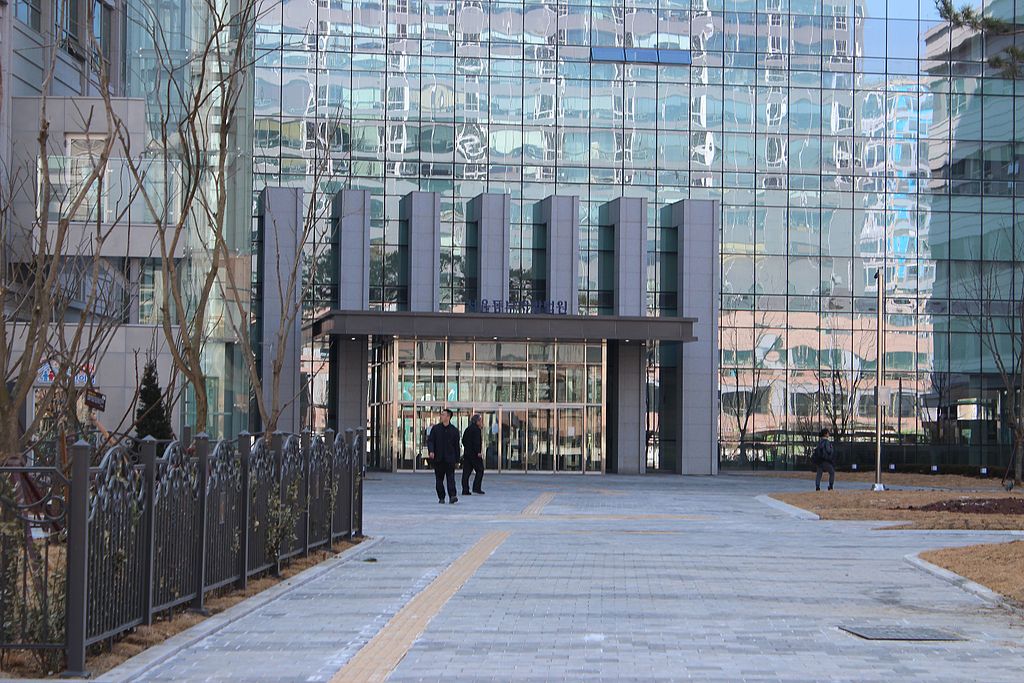
The Seoul Eastern District Court, in Seoul, South Korea.The Seoul Eastern District Court, in Seoul, South Korea. (Source: Pectus Solentis [CC BY-SA 4.0])

The defendants were identified as a college student surnamed Duong (23) and an unemployed individual surnamed Pham (also 23).

The court found both individuals guilty of violating the Special Act on Prevention of Telecommunications and Financial Fraud and Refund of Damages.

Prosecutors explained that Duong and Pham first made contact with the voice phishing scam ring in October last year.

The ring recruited both via a Telegram open chat room. The ring’s organizers told Duong and Pham that they were to receive the proceeds of voice phishing scams in Korean won.

The duo was then instructed to use this money to buy USDT, which they then sent to a crypto wallet held by a member of a voice phishing gang who was residing in Vietnam.

The ring paid both Duong and Pham commission fees of 50,000 won ($36.44) to 100,000 won ($72.88) per 10 million won ($7,288) worth of USDT they sent.

‘Hash Sentence Inevitable,’ Judge Explains

The court heard that the voice phishing ring succeeded in duping South Korea-based victims out of thousands of dollars’ worth of cash transfers.

The ring’s employees called people pretending to be credit card delivery workers, insurance company employees, National Tax Service staffers, and even public prosecutors.

They usually told potential victims that they were calling to check the safety of their bank accounts.

The ring used a range of money laundering techniques, using other accomplices from Uzbekistan and Vietnam.

The judge said that the court had not handed out a harsher sentence because neither of the defendants had criminal records in South Korea. But Lee added:

USDT-related crime is on the rise in South Korea, as the coin’s popularity in the nation continues to grow. This year has seen a sharp rise in bogus USDT-themed over-the-counter deals and related thefts.


Market Opportunity
Threshold Logo
Threshold Price(T)
$0.00939
$0.00939$0.00939
-0.63%
USD
Threshold (T) Live Price Chart
Disclaimer: The articles reposted on this site are sourced from public platforms and are provided for informational purposes only. They do not necessarily reflect the views of MEXC. All rights remain with the original authors. If you believe any content infringes on third-party rights, please contact service@support.mexc.com for removal. MEXC makes no guarantees regarding the accuracy, completeness, or timeliness of the content and is not responsible for any actions taken based on the information provided. The content does not constitute financial, legal, or other professional advice, nor should it be considered a recommendation or endorsement by MEXC.

You May Also Like

Visa Expands USDC Stablecoin Settlement For US Banks

Visa Expands USDC Stablecoin Settlement For US Banks

The post Visa Expands USDC Stablecoin Settlement For US Banks appeared on BitcoinEthereumNews.com. Visa Expands USDC Stablecoin Settlement For US Banks
Share
BitcoinEthereumNews2025/12/17 15:23
Nasdaq Company Adds 7,500 BTC in Bold Treasury Move

Nasdaq Company Adds 7,500 BTC in Bold Treasury Move

The live-streaming and e-commerce company has struck a deal to acquire 7,500 BTC, instantly becoming one of the largest public […] The post Nasdaq Company Adds 7,500 BTC in Bold Treasury Move appeared first on Coindoo.
Share
Coindoo2025/09/18 02:15
Curve Finance votes on revenue-sharing model for CRV holders

Curve Finance votes on revenue-sharing model for CRV holders

The post Curve Finance votes on revenue-sharing model for CRV holders appeared on BitcoinEthereumNews.com. Curve Finance has proposed a new protocol called Yield Basis that would share revenue directly with CRV holders, marking a shift from one-off incentives to sustainable income. Summary Curve Finance has put forward a revenue-sharing protocol to give CRV holders sustainable income beyond emissions and fees. The plan would mint $60M in crvUSD to seed three Bitcoin liquidity pools (WBTC, cbBTC, tBTC), with 35–65% of revenue distributed to veCRV stakers. The DAO vote runs from up to Sept. 24, with the proposal seen as a major step to strengthen CRV tokenomics after past liquidity and governance challenges. Curve Finance founder Michael Egorov has introduced a proposal to give CRV token holders a more direct way to earn income, launching a system called Yield Basis that aims to turn the governance token into a sustainable, yield-bearing asset.  The proposal has been published on the Curve DAO (CRV) governance forum, with voting open until Sept. 24. A new model for CRV rewards Yield Basis is designed to distribute transparent and consistent returns to CRV holders who lock their tokens for veCRV governance rights. Unlike past incentive programs, which relied heavily on airdrops and emissions, the protocol channels income from Bitcoin-focused liquidity pools directly back to token holders. To start, Curve would mint $60 million worth of crvUSD, its over-collateralized stablecoin, with proceeds allocated across three pools — WBTC, cbBTC, and tBTC — each capped at $10 million. 25% of Yield Basis tokens would be reserved for the Curve ecosystem, and between 35% and 65% of Yield Basis’s revenue would be given to veCRV holders. By emphasizing Bitcoin (BTC) liquidity and offering yields without the short-term loss risks associated with automated market makers, the protocol hopes to draw in professional traders and institutions. Context and potential impact on Curve Finance The proposal comes as Curve continues to modify…
Share
BitcoinEthereumNews2025/09/18 14:37