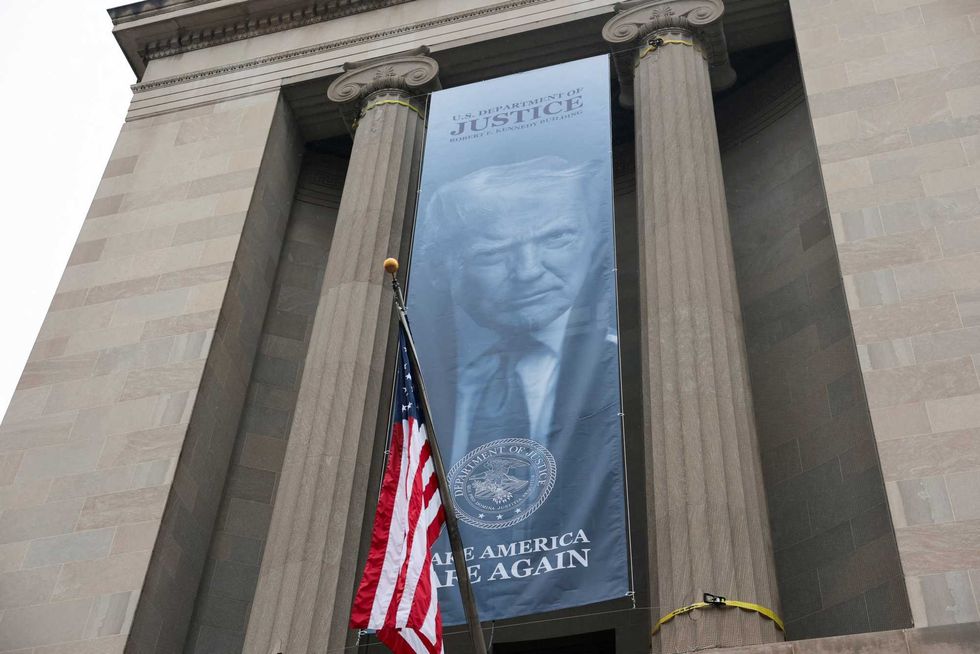
Periods of political ambiguity often make the crypto markets more volatile, and the current US government shutdown has once again pushed investors to revisit historical patterns. A closer look at earlier cycles shows that crypto markets tend to react sharply once policy uncertainty clears, and analysts are drawing comparisons to certain rebounds in the past […]Periods of political ambiguity often make the crypto markets more volatile, and the current US government shutdown has once again pushed investors to revisit historical patterns. A closer look at earlier cycles shows that crypto markets tend to react sharply once policy uncertainty clears, and analysts are drawing comparisons to certain rebounds in the past […]

Could XRP Be a Good Investment During Economic Uncertainty? 70% Post-Shutdown Rally History Says Yes – What About XRP Tundra?

Periods of political ambiguity often make the crypto markets more volatile, and the current US government shutdown has once again pushed investors to revisit historical patterns. A closer look at earlier cycles shows that crypto markets tend to react sharply once policy uncertainty clears, and analysts are drawing comparisons to certain rebounds in the past that followed similar events.

XRP has become a central topic of discussion after two widely circulated posts on X revived interest in its past performance. This renewed attention arrives at a moment when long-term investors are monitoring macro conditions closely and assessing whether digital assets with defined utility could be better positioned for recovery than speculative tokens.

Analysts Revisit XRP’s Historical Reaction to Shutdown Resolutions

Discussion around a rally following the government shutdown in the US resurfaced after the popular analysts Levi Rietveld and Steph Crypto referenced XRP’s reaction to the end of the 2019 shutdown in separate posts earlier this month. Rietveld argued that the end of the current shutdown could signal the start of one of XRP’s strongest uptrends in years, outlining how markets often respond when uncertainty wears off.

Steph Crypto expanded on that idea a day later. He pointed out that President Donald Trump has encouraged both political parties to reach a deal that would reopen the government. According to his analysis,this may estore broader market confidence and create conditions that might be supportive of a fresh crypto rally. He also pointed to the 2019 shutdown’s conclusion, when XRP climbed more than 70%.

Economic Uncertainty Raises Interest in Utility-Anchored Ecosystems

When macro conditions are uncertain, this generally pushes investors to evaluate assets based on function rather than market momentum. XRP has an already established role in payments, which helped it maintain long-term confidence even during periods of volatility. What is more, the wider XRPL ecosystem has seen increased attention from users seeking structured, measurable utility.

That shift has extended into emerging XRPL-connected ecosystems, including XRP Tundra, which combines Solana throughput with XRPL governance functionality. Its dual-token architecture reflects the broader trend toward multi-network designs that separate transactional roles from governance and reserves — a structure that appeals to users who prefer systems built around operational clarity rather than speculative growth.

Investors conducting due diligence often begin with fundamental questions like whether a certain project is “legit”, a search phrase that has grown more common as economic uncertainty increases. This behavior aligns with a wider market pattern: verification and transparency gain importance when macro conditions tighten.

For those researching whether XRP Tundra is legit, they can check the following article.

XRP Tundra Offers Structural Clarity Through a Dual-Token Model

The XRP Tundra framework distributes TUNDRA-S on Solana and TUNDRA-X on the XRPL through a synchronized airdrop occurring one hour before the January launch. The Phase 11 presale price of $0.183 for TUNDRA-S includes a 9% token bonus, while TUNDRA-X is allocated at a $0.0915 reference value at no additional cost.

This separation of roles is what allows TUNDRA-S to serve as the utility token for staking and platform activity, while TUNDRA-X functions as XRPL-based governance and reserves. The model is designed to match the growing investor preference for ecosystems that define each token’s purpose properly, especially during market cycles where predictability is more valuable than aggressive expansion.

The presale remains open until January 12th, 2026, after which all unsold tokens are permanently burned — a supply rule that has resonated with investors seeking long-term stability rather than post-launch dilution.

Staking Remains a Key Consideration for Long-Term Participants

As the discussions about what will happen to the market after the shutdown ends intensify, yield-oriented ecosystems have drawn heightened interest. XRP Tundra’s staking structure is one of the reasons it is frequently included in research threads surrounding XRP-based platforms.

  • Liquid Staking provides a 4–6% APY with no commitment, suited for participants who value flexibility during uncertain economic periods.
  • Balanced Staking offers 8–12% APY over a 30-day lock, appealing to users who want a steady yield with predictable timeframes.
  • Premium Staking delivers 15–20% APY through a 90-day commitment, designed for holders with longer investment horizons.

These tiers provide defined yield mechanics without relying on market speculation, a feature that aligns with how many investors behave during unpredictable policy cycles.

Verification Records and Launch Preparation Support a Measured Market Outlook

Verification continues to play a central role as January approaches. XRP Tundra’s review materials include the Cyberscope audit, the Solidproof audit, and the FreshCoins audit, each analyzing contract logic and presale allocation structure. Team documentation is validated through the Vital Block KYC.

Together, these records form a consistent backdrop for investors assessing the project during an environment shaped by economic uncertainty and policy flux. As markets watch whether this year’s shutdown will mirror past reactions, demand has shifted toward ecosystems that combine functional utility with transparent launch mechanics.

Interested investors should monitor the shutdown outcome closely and position ahead of potential policy-driven market shifts affecting XRP and staking ecosystems.

Check Tundra Now: official XRP Tundra website

Security and Trust: Cyberscope audit

Join The Community: Telegram

Disclaimer: The above article is sponsored content; it’s written by a third party. CryptoPotato doesn’t endorse or assume responsibility for the content, advertising, products, quality, accuracy, or other materials on this page. Nothing in it should be construed as financial advice. Readers are strongly advised to verify the information independently and carefully before engaging with any company or project mentioned and to do their own research. Investing in cryptocurrencies carries a risk of capital loss, and readers are also advised to consult a professional before making any decisions that may or may not be based on the above-sponsored content.

Readers are also advised to read CryptoPotato’s full disclaimer.

The post Could XRP Be a Good Investment During Economic Uncertainty? 70% Post-Shutdown Rally History Says Yes – What About XRP Tundra? appeared first on CryptoPotato.


Market Opportunity
XRP Logo
XRP Price(XRP)
$1.8725
$1.8725$1.8725
-0.52%
USD
XRP (XRP) Live Price Chart
Disclaimer: The articles reposted on this site are sourced from public platforms and are provided for informational purposes only. They do not necessarily reflect the views of MEXC. All rights remain with the original authors. If you believe any content infringes on third-party rights, please contact service@support.mexc.com for removal. MEXC makes no guarantees regarding the accuracy, completeness, or timeliness of the content and is not responsible for any actions taken based on the information provided. The content does not constitute financial, legal, or other professional advice, nor should it be considered a recommendation or endorsement by MEXC.

You May Also Like

Why 100 Percent Test Coverage is Not Possible — Lessons from Testing Banking and Healthcare Systems

Why 100 Percent Test Coverage is Not Possible — Lessons from Testing Banking and Healthcare Systems

Quality is not about testing everything; quality is about testing what is most important.
Share
Hackernoon2025/12/26 16:05
US eyes crypto mining at disputed nuclear plant in Russia-Ukraine conflict: report

US eyes crypto mining at disputed nuclear plant in Russia-Ukraine conflict: report

The plant is located in Ukraine and has been under Russian control since 2022, with its future management a key issue in peace talks.
Share
Coinstats2025/12/26 18:58
Google's AP2 protocol has been released. Does encrypted AI still have a chance?

Google's AP2 protocol has been released. Does encrypted AI still have a chance?

Following the MCP and A2A protocols, the AI Agent market has seen another blockbuster arrival: the Agent Payments Protocol (AP2), developed by Google. This will clearly further enhance AI Agents' autonomous multi-tasking capabilities, but the unfortunate reality is that it has little to do with web3AI. Let's take a closer look: What problem does AP2 solve? Simply put, the MCP protocol is like a universal hook, enabling AI agents to connect to various external tools and data sources; A2A is a team collaboration communication protocol that allows multiple AI agents to cooperate with each other to complete complex tasks; AP2 completes the last piece of the puzzle - payment capability. In other words, MCP opens up connectivity, A2A promotes collaboration efficiency, and AP2 achieves value exchange. The arrival of AP2 truly injects "soul" into the autonomous collaboration and task execution of Multi-Agents. Imagine AI Agents connecting Qunar, Meituan, and Didi to complete the booking of flights, hotels, and car rentals, but then getting stuck at the point of "self-payment." What's the point of all that multitasking? So, remember this: AP2 is an extension of MCP+A2A, solving the last mile problem of AI Agent automated execution. What are the technical highlights of AP2? The core innovation of AP2 is the Mandates mechanism, which is divided into real-time authorization mode and delegated authorization mode. Real-time authorization is easy to understand. The AI Agent finds the product and shows it to you. The operation can only be performed after the user signs. Delegated authorization requires the user to set rules in advance, such as only buying the iPhone 17 when the price drops to 5,000. The AI Agent monitors the trigger conditions and executes automatically. The implementation logic is cryptographically signed using Verifiable Credentials (VCs). Users can set complex commission conditions, including price ranges, time limits, and payment method priorities, forming a tamper-proof digital contract. Once signed, the AI Agent executes according to the conditions, with VCs ensuring auditability and security at every step. Of particular note is the "A2A x402" extension, a technical component developed by Google specifically for crypto payments, developed in collaboration with Coinbase and the Ethereum Foundation. This extension enables AI Agents to seamlessly process stablecoins, ETH, and other blockchain assets, supporting native payment scenarios within the Web3 ecosystem. What kind of imagination space can AP2 bring? After analyzing the technical principles, do you think that's it? Yes, in fact, the AP2 is boring when it is disassembled alone. Its real charm lies in connecting and opening up the "MCP+A2A+AP2" technology stack, completely opening up the complete link of AI Agent's autonomous analysis+execution+payment. From now on, AI Agents can open up many application scenarios. For example, AI Agents for stock investment and financial management can help us monitor the market 24/7 and conduct independent transactions. Enterprise procurement AI Agents can automatically replenish and renew without human intervention. AP2's complementary payment capabilities will further expand the penetration of the Agent-to-Agent economy into more scenarios. Google obviously understands that after the technical framework is established, the ecological implementation must be relied upon, so it has brought in more than 60 partners to develop it, almost covering the entire payment and business ecosystem. Interestingly, it also involves major Crypto players such as Ethereum, Coinbase, MetaMask, and Sui. Combined with the current trend of currency and stock integration, the imagination space has been doubled. Is web3 AI really dead? Not entirely. Google's AP2 looks complete, but it only achieves technical compatibility with Crypto payments. It can only be regarded as an extension of the traditional authorization framework and belongs to the category of automated execution. There is a "paradigm" difference between it and the autonomous asset management pursued by pure Crypto native solutions. The Crypto-native solutions under exploration are taking the "decentralized custody + on-chain verification" route, including AI Agent autonomous asset management, AI Agent autonomous transactions (DeFAI), AI Agent digital identity and on-chain reputation system (ERC-8004...), AI Agent on-chain governance DAO framework, AI Agent NPC and digital avatars, and many other interesting and fun directions. Ultimately, once users get used to AI Agent payments in traditional fields, their acceptance of AI Agents autonomously owning digital assets will also increase. And for those scenarios that AP2 cannot reach, such as anonymous transactions, censorship-resistant payments, and decentralized asset management, there will always be a time for crypto-native solutions to show their strength? The two are more likely to be complementary rather than competitive, but to be honest, the key technological advancements behind AI Agents currently all come from web2AI, and web3AI still needs to keep up the good work!
Share
PANews2025/09/18 07:00