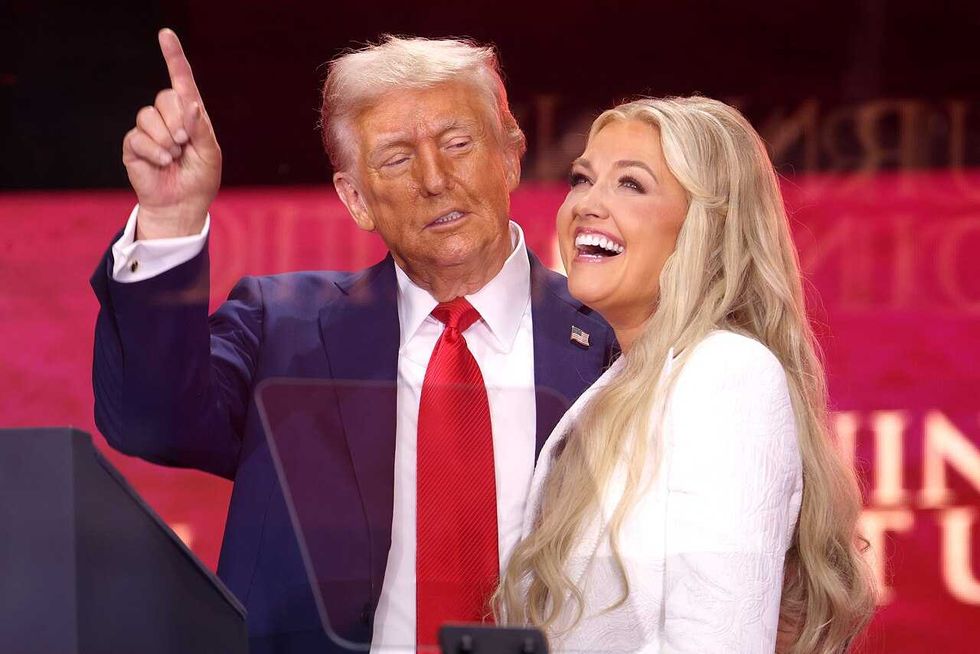
The bipartisan push for a congressional ban on stock trading has intensified despite the lack of a clear roadmap.The bipartisan push for a congressional ban on stock trading has intensified despite the lack of a clear roadmap.

Ban on Congress members' stock trading unlikely despite Bipartisan support

The bipartisan push for a congressional ban on stock trading has intensified despite the lack of a clear roadmap. Lawmakers at the House Administration Committee hearing on November 19 debated how to strengthen and reform the 2012 Stop Trading on Congressional Knowledge (STOCK) Act.

David Savickas, vice president of policy and government affairs at the Taxpayers Protection Alliance, said during the Wednesday hearing that the framework in the law has proved sorely lacking. He noted that the STOCK Act does not prevent conflicted trading by members of Congress but requires them to report when and if they trade stocks.

The STOCK Act was passed in 2012 to prohibit members of Congress from using nonpublic information for private profit. Meanwhile, the House Administration Committee hearing put the issue that has been brewing on Capitol Hill for months back in the spotlight. The recent government shutdown derailed much of congressional action.

Savickas notes most Congress members breach the STOCK Act

Dan Savickas noted that most members of Congress do not report their stock trades as mandated by the STOCK Act of 2012. He further noted that even when they do, many of them report way past the mandated time periods with little to no consequences so far. 

Lawmakers also aired additional grievances, arguing that there is a need for updates to the reporting and enforcement requirements in the STOCK Act. They also suggested a separate ban on members owning individual stock. 

However, the lawmakers noted that although proposals to implement such a ban have previously been presented at various points, most have mainly been stalled. For instance, in September, Reps. Chip Roy (R-Texas-21) and Seth Magaziner (D-RI) presented a bill prohibiting lawmakers, their spouses, and dependent children from owning, buying, or selling individual stocks. 

The Restore Trust in Congress Act (H.R. 5106) also prohibits them from trading securities, commodities, or futures, with a few exceptions. The bill further requires current members of Congress to divest from all covered assets at fair market value within 180 days and incoming members to do so within 90 days of taking office. 

House Democrats and Republicans, including Reps. Brian Fitzpatrick (R-Pa), Alexandria Ocasio-Cortez (D-N.Y.), Tim Burchett (R-Tenn.), Pramila Jayapal (D-Wash.), and Anna Luna (R-Fla.) have backed the bill. However, no action has been taken since it was referred to the House Administration Committee.

Magaziner urges Speaker Johnson to present the bill for a vote

Seth Magaziner (D-RI) urged House of Representatives Speaker Mike Johnson to bring the bill to the floor as soon as possible for a vote. He pointed out that the American people have made it clear that hearings alone are not enough. Magaziner believes the bipartisan bill should be enacted to ban stock trading among Congress members once and for all. 

The Citizens for Responsibility and Ethics in Washington, along with nine other organizations, has also written a letter to House Administration Committee Chair Bryan Steil (R-Wis.) and ranking member Joe Morelle (D-N.Y.), urging the panel to hold a special meeting to discuss the bill.

Rep Anna Luna (R-Fla.) also said if the House Committee does not announce it is taking action on the bill by Friday (November 21), she will introduce a discharge petition forcing floor action on the bill after the Thanksgiving break.

However, Luna pointed out that lawmakers in the upper chamber may not support the bill even if it passes the House. She believes the bill will not reach the president or be signed into law with any consequence. Burchett does not see the bill passing either, although he says he is waiting to be proven wrong.

Want your project in front of crypto’s top minds? Feature it in our next industry report, where data meets impact.

Market Opportunity
Comedian Logo
Comedian Price(BAN)
$0.0793
$0.0793$0.0793
+1.56%
USD
Comedian (BAN) Live Price Chart
Disclaimer: The articles reposted on this site are sourced from public platforms and are provided for informational purposes only. They do not necessarily reflect the views of MEXC. All rights remain with the original authors. If you believe any content infringes on third-party rights, please contact service@support.mexc.com for removal. MEXC makes no guarantees regarding the accuracy, completeness, or timeliness of the content and is not responsible for any actions taken based on the information provided. The content does not constitute financial, legal, or other professional advice, nor should it be considered a recommendation or endorsement by MEXC.

You May Also Like

Why This New Trending Meme Coin Is Being Dubbed The New PEPE After Record Presale

Why This New Trending Meme Coin Is Being Dubbed The New PEPE After Record Presale

The post Why This New Trending Meme Coin Is Being Dubbed The New PEPE After Record Presale appeared on BitcoinEthereumNews.com. Crypto News 17 September 2025 | 20:13 The meme coin market is heating up once again as traders look for the next breakout token. While Shiba Inu (SHIB) continues to build its ecosystem and PEPE holds onto its viral roots, a new contender, Layer Brett (LBRETT), is gaining attention after raising more than $3.7 million in its presale. With a live staking system, fast-growing community, and real tech backing, some analysts are already calling it “the next PEPE.” Here’s the latest on the Shiba Inu price forecast, what’s going on with PEPE, and why Layer Brett is drawing in new investors fast. Shiba Inu price forecast: Ecosystem builds, but retail looks elsewhere Shiba Inu (SHIB) continues to develop its broader ecosystem with Shibarium, the project’s Layer 2 network built to improve speed and lower gas fees. While the community remains strong, the price hasn’t followed suit lately. SHIB is currently trading around $0.00001298, and while that’s a decent jump from its earlier lows, it still falls short of triggering any major excitement across the market. The project includes additional tokens like BONE and LEASH, and also has ongoing initiatives in DeFi and NFTs. However, even with all this development, many investors feel the hype that once surrounded SHIB has shifted elsewhere, particularly toward newer, more dynamic meme coins offering better entry points and incentives. PEPE: Can it rebound or is the momentum gone? PEPE saw a parabolic rise during the last meme coin surge, catching fire on social media and delivering massive short-term gains for early adopters. However, like most meme tokens driven largely by hype, it has since cooled off. PEPE is currently trading around $0.00001076, down significantly from its peak. While the token still enjoys a loyal community, analysts believe its best days may be behind it unless…
Share
BitcoinEthereumNews2025/09/18 02:50
Real estate, crypto, bonds, AI stocks and gold defined global market trades in 2025

Real estate, crypto, bonds, AI stocks and gold defined global market trades in 2025

The post Real estate, crypto, bonds, AI stocks and gold defined global market trades in 2025 appeared on BitcoinEthereumNews.com. 2025 was packed with high-stakes
Share
BitcoinEthereumNews2025/12/29 06:12
Headwind Helps Best Wallet Token

Headwind Helps Best Wallet Token

The post Headwind Helps Best Wallet Token appeared on BitcoinEthereumNews.com. Google has announced the launch of a new open-source protocol called Agent Payments Protocol (AP2) in partnership with Coinbase, the Ethereum Foundation, and 60 other organizations. This allows AI agents to make payments on behalf of users using various methods such as real-time bank transfers, credit and debit cards, and, most importantly, stablecoins. Let’s explore in detail what this could mean for the broader cryptocurrency markets, and also highlight a presale crypto (Best Wallet Token) that could explode as a result of this development. Google’s Push for Stablecoins Agent Payments Protocol (AP2) uses digital contracts known as ‘Intent Mandates’ and ‘Verifiable Credentials’ to ensure that AI agents undertake only those payments authorized by the user. Mandates, by the way, are cryptographically signed, tamper-proof digital contracts that act as verifiable proof of a user’s instruction. For example, let’s say you instruct an AI agent to never spend more than $200 in a single transaction. This instruction is written into an Intent Mandate, which serves as a digital contract. Now, whenever the AI agent tries to make a payment, it must present this mandate as proof of authorization, which will then be verified via the AP2 protocol. Alongside this, Google has also launched the A2A x402 extension to accelerate support for the Web3 ecosystem. This production-ready solution enables agent-based crypto payments and will help reshape the growth of cryptocurrency integration within the AP2 protocol. Google’s inclusion of stablecoins in AP2 is a massive vote of confidence in dollar-pegged cryptocurrencies and a huge step toward making them a mainstream payment option. This widens stablecoin usage beyond trading and speculation, positioning them at the center of the consumption economy. The recent enactment of the GENIUS Act in the U.S. gives stablecoins more structure and legal support. Imagine paying for things like data crawls, per-task…
Share
BitcoinEthereumNews2025/09/18 01:27