CryptoQuant founder and CEO Ki Young Ju pushed back on a renewed wave of forced Bitcoin liquidation and bankruptcy chatter around Strategy (formerly MicroStrategy, MSTR), arguing that the bearish thesis misreads the company’s capital structure and shareholder incentives. In a Nov. 20, 2025 post on X, Ju wrote, “MSTR only goes bankrupt if an asteroid hits Earth,” adding that critics should “bring a single piece of evidence” before claiming Michael Saylor would be liquidated. The comments came as Bitcoin and high-beta crypto proxies retraced into late November, reviving legacy narratives that Strategy’s debt stack could compel BTC sales. Why Strategy Will Never Sell Bitcoin Ju’s central claim is that Strategy is not structurally set up like a margin trader. Addressing the most common fear—that convertible notes “missing” their conversion price forces liquidation—he stated: “Convertible debt not reaching the conversion price is not liquidation. It simply means the notes get repaid in cash […] Failing to convert is not a bankruptcy trigger. It is just normal debt maturity.” Related Reading: Is The Bitcoin Bottom In? Fidelity Research Lead Weighs The Odds In his view, the repayment pathways are conventional corporate finance tools: refinancing, rolling into new notes, secured borrowing, or operating cash flow. That framing aligns with how convertibles function in practice; if equity is below strike at maturity, the embedded option expires and the instrument reverts to straight debt rather than a forced-sale event. He also grounded his argument in governance and identity. “Saylor would never sell Bitcoin unless shareholders want it,” Ju wrote, warning that “selling even a single BTC would destroy MSTR’s identity as a Bitcoin treasury company and trigger a death spiral for both Bitcoin and MSTR.” Strategy has repeatedly defined itself as a BTC-treasury vehicle, and its shareholder base largely bought into that mandate, making voluntary divestment politically and strategically improbable absent a radical shift in investor preference. Balance-sheet data underpins Ju’s confidence. Strategy reported 640,808 BTC as of Oct. 30, 2025, acquired for about $47.44 billion; subsequent filings cited major November additions taking holdings to roughly 649,870 BTC. Even after accounting for the growing convertible and preferred layers, the BTC treasury remains the dominant asset, meaning solvency stress would require an extreme, prolonged Bitcoin collapse rather than a cyclical drawdown. Related Reading: Why Bitwise Thinks Bitcoin Still Hits $200,000 In 2026 Ju did not claim the equity is risk-free. “This does not mean MSTR’s stock price will always stay high,” he wrote, but called the idea that Strategy would sell BTC to support the stock or face imminent bankruptcy “completely absurd.” He added that even at a price of $10,000 per coin, Strategy would face “a debt restructuring, nothing more.” On preferred shares, he acknowledged dividend obligations, noting payments have not been missed and can be covered via new share issuance—dilutive, but not a liquidation vector. Posting BTC as collateral, he said, would be a last resort because that would introduce real margin risk. In short, Ju’s rebuttal draws a hard line between volatility and insolvency: Strategy may trade like leveraged Bitcoin, but its liabilities do not mechanically force BTC sales. The “Saylor liquidation” narrative, he argues, is a Twitter myth unless the world ends—by asteroid. At press time, BTC traded at $82,050. Featured image created with DALL.E, chart from TradingView.comCryptoQuant founder and CEO Ki Young Ju pushed back on a renewed wave of forced Bitcoin liquidation and bankruptcy chatter around Strategy (formerly MicroStrategy, MSTR), arguing that the bearish thesis misreads the company’s capital structure and shareholder incentives. In a Nov. 20, 2025 post on X, Ju wrote, “MSTR only goes bankrupt if an asteroid hits Earth,” adding that critics should “bring a single piece of evidence” before claiming Michael Saylor would be liquidated. The comments came as Bitcoin and high-beta crypto proxies retraced into late November, reviving legacy narratives that Strategy’s debt stack could compel BTC sales. Why Strategy Will Never Sell Bitcoin Ju’s central claim is that Strategy is not structurally set up like a margin trader. Addressing the most common fear—that convertible notes “missing” their conversion price forces liquidation—he stated: “Convertible debt not reaching the conversion price is not liquidation. It simply means the notes get repaid in cash […] Failing to convert is not a bankruptcy trigger. It is just normal debt maturity.” Related Reading: Is The Bitcoin Bottom In? Fidelity Research Lead Weighs The Odds In his view, the repayment pathways are conventional corporate finance tools: refinancing, rolling into new notes, secured borrowing, or operating cash flow. That framing aligns with how convertibles function in practice; if equity is below strike at maturity, the embedded option expires and the instrument reverts to straight debt rather than a forced-sale event. He also grounded his argument in governance and identity. “Saylor would never sell Bitcoin unless shareholders want it,” Ju wrote, warning that “selling even a single BTC would destroy MSTR’s identity as a Bitcoin treasury company and trigger a death spiral for both Bitcoin and MSTR.” Strategy has repeatedly defined itself as a BTC-treasury vehicle, and its shareholder base largely bought into that mandate, making voluntary divestment politically and strategically improbable absent a radical shift in investor preference. Balance-sheet data underpins Ju’s confidence. Strategy reported 640,808 BTC as of Oct. 30, 2025, acquired for about $47.44 billion; subsequent filings cited major November additions taking holdings to roughly 649,870 BTC. Even after accounting for the growing convertible and preferred layers, the BTC treasury remains the dominant asset, meaning solvency stress would require an extreme, prolonged Bitcoin collapse rather than a cyclical drawdown. Related Reading: Why Bitwise Thinks Bitcoin Still Hits $200,000 In 2026 Ju did not claim the equity is risk-free. “This does not mean MSTR’s stock price will always stay high,” he wrote, but called the idea that Strategy would sell BTC to support the stock or face imminent bankruptcy “completely absurd.” He added that even at a price of $10,000 per coin, Strategy would face “a debt restructuring, nothing more.” On preferred shares, he acknowledged dividend obligations, noting payments have not been missed and can be covered via new share issuance—dilutive, but not a liquidation vector. Posting BTC as collateral, he said, would be a last resort because that would introduce real margin risk. In short, Ju’s rebuttal draws a hard line between volatility and insolvency: Strategy may trade like leveraged Bitcoin, but its liabilities do not mechanically force BTC sales. The “Saylor liquidation” narrative, he argues, is a Twitter myth unless the world ends—by asteroid. At press time, BTC traded at $82,050. Featured image created with DALL.E, chart from TradingView.com

Only An Asteroid Can Sink MSTR’s Bitcoin Bet, CryptoQuant CEO Says

2025/11/22 00:00
3 min read
For feedback or concerns regarding this content, please contact us at crypto.news@mexc.com

CryptoQuant founder and CEO Ki Young Ju pushed back on a renewed wave of forced Bitcoin liquidation and bankruptcy chatter around Strategy (formerly MicroStrategy, MSTR), arguing that the bearish thesis misreads the company’s capital structure and shareholder incentives.

In a Nov. 20, 2025 post on X, Ju wrote, “MSTR only goes bankrupt if an asteroid hits Earth,” adding that critics should “bring a single piece of evidence” before claiming Michael Saylor would be liquidated. The comments came as Bitcoin and high-beta crypto proxies retraced into late November, reviving legacy narratives that Strategy’s debt stack could compel BTC sales.

Why Strategy Will Never Sell Bitcoin

Ju’s central claim is that Strategy is not structurally set up like a margin trader. Addressing the most common fear—that convertible notes “missing” their conversion price forces liquidation—he stated: “Convertible debt not reaching the conversion price is not liquidation. It simply means the notes get repaid in cash […] Failing to convert is not a bankruptcy trigger. It is just normal debt maturity.”

In his view, the repayment pathways are conventional corporate finance tools: refinancing, rolling into new notes, secured borrowing, or operating cash flow. That framing aligns with how convertibles function in practice; if equity is below strike at maturity, the embedded option expires and the instrument reverts to straight debt rather than a forced-sale event.

He also grounded his argument in governance and identity. “Saylor would never sell Bitcoin unless shareholders want it,” Ju wrote, warning that “selling even a single BTC would destroy MSTR’s identity as a Bitcoin treasury company and trigger a death spiral for both Bitcoin and MSTR.” Strategy has repeatedly defined itself as a BTC-treasury vehicle, and its shareholder base largely bought into that mandate, making voluntary divestment politically and strategically improbable absent a radical shift in investor preference.

Balance-sheet data underpins Ju’s confidence. Strategy reported 640,808 BTC as of Oct. 30, 2025, acquired for about $47.44 billion; subsequent filings cited major November additions taking holdings to roughly 649,870 BTC. Even after accounting for the growing convertible and preferred layers, the BTC treasury remains the dominant asset, meaning solvency stress would require an extreme, prolonged Bitcoin collapse rather than a cyclical drawdown.

Ju did not claim the equity is risk-free. “This does not mean MSTR’s stock price will always stay high,” he wrote, but called the idea that Strategy would sell BTC to support the stock or face imminent bankruptcy “completely absurd.”

He added that even at a price of $10,000 per coin, Strategy would face “a debt restructuring, nothing more.” On preferred shares, he acknowledged dividend obligations, noting payments have not been missed and can be covered via new share issuance—dilutive, but not a liquidation vector. Posting BTC as collateral, he said, would be a last resort because that would introduce real margin risk.

In short, Ju’s rebuttal draws a hard line between volatility and insolvency: Strategy may trade like leveraged Bitcoin, but its liabilities do not mechanically force BTC sales. The “Saylor liquidation” narrative, he argues, is a Twitter myth unless the world ends—by asteroid.

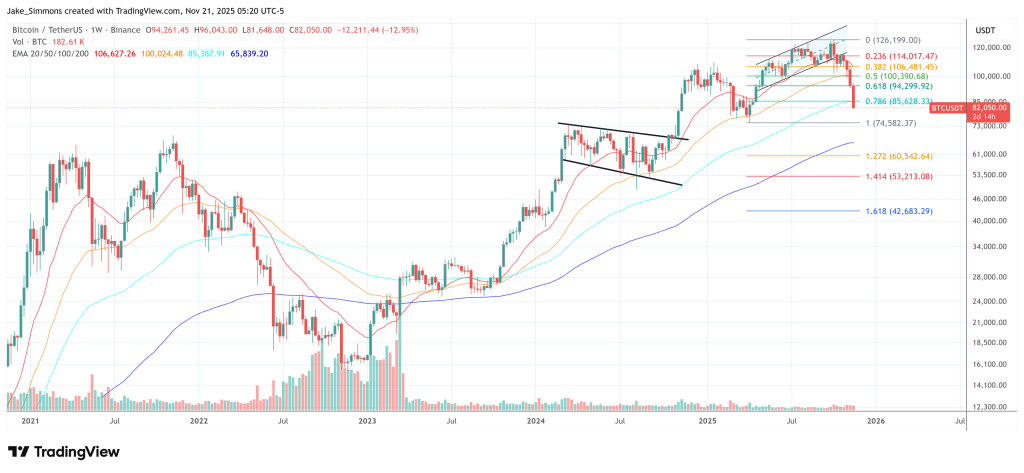
At press time, BTC traded at $82,050.
Bitcoin price
Market Opportunity
Bitcoin Logo
Bitcoin Price(BTC)
$71,065
$71,065$71,065
-1.06%
USD
Bitcoin (BTC) Live Price Chart
Disclaimer: The articles reposted on this site are sourced from public platforms and are provided for informational purposes only. They do not necessarily reflect the views of MEXC. All rights remain with the original authors. If you believe any content infringes on third-party rights, please contact crypto.news@mexc.com for removal. MEXC makes no guarantees regarding the accuracy, completeness, or timeliness of the content and is not responsible for any actions taken based on the information provided. The content does not constitute financial, legal, or other professional advice, nor should it be considered a recommendation or endorsement by MEXC.

You May Also Like

BetFury is at SBC Summit Lisbon 2025: Affiliate Growth in Focus

BetFury is at SBC Summit Lisbon 2025: Affiliate Growth in Focus

The post BetFury is at SBC Summit Lisbon 2025: Affiliate Growth in Focus appeared on BitcoinEthereumNews.com. Press Releases are sponsored content and not a part of Finbold’s editorial content. For a full disclaimer, please . Crypto assets/products can be highly risky. Never invest unless you’re prepared to lose all the money you invest. Curacao, Curacao, September 17th, 2025, Chainwire BetFury steps onto the stage of SBC Summit Lisbon 2025 — one of the key gatherings in the iGaming calendar. From 16 to 18 September, the platform showcases its brand strength, deepens affiliate connections, and outlines its plans for global expansion. BetFury continues to play a role in the evolving crypto and iGaming partnership landscape. BetFury’s Participation at SBC Summit The SBC Summit gathers over 25,000 delegates, including 6,000+ affiliates — the largest concentration of affiliate professionals in iGaming. For BetFury, this isn’t just visibility, it’s a strategic chance to present its Affiliate Program to the right audience. Face-to-face meetings, dedicated networking zones, and affiliate-focused sessions make Lisbon the ideal ground to build new partnerships and strengthen existing ones. BetFury Meets Affiliate Leaders at its Massive Stand BetFury arrives at the summit with a massive stand placed right in the center of the Affiliate zone. Designed as a true meeting hub, the stand combines large LED screens, a sleek interior, and the best coffee at the event — but its core mission goes far beyond style. Here, BetFury’s team welcomes partners and affiliates to discuss tailored collaborations, explore growth opportunities across multiple GEOs, and expand its global Affiliate Program. To make the experience even more engaging, the stand also hosts: Affiliate Lottery — a branded drum filled with exclusive offers and personalized deals for affiliates. Merch Kits — premium giveaways to boost brand recognition and leave visitors with a lasting conference memory. Besides, at SBC Summit Lisbon, attendees have a chance to meet the BetFury team along…
Share
BitcoinEthereumNews2025/09/18 01:20
Why XRP Could Be More Important Than Anyone Realised: DTCC, Mastercard and DBS Explained

Why XRP Could Be More Important Than Anyone Realised: DTCC, Mastercard and DBS Explained

The post Why XRP Could Be More Important Than Anyone Realised: DTCC, Mastercard and DBS Explained appeared first on Coinpedia Fintech News XRP is trading at $1.
Share
CoinPedia2026/03/14 00:54
XLM Price Climbs Toward $0.163 as Social Surge on Adoption News From BoG in Africa

XLM Price Climbs Toward $0.163 as Social Surge on Adoption News From BoG in Africa

The post XLM Price Climbs Toward $0.163 as Social Surge on Adoption News From BoG in Africa appeared first on Coinpedia Fintech News The XLM price has quietly staged
Share
CoinPedia2026/03/13 23:56