

PANews reported on November 24th that, according to The Block, Nasdaq-listed biopharmaceutical company Enlivex Therapeutics announced it will raise $212 million through a PIPE private placement to purchase Rain tokens as the core reserve for its Digital Asset Vault (DAT). The company claims the project is the first DAT built around a prediction market token. Rain is a decentralized prediction market protocol on the Arbitrum blockchain. Following the completion of this fundraising, former Italian Prime Minister Matteo Renzi will join the Enlivex board of directors.PANews reported on November 24th that, according to The Block, Nasdaq-listed biopharmaceutical company Enlivex Therapeutics announced it will raise $212 million through a PIPE private placement to purchase Rain tokens as the core reserve for its Digital Asset Vault (DAT). The company claims the project is the first DAT built around a prediction market token. Rain is a decentralized prediction market protocol on the Arbitrum blockchain. Following the completion of this fundraising, former Italian Prime Minister Matteo Renzi will join the Enlivex board of directors.
Enlivex plans to raise $212 million to purchase Rain tokens, aiming to create a digital asset vault for prediction markets.
For feedback or concerns regarding this content, please contact us at crypto.news@mexc.com
PANews reported on November 24th that, according to The Block, Nasdaq-listed biopharmaceutical company Enlivex Therapeutics announced it will raise $212 million through a PIPE private placement to purchase Rain tokens as the core reserve for its Digital Asset Vault (DAT). The company claims the project is the first DAT built around a prediction market token. Rain is a decentralized prediction market protocol on the Arbitrum blockchain. Following the completion of this fundraising, former Italian Prime Minister Matteo Renzi will join the Enlivex board of directors.
Disclaimer: The articles reposted on this site are sourced from public platforms and are provided for informational purposes only. They do not necessarily reflect the views of MEXC. All rights remain with the original authors. If you believe any content infringes on third-party rights, please contact crypto.news@mexc.com for removal. MEXC makes no guarantees regarding the accuracy, completeness, or timeliness of the content and is not responsible for any actions taken based on the information provided. The content does not constitute financial, legal, or other professional advice, nor should it be considered a recommendation or endorsement by MEXC.
You May Also Like

We're living in a Trump horror movie — with the most loathsome act just performed
Paul Thomas Anderson’s One Battle After Another just won the Oscar for Best Picture. It’s a multi-generational saga of political resistance. It’s a film about people
Share
Rawstory2026/03/21 22:47

Three Key Conditions Needed for Fed Rate Hikes as US-Iran Conflict Fuels Inflation Risks
The post Three Key Conditions Needed for Fed Rate Hikes as US-Iran Conflict Fuels Inflation Risks appeared on BitcoinEthereumNews.com. Markets price Fed hike risk
Share
BitcoinEthereumNews2026/03/21 22:44
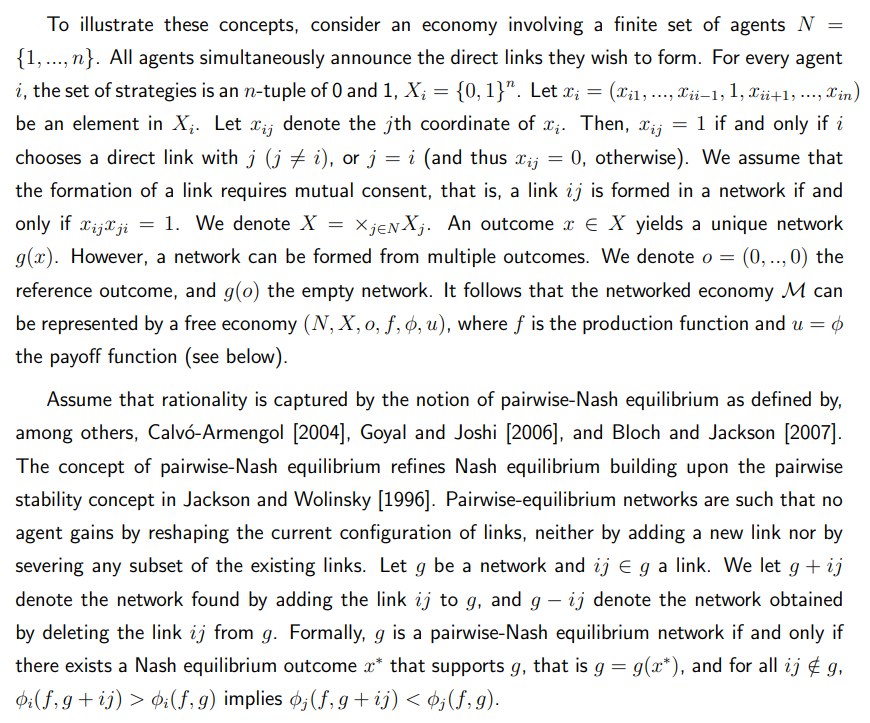
The Economics of Self-Isolation: A Game-Theoretic Analysis of Contagion in a Free Economy
Exploring how the costs of a pandemic can lead to a self-enforcing lockdown in a networked economy, analyzing the resulting changes in network structure and the existence of stable equilibria.
Share
Hackernoon2025/09/17 23:00
