

Everyday tech, extraordinary scale: What India can learn from China’s robotic revolution
China has always piqued my curiosity, perhaps because the media tells us so little about its 5,000-year-old civilisation. I first visited the country with my grandfather in 2008 and loved every bit of it.
But given how fast China has developed, I expected to see a completely different nation in 2025. I wasn’t wrong. I spent the entire month of April travelling through Hangzhou, Shanghai, Beijing and Chengdu, and realised that Chinese society is light-years ahead of most others. Beyond the well-known advances in infrastructure, what stood out was the widespread adoption of technology and robotics.
As soon as I checked into my hotel in Chengdu, a three-foot cuboid robot guided me to the elevator. When we reached my floor, it popped open a drawer with cookies and water. The robot spoke fluent Mandarin and even had a face that changed expressions. These robots make the need for staff to escort guests or deliver room service obsolete. Some models can perform up to 80 deliveries a day and even summon elevators on their own. When I asked the hotel manager about them, he smiled and said they’d been using robots for four years, and planned to buy more. Hotel chains across China are adopting robots to cut costs and stabilise service in an industry where labour costs keep rising.
Next up in Hangzhou, home to Alibaba, I saw hikers using lightweight robotic frames strapped to the lower body that assist with climbing. A couple ahead of me on a steep trail near West Lake was using these robotic legs to take longer, easier strides, reducing the strain on their knees. Another man jogging uphill had a similar exoskeleton supporting his movements, allowing him to maintain pace with noticeably less effort.
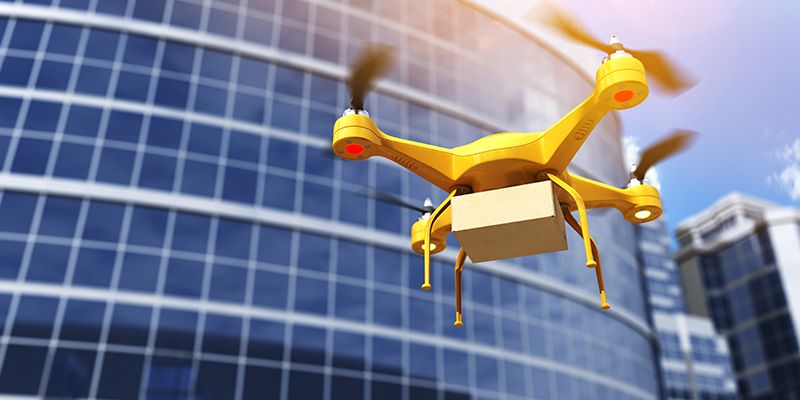
Robots weren’t limited to hotels; they ruled the skies, too. At the Great Wall, I heard a faint buzzing overhead: a drone ferrying a parcel across the city. I couldn’t help but wonder how much smoother Bengaluru’s traffic would be if drones handled deliveries instead of thousands of scooters. In China, companies like JD.com and Meituan have completed hundreds of thousands of drone deliveries. They don’t just transport emergency medicines but also food, clothes and even toys.
What impressed me was how seamlessly these deliveries fit into city life. Drone ports are tucked between buildings, charging pads sit quietly on rooftops, and the entire system feels integrated rather than intrusive. Residents barely look up when a drone passes overhead, a sign that this is no longer seen as technology, but as infrastructure.
China is also surging ahead in humanoids. In Hangzhou, I also watched a demo of a five-foot robot that could walk, turn, climb stairs and carry trays. It was built by Unitree Robotics, based in Hangzhou. The company first made waves with its four-legged Go1 and Go2 robots and now aims to make humanoids like the G1 affordable and scalable. Unitree’s robots have even performed synchronised dances on national television.
The pace of iteration in this space is staggering. In the span of a single year, several companies upgraded their humanoids from shaky prototypes to machines that could jog, balance on one leg, or manipulate small objects with surprising precision. Local universities are deeply involved, with entire labs dedicated to legged locomotion, dexterous hands, and autonomous control. This tight link between academia and industry has allowed Chinese firms to shorten development cycles dramatically, often releasing capabilities months before their global competitors. About a dozen Chinese companies are competing to dominate the humanoid race, but that race is no longer confined to China. In the United States, firms such as Figure AI, Tesla (with its Optimus project) and 1X Technologies are building humanoids for factories, logistics and even homes. While AI companies dominate headlines, robotics companies are quietly building, starting to look like a new space race, with both nations investing heavily and hoping to set global standards for the decade ahead.
No reflection on China’s robotics push would be complete without DJI. In the electronics districts of Beijing and Shanghai, DJI stores looked as sleek and crowded as Apple outlets. Founded in Shenzhen in 2006, DJI has grown into the world’s largest consumer drone maker, with more than 70% of the global market share. Its drones are used by photographers, farmers, construction firms and emergency services. DJI’s rise shows what happens when engineering excellence meets cost discipline and global branding. It is perhaps China’s clearest example of turning robotics into mass-market infrastructure.
What struck me throughout the trip was how naturally Chinese society embraces robots. There is an ease to it, almost an assumption that technology should simplify life rather than complicate it. People treat them like everyday tools, not futuristic novelties. Part of this comes from China’s comfort with tech-led convenience: everything from payments to grocery runs is already automated. But it’s also exposure: children growing up around robots in malls, and elders using them for deliveries or assistance. Over time, familiarity has bred confidence, not fear.
It's hard not to wonder about the sheer scale of investment that has gone into China’s robotics industry to make all of this possible. Official data and industry reports now put China’s robotics market at over $6 billion in annual revenue, with more than 1.7 million industrial robots already working in its factories and over half of all new robots installed each year globally.
Beijing is also backing this push with serious capital: a long-term state-backed fund of up to 1 trillion yuan (around $130 billion) for robotics, AI and other advanced industries, and more than $20 billion earmarked specifically for humanoid firms and subsidies in just the last couple of years. India is at a much earlier stage, with a robotics market of roughly $1.7 billion and about $117 million raised by robotics startups in 2024, but that funding has already quadrupled in two years.
My month in China left me with two big impressions. First, robotics is not locked away in labs; it’s being tested, deployed and normalised at scale. Second, leadership in robotics comes not from isolated breakthroughs but from ecosystems, where a strong manufacturing base, AI talent, state support, and capital markets all reinforce one another.
For India, the opportunity could not be clearer. Delivery robots could ease the load on gig workers, hospital robots could free up nurses, and drones could transform how we farm. India already has world-class software talent, growing hardware capacity and a track record of leapfrogging, UPI being the best example. What we need now is integration: connecting software with hardware, building supportive regulations and attracting patient capital. There’s a real opportunity for India to catch the wave, not just as a consumer of others’ inventions but as a builder of its own.
(Arjun Gandhi is a Vice President at Nexus Venture Partners.)
Edited by Jyoti Narayan
You May Also Like

What’s behind the latest decline?

‘The Orange March Continues’: Saylor Hints at Next Bitcoin Mega Buy as Strategy Expands Beyond 761K BTC Holdings

