The post Bolivia to Add Stablecoins to Its Banking System appeared on BitcoinEthereumNews.com. The government of Bolivia announced on Tuesday it will begin integrating cryptocurrencies into the formal financial system — marking a major shift under its new economic agenda. Officials said the effort will start with stablecoins, allowing banks to offer crypto-based services such as savings accounts, loans, and payment instruments. Crypto integration part of larger economic overhaul The announcement comes as Bolivia negotiates more than US $9 billion in multilateral loans aimed at stabilizing the economy. Economics Minister Jose Gabriel Espinoza told reporters this financing package will support both public and private projects. He added that crypto integration will serve as a legal-tender payment option under the new plan. Government officials said banks will soon be able to offer services like crypto-backed savings, loans and credit cards. The aim is to give people and businesses access to alternative payment and savings tools amid ongoing economic hardship. Why the shift — economy under stress and crypto usage rising Bolivia has faced one of its worst economic crises in decades: inflation at a multi-decade high, near-zero foreign currency reserves and severe fuel shortages. At the same time, digital-asset use surged after the government lifted a crypto ban in mid-2024. According to recent data, crypto transactions — including stablecoins — jumped from US $46.5 million in the first half of 2024 to US $294 million in the first half of 2025. Many small businesses and citizens already use crypto for payments, remittances and savings as a hedge against the boliviano’s sharp decline in value. The plan explicitly mentions stablecoins as the first phase of integration.  While some local firms already accept Bitcoin and other cryptocurrencies for informal transactions, the official move does not necessarily make those assets legal tender. Thus far, only stablecoins are slated for inclusion under the formal banking system. Any extension… The post Bolivia to Add Stablecoins to Its Banking System appeared on BitcoinEthereumNews.com. The government of Bolivia announced on Tuesday it will begin integrating cryptocurrencies into the formal financial system — marking a major shift under its new economic agenda. Officials said the effort will start with stablecoins, allowing banks to offer crypto-based services such as savings accounts, loans, and payment instruments. Crypto integration part of larger economic overhaul The announcement comes as Bolivia negotiates more than US $9 billion in multilateral loans aimed at stabilizing the economy. Economics Minister Jose Gabriel Espinoza told reporters this financing package will support both public and private projects. He added that crypto integration will serve as a legal-tender payment option under the new plan. Government officials said banks will soon be able to offer services like crypto-backed savings, loans and credit cards. The aim is to give people and businesses access to alternative payment and savings tools amid ongoing economic hardship. Why the shift — economy under stress and crypto usage rising Bolivia has faced one of its worst economic crises in decades: inflation at a multi-decade high, near-zero foreign currency reserves and severe fuel shortages. At the same time, digital-asset use surged after the government lifted a crypto ban in mid-2024. According to recent data, crypto transactions — including stablecoins — jumped from US $46.5 million in the first half of 2024 to US $294 million in the first half of 2025. Many small businesses and citizens already use crypto for payments, remittances and savings as a hedge against the boliviano’s sharp decline in value. The plan explicitly mentions stablecoins as the first phase of integration.  While some local firms already accept Bitcoin and other cryptocurrencies for informal transactions, the official move does not necessarily make those assets legal tender. Thus far, only stablecoins are slated for inclusion under the formal banking system. Any extension…

Bolivia to Add Stablecoins to Its Banking System

For feedback or concerns regarding this content, please contact us at crypto.news@mexc.com

The government of Bolivia announced on Tuesday it will begin integrating cryptocurrencies into the formal financial system — marking a major shift under its new economic agenda. Officials said the effort will start with stablecoins, allowing banks to offer crypto-based services such as savings accounts, loans, and payment instruments.

Crypto integration part of larger economic overhaul

The announcement comes as Bolivia negotiates more than US $9 billion in multilateral loans aimed at stabilizing the economy. Economics Minister Jose Gabriel Espinoza told reporters this financing package will support both public and private projects. He added that crypto integration will serve as a legal-tender payment option under the new plan.

Government officials said banks will soon be able to offer services like crypto-backed savings, loans and credit cards. The aim is to give people and businesses access to alternative payment and savings tools amid ongoing economic hardship.

Why the shift — economy under stress and crypto usage rising

Bolivia has faced one of its worst economic crises in decades: inflation at a multi-decade high, near-zero foreign currency reserves and severe fuel shortages.

At the same time, digital-asset use surged after the government lifted a crypto ban in mid-2024. According to recent data, crypto transactions — including stablecoins — jumped from US $46.5 million in the first half of 2024 to US $294 million in the first half of 2025.

Many small businesses and citizens already use crypto for payments, remittances and savings as a hedge against the boliviano’s sharp decline in value.

The plan explicitly mentions stablecoins as the first phase of integration.  While some local firms already accept Bitcoin and other cryptocurrencies for informal transactions, the official move does not necessarily make those assets legal tender.

Thus far, only stablecoins are slated for inclusion under the formal banking system. Any extension to include non-stable cryptos like Bitcoin will likely depend on future regulation.

Source: https://coinpaper.com/12683/bolivia-turns-to-stablecoins-as-economy-falters-major-banking-shift-announced

Disclaimer: The articles reposted on this site are sourced from public platforms and are provided for informational purposes only. They do not necessarily reflect the views of MEXC. All rights remain with the original authors. If you believe any content infringes on third-party rights, please contact crypto.news@mexc.com for removal. MEXC makes no guarantees regarding the accuracy, completeness, or timeliness of the content and is not responsible for any actions taken based on the information provided. The content does not constitute financial, legal, or other professional advice, nor should it be considered a recommendation or endorsement by MEXC.

You May Also Like

Shocking OpenVPP Partnership Claim Draws Urgent Scrutiny

Shocking OpenVPP Partnership Claim Draws Urgent Scrutiny

The post Shocking OpenVPP Partnership Claim Draws Urgent Scrutiny appeared on BitcoinEthereumNews.com. The cryptocurrency world is buzzing with a recent controversy surrounding a bold OpenVPP partnership claim. This week, OpenVPP (OVPP) announced what it presented as a significant collaboration with the U.S. government in the innovative field of energy tokenization. However, this claim quickly drew the sharp eye of on-chain analyst ZachXBT, who highlighted a swift and official rebuttal that has sent ripples through the digital asset community. What Sparked the OpenVPP Partnership Claim Controversy? The core of the issue revolves around OpenVPP’s assertion of a U.S. government partnership. This kind of collaboration would typically be a monumental endorsement for any private cryptocurrency project, especially given the current regulatory climate. Such a partnership could signify a new era of mainstream adoption and legitimacy for energy tokenization initiatives. OpenVPP initially claimed cooperation with the U.S. government. This alleged partnership was said to be in the domain of energy tokenization. The announcement generated considerable interest and discussion online. ZachXBT, known for his diligent on-chain investigations, was quick to flag the development. He brought attention to the fact that U.S. Securities and Exchange Commission (SEC) Commissioner Hester Peirce had directly addressed the OpenVPP partnership claim. Her response, delivered within hours, was unequivocal and starkly contradicted OpenVPP’s narrative. How Did Regulatory Authorities Respond to the OpenVPP Partnership Claim? Commissioner Hester Peirce’s statement was a crucial turning point in this unfolding story. She clearly stated that the SEC, as an agency, does not engage in partnerships with private cryptocurrency projects. This response effectively dismantled the credibility of OpenVPP’s initial announcement regarding their supposed government collaboration. Peirce’s swift clarification underscores a fundamental principle of regulatory bodies: maintaining impartiality and avoiding endorsements of private entities. Her statement serves as a vital reminder to the crypto community about the official stance of government agencies concerning private ventures. Moreover, ZachXBT’s analysis…
Share
BitcoinEthereumNews2025/09/18 02:13
A Netflix ‘KPop Demon Hunters’ Short Film Has Been Rated For Release

A Netflix ‘KPop Demon Hunters’ Short Film Has Been Rated For Release

The post A Netflix ‘KPop Demon Hunters’ Short Film Has Been Rated For Release appeared on BitcoinEthereumNews.com. KPop Demon Hunters Netflix Everyone has wondered what may be the next step for KPop Demon Hunters as an IP, given its record-breaking success on Netflix. Now, the answer may be something exactly no one predicted. According to a new filing with the MPA, something called Debut: A KPop Demon Hunters Story has been rated PG by the ratings body. It’s listed alongside some other films, and this is obviously something that has not been publicly announced. A short film could be well, very short, a few minutes, and likely no more than ten. Even that might be pushing it. Using say, Pixar shorts as a reference, most are between 4 and 8 minutes. The original movie is an hour and 36 minutes. The “Debut” in the title indicates some sort of flashback, perhaps to when HUNTR/X first arrived on the scene before they blew up. Previously, director Maggie Kang has commented about how there were more backstory components that were supposed to be in the film that were cut, but hinted those could be explored in a sequel. But perhaps some may be put into a short here. I very much doubt those scenes were fully produced and simply cut, but perhaps they were finished up for this short film here. When would Debut: KPop Demon Hunters theoretically arrive? I’m not sure the other films on the list are much help. Dead of Winter is out in less than two weeks. Mother Mary does not have a release date. Ne Zha 2 came out earlier this year. I’ve only seen news stories saying The Perfect Gamble was supposed to come out in Q1 2025, but I’ve seen no evidence that it actually has. KPop Demon Hunters Netflix It could be sooner rather than later as Netflix looks to capitalize…
Share
BitcoinEthereumNews2025/09/18 02:23
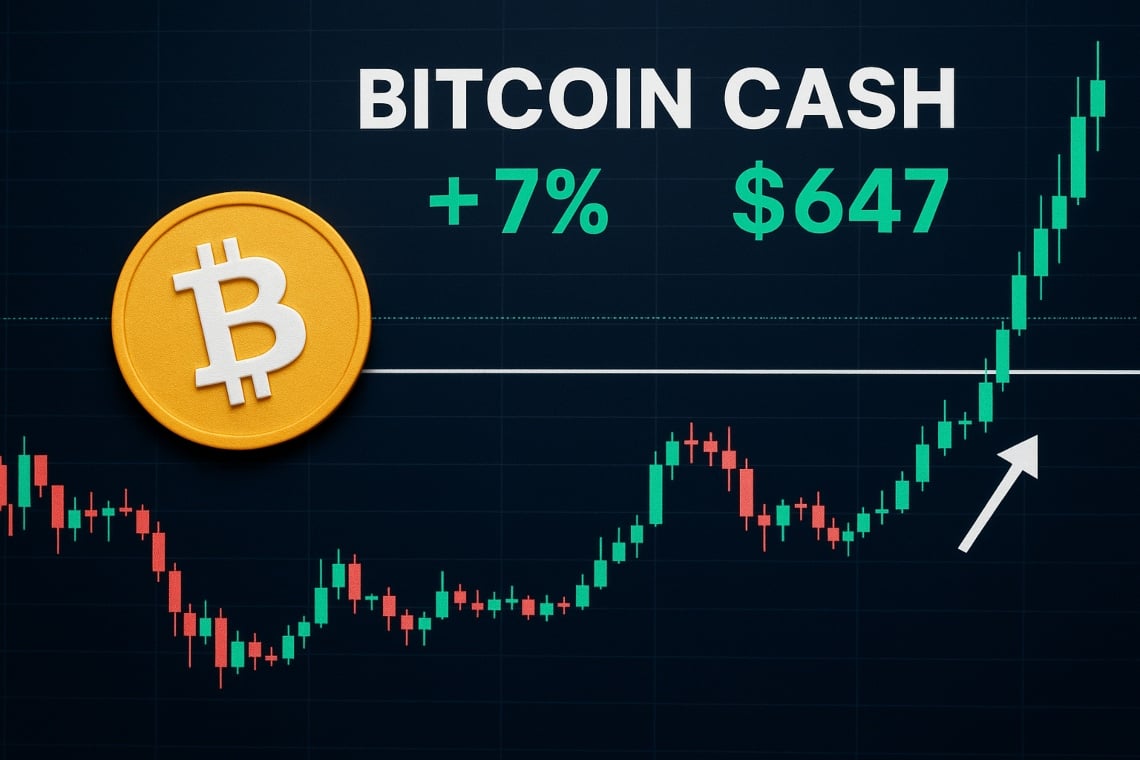
Bitcoin Cash: price +7% at $647, breakout and key levels (09/18/2025)

Bitcoin Cash: price +7% at $647, breakout and key levels (09/18/2025)

Bitcoin Cash gains 7% and reaches $647, hitting highs not seen since last April: the movement fits into a risk-on climate.
Share
The Cryptonomist2025/09/18 21:47