XRP is under intense selling pressure as the broader crypto market enters a decisive stage marked by fear, uncertainty, and a rapid shift in investor sentiment. With Bitcoin struggling to recover and altcoins posting steep losses, many analysts are warning that XRP could face a continued decline in the coming days. Investors are bracing for more volatility as liquidity thins and market confidence weakens. Related Reading: Major Bitcoin LTH Sell-Off Signals Cycle Exhaustion as Supply Drops to 13.6M BTC Yet, despite the bearish narrative, the XRP ecosystem has shown unusual levels of activity—particularly on the institutional front. The arrival of the first US spot XRP ETFs has reshaped its market profile. Canary Capital was the first to launch on November 13, soon followed by Franklin Templeton, Bitwise, and Grayscale. In a matter of days, XRP transitioned from a conventional crypto asset to one accessible through regulated institutional vehicles, potentially shifting its long-term demand dynamics. This new backdrop makes one ongoing trend on Binance even more striking. Since October, XRP reserves on the exchange have been falling sharply. Current data shows reserves have dropped to roughly 2.7 billion XRP, one of the lowest levels ever recorded on the platform. Such consistent outflows signal rising demand for self-custody—an important metric as XRP navigates this critical market phase. XRP Exchange Outflows Signal Strengthening Long-Term Demand According to a new CryptoQuant report by analyst Darkfost, XRP is experiencing one of its most notable exchange outflow trends in years. Since October 6, roughly 300 million XRP have left Binance alone—a figure far too large and too consistent to dismiss as simple internal reshuffling. While a small portion of these transfers may be operational movements by the exchange, the broader pattern is unmistakable: investors are steadily withdrawing XRP from trading platforms. This behavior is typically interpreted as a bullish long-term signal. Day after day, the decline in exchange reserves continues, suggesting that buyers are choosing to move their XRP into private wallets rather than leaving them on exchanges for trading or short-term speculation. Historically, large-scale withdrawals reflect strong conviction, as holders position themselves for longer-term appreciation rather than immediate selling. The supply dynamics created by this trend are significant. With fewer tokens available on exchanges, liquidity tightens. When combined with the rising institutional interest brought by newly launched U.S. spot ETFs, this creates the potential foundation for a powerful shift in momentum. If exchange reserves continue dropping at the current pace, XRP could enter a more structured phase of accumulation—one driven not by hype, but by growing confidence from both retail and institutional participants. Related Reading: Ethereum ICO Whale Sells 20,000 ETH ($58M), Raising Questions Over Market Timing XRP Attempts to Stabilize but Remains Under Strong Selling Pressure XRP’s recent price action on the 3D chart shows an asset trying to stabilize, yet still struggling against a clearly bearish backdrop. After weeks of decline, XRP found temporary support near the $2 psychological zone, where buyers briefly stepped in to prevent a deeper breakdown. This area aligns closely with the 200-day moving average (red line), which has acted as a final line of defense during multiple market cycles. Despite the small rebound, XRP continues to trade well below the 50-day and 100-day moving averages, both of which are now sloping downward and reinforcing the broader bearish trend. The inability to reclaim the $2.40–$2.50 zone — an important previous support turned resistance — suggests that sellers still dominate the market structure. Volume also remains muted compared to earlier phases of the cycle, indicating that strong conviction buying has not yet returned. Related Reading: Bitcoin Short Squeeze Flushes Out Late Longers as Funding Turns Negative: Classic Capitulation Signal The wick-down capitulation move seen earlier in the month reflects aggressive liquidation, followed by a rapid recovery. While this type of price action can sometimes precede short-term relief rallies, the overall pattern still leans bearish unless XRP can break above key moving averages. Featured image from ChatGPT, chart from TradingView.comXRP is under intense selling pressure as the broader crypto market enters a decisive stage marked by fear, uncertainty, and a rapid shift in investor sentiment. With Bitcoin struggling to recover and altcoins posting steep losses, many analysts are warning that XRP could face a continued decline in the coming days. Investors are bracing for more volatility as liquidity thins and market confidence weakens. Related Reading: Major Bitcoin LTH Sell-Off Signals Cycle Exhaustion as Supply Drops to 13.6M BTC Yet, despite the bearish narrative, the XRP ecosystem has shown unusual levels of activity—particularly on the institutional front. The arrival of the first US spot XRP ETFs has reshaped its market profile. Canary Capital was the first to launch on November 13, soon followed by Franklin Templeton, Bitwise, and Grayscale. In a matter of days, XRP transitioned from a conventional crypto asset to one accessible through regulated institutional vehicles, potentially shifting its long-term demand dynamics. This new backdrop makes one ongoing trend on Binance even more striking. Since October, XRP reserves on the exchange have been falling sharply. Current data shows reserves have dropped to roughly 2.7 billion XRP, one of the lowest levels ever recorded on the platform. Such consistent outflows signal rising demand for self-custody—an important metric as XRP navigates this critical market phase. XRP Exchange Outflows Signal Strengthening Long-Term Demand According to a new CryptoQuant report by analyst Darkfost, XRP is experiencing one of its most notable exchange outflow trends in years. Since October 6, roughly 300 million XRP have left Binance alone—a figure far too large and too consistent to dismiss as simple internal reshuffling. While a small portion of these transfers may be operational movements by the exchange, the broader pattern is unmistakable: investors are steadily withdrawing XRP from trading platforms. This behavior is typically interpreted as a bullish long-term signal. Day after day, the decline in exchange reserves continues, suggesting that buyers are choosing to move their XRP into private wallets rather than leaving them on exchanges for trading or short-term speculation. Historically, large-scale withdrawals reflect strong conviction, as holders position themselves for longer-term appreciation rather than immediate selling. The supply dynamics created by this trend are significant. With fewer tokens available on exchanges, liquidity tightens. When combined with the rising institutional interest brought by newly launched U.S. spot ETFs, this creates the potential foundation for a powerful shift in momentum. If exchange reserves continue dropping at the current pace, XRP could enter a more structured phase of accumulation—one driven not by hype, but by growing confidence from both retail and institutional participants. Related Reading: Ethereum ICO Whale Sells 20,000 ETH ($58M), Raising Questions Over Market Timing XRP Attempts to Stabilize but Remains Under Strong Selling Pressure XRP’s recent price action on the 3D chart shows an asset trying to stabilize, yet still struggling against a clearly bearish backdrop. After weeks of decline, XRP found temporary support near the $2 psychological zone, where buyers briefly stepped in to prevent a deeper breakdown. This area aligns closely with the 200-day moving average (red line), which has acted as a final line of defense during multiple market cycles. Despite the small rebound, XRP continues to trade well below the 50-day and 100-day moving averages, both of which are now sloping downward and reinforcing the broader bearish trend. The inability to reclaim the $2.40–$2.50 zone — an important previous support turned resistance — suggests that sellers still dominate the market structure. Volume also remains muted compared to earlier phases of the cycle, indicating that strong conviction buying has not yet returned. Related Reading: Bitcoin Short Squeeze Flushes Out Late Longers as Funding Turns Negative: Classic Capitulation Signal The wick-down capitulation move seen earlier in the month reflects aggressive liquidation, followed by a rapid recovery. While this type of price action can sometimes precede short-term relief rallies, the overall pattern still leans bearish unless XRP can break above key moving averages. Featured image from ChatGPT, chart from TradingView.com

XRP Reserves On Binance Collapse To Record Lows: Investors Move Toward Long-Term Holding

2025/11/28 06:00
4 min read
For feedback or concerns regarding this content, please contact us at crypto.news@mexc.com

XRP is under intense selling pressure as the broader crypto market enters a decisive stage marked by fear, uncertainty, and a rapid shift in investor sentiment. With Bitcoin struggling to recover and altcoins posting steep losses, many analysts are warning that XRP could face a continued decline in the coming days. Investors are bracing for more volatility as liquidity thins and market confidence weakens.

Yet, despite the bearish narrative, the XRP ecosystem has shown unusual levels of activity—particularly on the institutional front. The arrival of the first US spot XRP ETFs has reshaped its market profile. Canary Capital was the first to launch on November 13, soon followed by Franklin Templeton, Bitwise, and Grayscale. In a matter of days, XRP transitioned from a conventional crypto asset to one accessible through regulated institutional vehicles, potentially shifting its long-term demand dynamics.

This new backdrop makes one ongoing trend on Binance even more striking. Since October, XRP reserves on the exchange have been falling sharply. Current data shows reserves have dropped to roughly 2.7 billion XRP, one of the lowest levels ever recorded on the platform. Such consistent outflows signal rising demand for self-custody—an important metric as XRP navigates this critical market phase.

XRP Exchange Outflows Signal Strengthening Long-Term Demand

According to a new CryptoQuant report by analyst Darkfost, XRP is experiencing one of its most notable exchange outflow trends in years. Since October 6, roughly 300 million XRP have left Binance alone—a figure far too large and too consistent to dismiss as simple internal reshuffling. While a small portion of these transfers may be operational movements by the exchange, the broader pattern is unmistakable: investors are steadily withdrawing XRP from trading platforms.

XRP Ledger Exchange Reserve on Binance | Source: CryptoQuant

This behavior is typically interpreted as a bullish long-term signal. Day after day, the decline in exchange reserves continues, suggesting that buyers are choosing to move their XRP into private wallets rather than leaving them on exchanges for trading or short-term speculation. Historically, large-scale withdrawals reflect strong conviction, as holders position themselves for longer-term appreciation rather than immediate selling.

The supply dynamics created by this trend are significant. With fewer tokens available on exchanges, liquidity tightens. When combined with the rising institutional interest brought by newly launched U.S. spot ETFs, this creates the potential foundation for a powerful shift in momentum.

If exchange reserves continue dropping at the current pace, XRP could enter a more structured phase of accumulation—one driven not by hype, but by growing confidence from both retail and institutional participants.

XRP Attempts to Stabilize but Remains Under Strong Selling Pressure

XRP’s recent price action on the 3D chart shows an asset trying to stabilize, yet still struggling against a clearly bearish backdrop. After weeks of decline, XRP found temporary support near the $2 psychological zone, where buyers briefly stepped in to prevent a deeper breakdown. This area aligns closely with the 200-day moving average (red line), which has acted as a final line of defense during multiple market cycles.
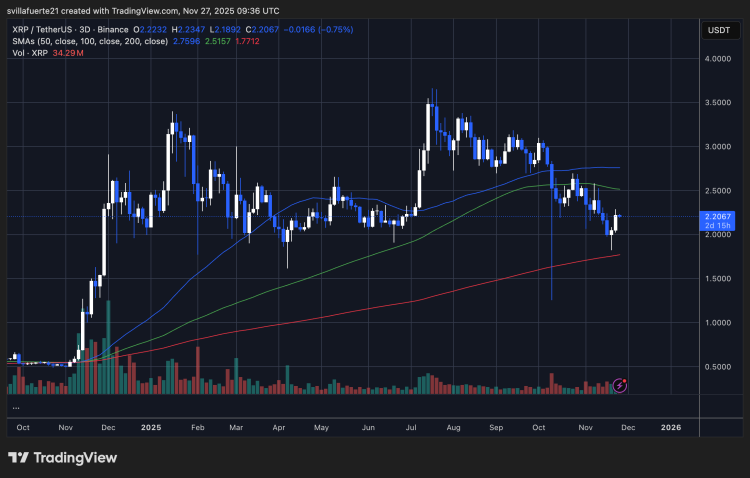
XRP testing key resistance | Source: XRPUSDT chart on TradingView

Despite the small rebound, XRP continues to trade well below the 50-day and 100-day moving averages, both of which are now sloping downward and reinforcing the broader bearish trend. The inability to reclaim the $2.40–$2.50 zone — an important previous support turned resistance — suggests that sellers still dominate the market structure. Volume also remains muted compared to earlier phases of the cycle, indicating that strong conviction buying has not yet returned.

The wick-down capitulation move seen earlier in the month reflects aggressive liquidation, followed by a rapid recovery. While this type of price action can sometimes precede short-term relief rallies, the overall pattern still leans bearish unless XRP can break above key moving averages.

Featured image from ChatGPT, chart from TradingView.com

Market Opportunity
XRP Logo
XRP Price(XRP)
$1.4396
$1.4396$1.4396
+0.55%
USD
XRP (XRP) Live Price Chart
Disclaimer: The articles reposted on this site are sourced from public platforms and are provided for informational purposes only. They do not necessarily reflect the views of MEXC. All rights remain with the original authors. If you believe any content infringes on third-party rights, please contact crypto.news@mexc.com for removal. MEXC makes no guarantees regarding the accuracy, completeness, or timeliness of the content and is not responsible for any actions taken based on the information provided. The content does not constitute financial, legal, or other professional advice, nor should it be considered a recommendation or endorsement by MEXC.

You May Also Like

Fed forecasts only one rate cut in 2026, a more conservative outlook than expected
Fed forecasts only one rate cut in 2026, a more conservative outlook than expected

The post Fed forecasts only one rate cut in 2026, a more conservative outlook than expected appeared on BitcoinEthereumNews.com. Federal Reserve Chairman Jerome Powell talks to reporters following the regular Federal Open Market Committee meetings at the Fed on July 30, 2025 in Washington, DC. Chip Somodevilla | Getty Images The Federal Reserve is projecting only one rate cut in 2026, fewer than expected, according to its median projection. The central bank’s so-called dot plot, which shows 19 individual members’ expectations anonymously, indicated a median estimate of 3.4% for the federal funds rate at the end of 2026. That compares to a median estimate of 3.6% for the end of this year following two expected cuts on top of Wednesday’s reduction. A single quarter-point reduction next year is significantly more conservative than current market pricing. Traders are currently pricing in at two to three more rate cuts next year, according to the CME Group’s FedWatch tool, updated shortly after the decision. The gauge uses prices on 30-day fed funds futures contracts to determine market-implied odds for rate moves. Here are the Fed’s latest targets from 19 FOMC members, both voters and nonvoters: Zoom In IconArrows pointing outwards The forecasts, however, showed a large difference of opinion with two voting members seeing as many as four cuts. Three officials penciled in three rate reductions next year. “Next year’s dot plot is a mosaic of different perspectives and is an accurate reflection of a confusing economic outlook, muddied by labor supply shifts, data measurement concerns, and government policy upheaval and uncertainty,” said Seema Shah, chief global strategist at Principal Asset Management. The central bank has two policy meetings left for the year, one in October and one in December. Economic projections from the Fed saw slightly faster economic growth in 2026 than was projected in June, while the outlook for inflation was updated modestly higher for next year. There’s a lot of uncertainty…
Share
BitcoinEthereumNews2025/09/18 02:59
Trump is running out of time — and Republicans ready to abandon him

Trump is running out of time — and Republicans ready to abandon him

When President Donald Trump was reelected in 2024, he rode in on a largely populist message that promised to lower prices, reduce inflation, cut taxes, and improve
Share
Alternet2026/03/23 22:02
Trump twists himself in knots to explain why giving Iran money is different from Obama

Trump twists himself in knots to explain why giving Iran money is different from Obama

President Donald Trump spoke to reporters ahead of a trip to Memphis, Tennessee on Monday morning after spending the weekend in Palm Beach, Florida. Trump took
Share
Alternet2026/03/23 22:38