Building AI agents in minutes, not months — How Elastic empowers AI with context
India’s AI market is projected to reach $17 billion by 2027, with nearly 65% of large enterprises already investing in AI and analytics, according to a Boston Consulting Group report. Over the past few years, India’s AI journey has evolved from experimentation to execution, with enterprises embedding intelligence across operations, from customer engagement to logistics.
Now, as adoption matures, the next frontier is emerging: agentic AI — intelligent systems that not only analyse data but act on it. These systems combine large language models (LLMs) with enterprise data, tools, and context to autonomously reason, decide, and deliver outcomes.
Making this vision work requires three key components: high-quality contextual data, real-time orchestration, and secure integration across enterprise workflows.
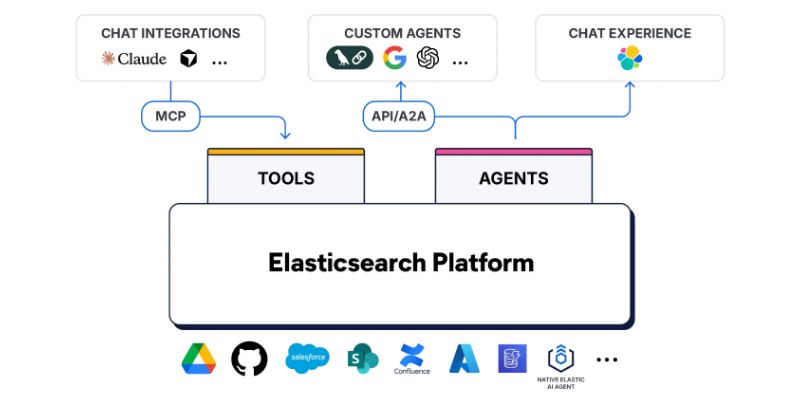
That’s where Elastic comes in. With its new Agent Builder, the company brings all these elements together, enabling enterprises to build, deploy, and scale AI agents in minutes, not months. Integrated into the Elasticsearch platform, Agent Builder unifies retrieval, orchestration, and governance in one cohesive environment. This helps AI systems make decisions that are not just fast, but informed, accountable.
“Agent Builder is the bridge between search and autonomous intelligence,” says Ravindra Ramnani, Senior Manager, Solutions Architecture at Elastic. “It transforms proprietary enterprise data into actionable AI experiences that are grounded in performance, openness, and security.”
Building for context with Agent Builder
At its core, Elastic Agent Builder extends the power of Elasticsearch into the world of agentic AI. Built on Elastic’s proven foundation of search, vector retrieval, and observability, it enables developers to build agents that can interact through natural language, retrieve context, reason through objectives, and act securely within enterprise environments.
As Elastic’s framework for contextual retrieval and orchestration, Agent Builder interprets user intent, invokes the right tools, and surfaces real-time insights from enterprise data. The result: agents that can draw immediate, relevant intelligence from Elastic’s indexed data to power downstream workflows, enrich applications, and accelerate AI adoption from prototype to production.
Agent Builder remains open by design. Developers can utilise their own tools, plug in external APIs, and integrate third-party models into the Elasticsearch platform using open standards.
“Developers have the freedom to design agents that align precisely with their data and workflows,” Ramnani says. “They can extend functionality or bring their own AI services, all within a governed, high-performance environment.”
This flexibility makes Agent Builder equally powerful for startups experimenting with AI copilots and large enterprises deploying production-grade agents at scale.
From data to deployment: Scaling with confidence
Elasticsearch’s capabilities provide Agent Builder with the scalability, speed, and resilience enterprises trust. The platform’s reliability underpins mission-critical workloads across search, observability, and security. Now, those same enterprise-grade guarantees extend to AI agents.
Built-in governance, performance tracing, and context validation ensure each agent operates with precision. Teams can observe and control every interaction, minimising risk while maintaining uptime and trust across expanding datasets and user bases.
At the heart of this system lies context engineering, the practice of designing how AI agents gather, filter, and apply information from multiple sources to make decisions. In agentic AI, where models act autonomously and continuously interact with dynamic environments, context engineering becomes essential. It ensures that every response or action is informed by the most relevant, current, and trustworthy data, rather than static prompts.
Elastic’s strength in search makes this approach distinctive. Vector search enables agents to retrieve contextually relevant data in real time, grounding reasoning in facts. Combined with RAG, it powers what Ramnani calls “connected intelligence”, AI that adapts and learns continuously from live data streams.
Use cases: From ElasticGPT to knowledge management applications
Elastic’s AI capabilities are already shaping transformative use cases. Internally, the company has deployed ElasticGPT, a secure AI assistant that leverages internal documentation, wikis, and engineering knowledge to deliver instant, context-rich answers to employee queries.
Enterprises like LG CNS and Apna are already using Elastic’s search and retrieval capabilities to power AI assistants that unify scattered information, accelerate internal decision-making, and enhance employee productivity. The next step will build on these foundations — extending from search-driven assistants to autonomous, context-aware agents governed by more stringent accuracy, traceability, and performance controls.
“It’s a great example of how enterprises can unlock their internal knowledge bases,” Ramnani says. “We’re seeing it act as a force multiplier, making every employee, from engineers to analysts, more effective.”
This aligns with a growing industry trend: a report from Ernst & Young (EY) India found that generative AI could contribute $1.5 trillion to the country’s GDP by 2030, largely through productivity gains and workflow automation. Elastic’s Agent Builder offers a tangible pathway for realising that potential.
One of the biggest challenges in enterprise AI development lies in collaboration. Data teams own the pipelines, indexing, and governance; developers build the applications that surface that intelligence. Agent Builder’s shared “Agents & Tools” layer brings together these disparate teams to form a well-run machine.
Data engineers continue managing ingestion and queries, while app developers consume those assets declaratively by defining objectives, tools, and data exposure through APIs. Elastic handles orchestration, context retrieval, and execution. The result: faster delivery, better alignment, and less operational friction.
Productivity, efficiency, and scale
Even in early deployments, the productivity gains are striking. What once required a team of AI/ML engineers and months of effort can now be prototyped by a single developer in minutes.
“It radically accelerates the AI development lifecycle,” Ramnani explains. “Developers can move from concept to production-ready agent without rebuilding the entire stack.”
The ripple effects extend to end users as well with agents that amplify the capabilities of every employee, lowering costs while improving performance and decision quality.
For Ramnani, the message to developers is clear: “Don’t just focus on the LLM, focus on your data.” He adds, “A powerful LLM is a commodity. The real differentiator is your organisation’s private data. Your success with AI depends on how effectively you connect that data to your agents in a secure, governed, and relevant way.”
Elastic’s Agent Builder turns that connection from an add-on into a core capability of the Elasticsearch platform.
In a world where AI tools are multiplying, Elastic is doubling down on what it has always done best: search, scale, and relevance. Agent Builder turns those strengths into the foundation for a new kind of enterprise intelligence, one that is open, governed, and ready for the next era of AI-driven innovation.

You May Also Like

Ethereum Price Prediction: ETH Targets $10,000 In 2026 But Layer Brett Could Reach $1 From $0.0058

IP Hits $11.75, HYPE Climbs to $55, BlockDAG Surpasses Both with $407M Presale Surge!