The United Nations Educational, Scientific, and Cultural Organization (UNESCO) said on Friday that the Philippines does not have its “house in order” and is adapting slowly to artificial intelligence (AI) compared to other Southeast Asian countries.  “The Philippines has yet to get its house in order, as I’ve mentioned in the report. If you compare it, stepping […]The United Nations Educational, Scientific, and Cultural Organization (UNESCO) said on Friday that the Philippines does not have its “house in order” and is adapting slowly to artificial intelligence (AI) compared to other Southeast Asian countries.  “The Philippines has yet to get its house in order, as I’ve mentioned in the report. If you compare it, stepping […]

UNESCO: PHL has yet to have its “house in order” for AI adoption

2025/12/01 20:49
3 min read
For feedback or concerns regarding this content, please contact us at crypto.news@mexc.com

The United Nations Educational, Scientific, and Cultural Organization (UNESCO) said on Friday that the Philippines does not have its “house in order” and is adapting slowly to artificial intelligence (AI) compared to other Southeast Asian countries. 

“The Philippines has yet to get its house in order, as I’ve mentioned in the report. If you compare it, stepping back to the Southeast Asian countries, we’re kind of left behind,” UNESCO AI Expert Mark F. Manantan told BusinessWorld at the sidelines of an event. 

“I wouldn’t say we’re running behind, but we’re slowly picking up. It’s patchy, but it’s trending upwards; the process is just slow,” he added. 

A report by the Worldwide Independent Network of Market Research (WIN) in August found that the Philippines, with 54.7 points out of 100, ranked 11th out of 38 countries globally, but placed fourth lowest among other Asia-Pacific nations. 

“When we compare ourselves to Singapore, Malaysia, Thailand, Indonesia, and Vietnam, they’re moving at a pace where they’re already pilot testing AI solutions,” Mr. Manantan said. 

“We are still kind of in the stage where we’re sorting out the fundamentals of our AI governance, our AI ecosystem,” he added. “I hope that we don’t see it as a competition per se, but also as an inspiration that we can learn from our neighbors.” 

According to the Philippines’ AI readiness assessment report by UNESCO, one of the prevailing issues contributing to the slow adoption of AI in the country includes “poor digital infrastructure, siloed policymaking, bureaucratic inertia, lagging investments in national research and development, outdated legal and regulatory frameworks and guidelines.” 

“It points to the lingering structural challenges that we have as far as infrastructure is concerned,” Mr. Manantan said. “All of those core fundamental elements that would really create an enabling AI environment.” 

Meanwhile, the Department of Science and Technology (DoST) Secretary Renato U. Solidum, Jr. underscored that the country’s AI adoption is “slightly above middle” compared to other neighboring countries. 

“We’re in the middle or slightly above the middle, compared to many other countries despite the fact that we are just starting in terms of having an integrated effort,” he told BusinessWorld in an interview. 

Mr. Solidum added that to reap the full potential of AI adoption, a multi-sectoral approach must be taken to upskill and reskill workers. 

“We need to put in more effort on the upscaling, reskilling of workers so that our current private sector industries can be more effective and efficient with the use of AI,” he said. 

“Definitely it is a team effort, other departments would need to be doing their thing,” he added. “We should approach the use of AI not with brute compute power, but how to develop innovative programs so that non-experts can still use AI.” — Almira Louise S. Martinez  

Market Opportunity
PHILCOIN Logo
PHILCOIN Price(PHL)
$0,02056
$0,02056$0,02056
-%0,43
USD
PHILCOIN (PHL) Live Price Chart
Disclaimer: The articles reposted on this site are sourced from public platforms and are provided for informational purposes only. They do not necessarily reflect the views of MEXC. All rights remain with the original authors. If you believe any content infringes on third-party rights, please contact crypto.news@mexc.com for removal. MEXC makes no guarantees regarding the accuracy, completeness, or timeliness of the content and is not responsible for any actions taken based on the information provided. The content does not constitute financial, legal, or other professional advice, nor should it be considered a recommendation or endorsement by MEXC.

You May Also Like

Nvidia CEO Says AI Skills Beat Degrees in Hiring
Nvidia CEO Says AI Skills Beat Degrees in Hiring

Nvidia CEO Prioritizes AI Skills, Says AI-Fluent Graduates Will Be Hired Every Time In a statement that underscores the rapidly shifting demands of the global w
Share
Hokanews2026/03/25 03:25
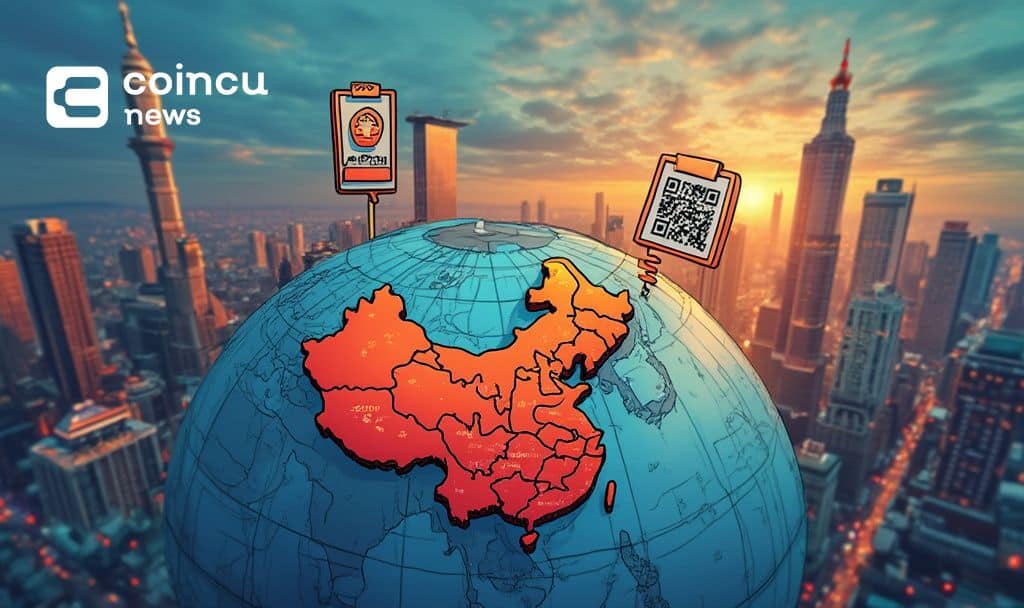
China Launches Cross-Border QR Code Payment Trial

China Launches Cross-Border QR Code Payment Trial

The post China Launches Cross-Border QR Code Payment Trial appeared on BitcoinEthereumNews.com. Key Points: Main event involves China initiating a cross-border QR code payment trial. Alipay and Ant International are key participants. Impact on financial security and regulatory focus on illicit finance. China’s central bank, led by Deputy Governor Lu Lei, initiated a trial of a unified cross-border QR code payment gateway with Alipay and Ant International as participants. This pilot addresses cross-border fund risks, aiming to enhance financial security amid rising money laundering through digital channels, despite muted crypto market reactions. China’s Cross-Border Payment Gateway Trial with Alipay The trial operation of a unified cross-border QR code payment gateway marks a milestone in China’s financial landscape. Prominent entities such as Alipay and Ant International are at the forefront, participating as the initial institutions in this venture. Lu Lei, Deputy Governor of the People’s Bank of China, highlighted the systemic risks posed by increased cross-border fund flows. Changes are expected in the dynamics of digital transactions, potentially enhancing transaction efficiency while tightening regulations around illicit finance. The initiative underscores China’s commitment to bolstering financial security amidst growing global fund movements. “The scale of cross-border fund flows is expanding, and the frequency is accelerating, providing opportunities for risks such as cross-border money laundering and terrorist financing. Some overseas illegal platforms transfer funds through channels such as virtual currencies and underground banks, creating a ‘resonance’ of risks at home and abroad, posing a challenge to China’s foreign exchange management and financial security.” — Lu Lei, Deputy Governor, People’s Bank of China Bitcoin and Impact of China’s Financial Initiatives Did you know? China’s latest initiative echoes the Payment Connect project of June 2025, furthering real-time cross-boundary remittances and expanding its influence on global financial systems. As of September 17, 2025, Bitcoin (BTC) stands at $115,748.72 with a market cap of $2.31 trillion, showing a 0.97%…
Share
BitcoinEthereumNews2025/09/18 05:28
Solana Price Prediction Needs a Year to Match What Pepeto Targets on Listing Day

Solana Price Prediction Needs a Year to Match What Pepeto Targets on Listing Day

While the solana price prediction eyes a recovery toward $294, Pepeto is attracting attention with growth potential that could surpass SOL’s next rally. CME Group
Share
Techbullion2026/03/25 03:17