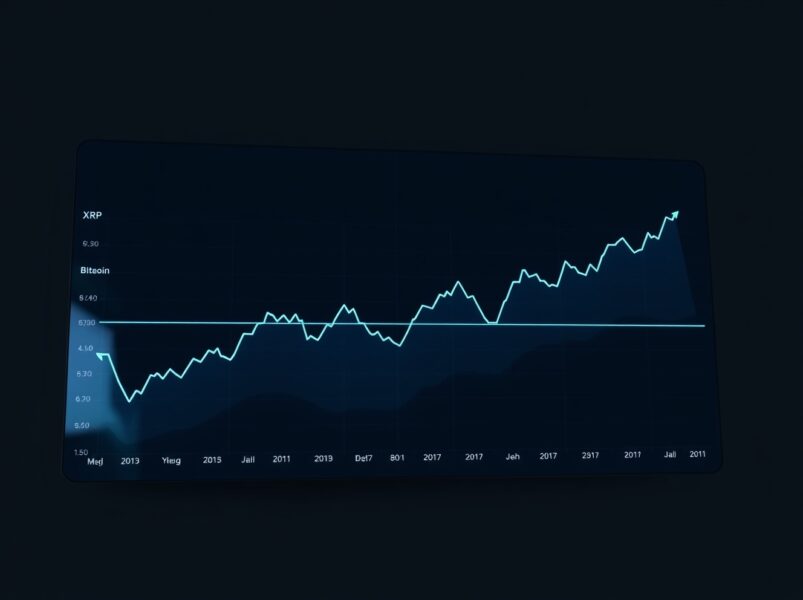
The post Bitcoin Declines 22% Amid Crypto Market Volatility as Leaders Express Caution appeared on BitcoinEthereumNews.com. The cryptocurrency market is facing a notable decline in 2025, with Bitcoin dropping 22% over the past month due to macroeconomic uncertainty and potential Federal Reserve interest rate hikes. Industry leaders like Ethereum co-founder Vitalik Buterin urge caution, emphasizing long-term resilience amid volatility. Leaders express caution amid market volatility and economic uncertainty, highlighting the need for strategic patience in investments. Bitcoin has experienced a 22% decline in the recent month, reflecting broader risk aversion in digital assets. A shift towards traditional safe havens like gold and silver is noted, with institutional investors reallocating amid the downturn, as market capitalization falls by over $200 billion. Cryptocurrency market decline in 2025 shakes investor confidence: Bitcoin’s 22% drop signals caution. Discover leader insights and strategies to navigate volatility—stay informed for smarter crypto decisions today. What is Causing the Cryptocurrency Market Decline in 2025? The cryptocurrency market decline in 2025 stems primarily from macroeconomic uncertainty and speculation around Federal Reserve interest rate decisions. Major assets like Bitcoin and Ethereum have seen sharp corrections, with Bitcoin falling 22% in the past month alone. This volatility is compounded by broader economic pressures, including inflation concerns and geopolitical tensions, prompting investors to adopt a more conservative approach. How Are Industry Leaders Responding to the Crypto Downturn? Prominent figures in the cryptocurrency space are advocating for vigilance and long-term focus as the market navigates this turbulent period. Ethereum co-founder Vitalik Buterin has stressed the importance of technological advancements over short-term price fluctuations. According to statements from Ethereum’s development team, ongoing upgrades aim to enhance scalability and security, providing a foundation for future stability. Binance CEO Changpeng Zhao, known as CZ, has echoed similar sentiments in recent communications, noting that market corrections are natural in emerging asset classes. Data from blockchain analytics firms like Chainalysis indicates a 15% reduction… The post Bitcoin Declines 22% Amid Crypto Market Volatility as Leaders Express Caution appeared on BitcoinEthereumNews.com. The cryptocurrency market is facing a notable decline in 2025, with Bitcoin dropping 22% over the past month due to macroeconomic uncertainty and potential Federal Reserve interest rate hikes. Industry leaders like Ethereum co-founder Vitalik Buterin urge caution, emphasizing long-term resilience amid volatility. Leaders express caution amid market volatility and economic uncertainty, highlighting the need for strategic patience in investments. Bitcoin has experienced a 22% decline in the recent month, reflecting broader risk aversion in digital assets. A shift towards traditional safe havens like gold and silver is noted, with institutional investors reallocating amid the downturn, as market capitalization falls by over $200 billion. Cryptocurrency market decline in 2025 shakes investor confidence: Bitcoin’s 22% drop signals caution. Discover leader insights and strategies to navigate volatility—stay informed for smarter crypto decisions today. What is Causing the Cryptocurrency Market Decline in 2025? The cryptocurrency market decline in 2025 stems primarily from macroeconomic uncertainty and speculation around Federal Reserve interest rate decisions. Major assets like Bitcoin and Ethereum have seen sharp corrections, with Bitcoin falling 22% in the past month alone. This volatility is compounded by broader economic pressures, including inflation concerns and geopolitical tensions, prompting investors to adopt a more conservative approach. How Are Industry Leaders Responding to the Crypto Downturn? Prominent figures in the cryptocurrency space are advocating for vigilance and long-term focus as the market navigates this turbulent period. Ethereum co-founder Vitalik Buterin has stressed the importance of technological advancements over short-term price fluctuations. According to statements from Ethereum’s development team, ongoing upgrades aim to enhance scalability and security, providing a foundation for future stability. Binance CEO Changpeng Zhao, known as CZ, has echoed similar sentiments in recent communications, noting that market corrections are natural in emerging asset classes. Data from blockchain analytics firms like Chainalysis indicates a 15% reduction…

Bitcoin Declines 22% Amid Crypto Market Volatility as Leaders Express Caution

  • Leaders express caution amid market volatility and economic uncertainty, highlighting the need for strategic patience in investments.

  • Bitcoin has experienced a 22% decline in the recent month, reflecting broader risk aversion in digital assets.

  • A shift towards traditional safe havens like gold and silver is noted, with institutional investors reallocating amid the downturn, as market capitalization falls by over $200 billion.

Cryptocurrency market decline in 2025 shakes investor confidence: Bitcoin’s 22% drop signals caution. Discover leader insights and strategies to navigate volatility—stay informed for smarter crypto decisions today.

What is Causing the Cryptocurrency Market Decline in 2025?

The cryptocurrency market decline in 2025 stems primarily from macroeconomic uncertainty and speculation around Federal Reserve interest rate decisions. Major assets like Bitcoin and Ethereum have seen sharp corrections, with Bitcoin falling 22% in the past month alone. This volatility is compounded by broader economic pressures, including inflation concerns and geopolitical tensions, prompting investors to adopt a more conservative approach.

How Are Industry Leaders Responding to the Crypto Downturn?

Prominent figures in the cryptocurrency space are advocating for vigilance and long-term focus as the market navigates this turbulent period. Ethereum co-founder Vitalik Buterin has stressed the importance of technological advancements over short-term price fluctuations. According to statements from Ethereum’s development team, ongoing upgrades aim to enhance scalability and security, providing a foundation for future stability.

Binance CEO Changpeng Zhao, known as CZ, has echoed similar sentiments in recent communications, noting that market corrections are natural in emerging asset classes. Data from blockchain analytics firms like Chainalysis indicates a 15% reduction in trading volumes across major exchanges during this decline, underscoring reduced speculative activity. Institutional investors, as reported by financial research from Bloomberg Intelligence, are diversifying into stable assets, with Ethereum’s staking rewards holding steady at around 4-5% annually despite the price drop.

This collective response highlights a sector maturing through adversity. Historical precedents, such as the 2022 downturn following the FTX collapse, show that such periods often precede recovery phases driven by innovation. Experts from the Crypto Research Institute emphasize that regulatory clarity, expected from ongoing U.S. Securities and Exchange Commission discussions, could mitigate further downside risks. Overall, leaders are positioning their projects for endurance, with Ethereum’s layer-2 solutions projected to process over 100 transactions per second by mid-2025, per internal roadmaps.

Frequently Asked Questions

What Factors Are Driving the 22% Bitcoin Decline in the Crypto Market?

The 22% Bitcoin decline is largely attributed to heightened economic uncertainty, including potential interest rate hikes by the Federal Reserve and persistent inflation. Investors are pulling back from high-risk assets, leading to a $150 billion drop in Bitcoin’s market cap since the start of the month. This correction aligns with patterns seen in previous cycles, where macroeconomic signals trigger broad sell-offs.

Should Investors Shift to Safe Havens Like Gold During the Crypto Downturn?

Many investors are indeed considering traditional safe havens like gold and the U.S. dollar during this cryptocurrency downturn, as they offer stability in uncertain times. Gold prices have risen 8% in 2025, attracting capital fleeing volatile digital assets. While diversification is key, holding a mix of assets can help weather short-term storms while maintaining exposure to crypto’s growth potential.

Key Takeaways

  • Market Volatility is Cyclical: The current cryptocurrency market decline mirrors past corrections, often followed by stabilization as economic conditions improve.
  • Leader Insights Guide Strategy: Statements from Vitalik Buterin and Changpeng Zhao stress focusing on fundamentals like protocol upgrades, with Ethereum’s developments providing a buffer against price drops.
  • Diversification is Essential: Shift some investments to safe havens like gold to mitigate risks, while monitoring regulatory updates for signs of market recovery.

Conclusion

The cryptocurrency market decline in 2025, marked by Bitcoin’s 22% drop and broader impacts on Ethereum and other assets, underscores the interplay between digital currencies and global economics. Industry leaders like Vitalik Buterin and Changpeng Zhao promote a measured approach, prioritizing innovation and resilience. As regulatory frameworks evolve and interest rate speculations resolve, the sector is poised for potential rebound—investors should stay vigilant and diversify to capitalize on emerging opportunities.

The downturn has reshaped investor strategies, with a clear pivot towards established safe havens amid the crypto volatility. Institutional participation remains robust, as evidenced by sustained blockchain activity reported by firms like Glassnode. Looking ahead, advancements in scalability and clearer policies could restore confidence, signaling a brighter path for cryptocurrency market participants in the coming quarters.

Beyond the immediate correction, this period serves as a reminder of crypto’s integration into traditional finance. Data from the Cambridge Centre for Alternative Finance shows that over 420 million people worldwide hold digital assets, a figure that continues to grow despite setbacks. Expert analyses from Deloitte highlight that such declines often accelerate adoption of more secure protocols, benefiting long-term holders.

Institutional shifts are particularly telling: hedge funds have increased allocations to gold ETFs by 12% this year, per Morningstar reports, while crypto exposure is tempered. Ripple and Dogecoin, down 18% and 25% respectively, illustrate the risk-off environment extending to altcoins. Yet, underlying network metrics remain positive, with Bitcoin’s hash rate hitting new highs, indicating miner confidence in eventual recovery.

Regulatory vigilance plays a pivotal role, with the European Union’s MiCA framework set to influence global standards by late 2025. Quotes from SEC Chair Gary Gensler emphasize consumer protection, which could stabilize markets by weeding out bad actors. For everyday investors, this means prioritizing education and risk management tools like hardware wallets and dollar-cost averaging.

Historical context reinforces optimism: post-2018 bear market, Bitcoin surged over 300% in the following bull run. Current on-chain data from Santiment shows decreasing exchange inflows, a bullish signal suggesting accumulation. As the Federal Reserve’s June meeting approaches, any dovish signals could spark a reversal, underscoring the importance of timing in crypto market decline navigation.

Ultimately, this decline tests the sector’s maturity, with leaders like Buterin driving Ethereum towards deflationary mechanics through EIP-1559 burns, exceeding 2 million ETH incinerated since implementation. CZ’s Binance continues to expand compliance efforts, onboarding over 50 million users globally. These developments position crypto not just as speculative assets, but as integral to the future financial ecosystem.

Source: https://en.coinotag.com/bitcoin-declines-22-amid-crypto-market-volatility-as-leaders-express-caution


Market Opportunity
Wink Logo
Wink Price(LIKE)
$0.003235
$0.003235$0.003235
+1.12%
USD
Wink (LIKE) Live Price Chart
Disclaimer: The articles reposted on this site are sourced from public platforms and are provided for informational purposes only. They do not necessarily reflect the views of MEXC. All rights remain with the original authors. If you believe any content infringes on third-party rights, please contact service@support.mexc.com for removal. MEXC makes no guarantees regarding the accuracy, completeness, or timeliness of the content and is not responsible for any actions taken based on the information provided. The content does not constitute financial, legal, or other professional advice, nor should it be considered a recommendation or endorsement by MEXC.

You May Also Like

UK Looks to US to Adopt More Crypto-Friendly Approach

UK Looks to US to Adopt More Crypto-Friendly Approach

The post UK Looks to US to Adopt More Crypto-Friendly Approach appeared on BitcoinEthereumNews.com. The UK and US are reportedly preparing to deepen cooperation on digital assets, with Britain looking to copy the Trump administration’s crypto-friendly stance in a bid to boost innovation.  UK Chancellor Rachel Reeves and US Treasury Secretary Scott Bessent discussed on Tuesday how the two nations could strengthen their coordination on crypto, the Financial Times reported on Tuesday, citing people familiar with the matter.  The discussions also involved representatives from crypto companies, including Coinbase, Circle Internet Group and Ripple, with executives from the Bank of America, Barclays and Citi also attending, according to the report. The agreement was made “last-minute” after crypto advocacy groups urged the UK government on Thursday to adopt a more open stance toward the industry, claiming its cautious approach to the sector has left the country lagging in innovation and policy.  Source: Rachel Reeves Deal to include stablecoins, look to unlock adoption Any deal between the countries is likely to include stablecoins, the Financial Times reported, an area of crypto that US President Donald Trump made a policy priority and in which his family has significant business interests. The Financial Times reported on Monday that UK crypto advocacy groups also slammed the Bank of England’s proposal to limit individual stablecoin holdings to between 10,000 British pounds ($13,650) and 20,000 pounds ($27,300), claiming it would be difficult and expensive to implement. UK banks appear to have slowed adoption too, with around 40% of 2,000 recently surveyed crypto investors saying that their banks had either blocked or delayed a payment to a crypto provider.  Many of these actions have been linked to concerns over volatility, fraud and scams. The UK has made some progress on crypto regulation recently, proposing a framework in May that would see crypto exchanges, dealers, and agents treated similarly to traditional finance firms, with…
Share
BitcoinEthereumNews2025/09/18 02:21
TrendX Taps Trusta AI to Develop Safer and Smarter Web3 Network

TrendX Taps Trusta AI to Develop Safer and Smarter Web3 Network

The purpose of collaboration is to advance the Web3 landscape by combining the decentralized infrastructure of TrendX with AI-led capabilities of Trusta AI.
Share
Blockchainreporter2025/09/18 01:07
Academic Publishing and Fairness: A Game-Theoretic Model of Peer-Review Bias

Academic Publishing and Fairness: A Game-Theoretic Model of Peer-Review Bias

Exploring how biases in the peer-review system impact researchers' choices, showing how principles of fairness relate to the production of scientific knowledge based on topic importance and hardness.
Share
Hackernoon2025/09/17 23:15