BitcoinWorld Ethereum Validator Participation Plummets: The Shocking Impact of the Fusaka Upgrade Bug Did you feel a tremor in the crypto world? The Ethereum network, a titan of decentralized finance, recently experienced a surprising and sudden dip in its core operations. Ethereum validator participation temporarily fell, not due to a market crash, but because of a technical bug following a major network upgrade. This event highlights both the […] This post Ethereum Validator Participation Plummets: The Shocking Impact of the Fusaka Upgrade Bug first appeared on BitcoinWorld.BitcoinWorld Ethereum Validator Participation Plummets: The Shocking Impact of the Fusaka Upgrade Bug Did you feel a tremor in the crypto world? The Ethereum network, a titan of decentralized finance, recently experienced a surprising and sudden dip in its core operations. Ethereum validator participation temporarily fell, not due to a market crash, but because of a technical bug following a major network upgrade. This event highlights both the […] This post Ethereum Validator Participation Plummets: The Shocking Impact of the Fusaka Upgrade Bug first appeared on BitcoinWorld.

Ethereum Validator Participation Plummets: The Shocking Impact of the Fusaka Upgrade Bug

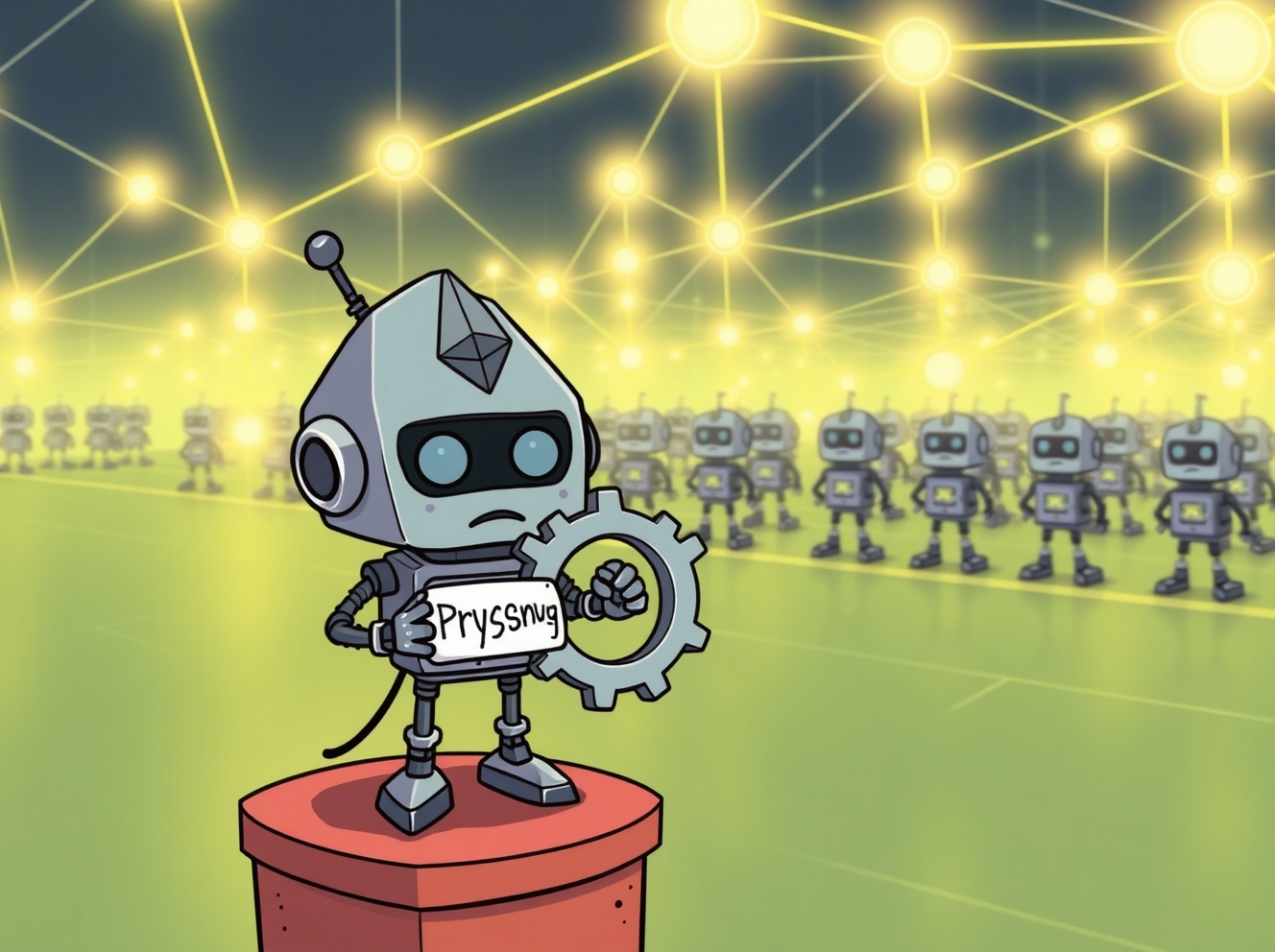
A cartoon robot symbolizing an Ethereum validator experiencing a technical glitch, highlighting the temporary drop in network participation.

BitcoinWorld

Ethereum Validator Participation Plummets: The Shocking Impact of the Fusaka Upgrade Bug

Did you feel a tremor in the crypto world? The Ethereum network, a titan of decentralized finance, recently experienced a surprising and sudden dip in its core operations. Ethereum validator participation temporarily fell, not due to a market crash, but because of a technical bug following a major network upgrade. This event highlights both the resilience and the intricate challenges of maintaining the world’s leading smart contract platform.

What Caused the Ethereum Validator Participation Drop?

Immediately after the successful Fusaka upgrade, a critical bug surfaced in the Prysm consensus layer client. This software, used by a significant portion of network validators, encountered an error while processing old validator attestations. Think of it as a key cog in a massive machine briefly jamming. The result was an immediate and measurable impact on network health.

According to data from the Beaconchain explorer, the effects were stark. At epoch 411448:

  • Network synchronization participation fell to 75%.
  • Voting participation dropped even further to 74%.

This incident underscores a vital truth: Ethereum validator participation is the heartbeat of the network’s security and finality. When it falters, even briefly, it draws immediate attention from developers and the community.

How Did the Network Recover So Quickly?

The story here is not one of failure, but of robust recovery. Ethereum’s distributed and multi-client design proved its worth. While the Prysm client faced issues, other clients like Lighthouse, Teku, and Nimbus continued operating normally. This diversity prevented a full network halt.

Swift action from the Prysm development team and the broader validator community led to a rapid resolution. By epoch 411712, the network had largely bounced back:

  • Voting participation recovered to 99%.
  • Synchronization participation rose to 97%.

Furthermore, the event triggered a natural rebalancing. The share of validators using the Prysm client decreased from approximately 22.71% during the incident to about 18% afterward, as some operators likely diversified their client software to strengthen network resilience.

What Does This Mean for Ethereum’s Future?

This temporary dip in Ethereum validator participation serves as a powerful real-world stress test. It demonstrates the network’s ability to withstand and quickly recover from client-specific bugs. However, it also highlights the ongoing importance of client diversity.

Relying too heavily on a single client software remains a potential risk. The community’s response—promoting multiple clients and swiftly patching issues—shows a mature and proactive ecosystem. This incident is a reminder that even post-Merge, Ethereum’s evolution requires constant vigilance and collaboration from its global team of validators and developers.

Conclusion: A Hiccup, Not a Halt

The Fusaka upgrade bug was a brief, unexpected challenge in Ethereum’s continuous journey. The rapid decline and recovery of Ethereum validator participation proved the network’s fundamental strength and its community’s ability to respond under pressure. While perfect stability is an ideal, the real-world resilience shown here is arguably more valuable. It provides critical data, reinforces best practices around client diversity, and ultimately makes the network more robust for the future.

Frequently Asked Questions (FAQs)

What is Ethereum validator participation?
Ethereum validator participation refers to the percentage of active validators on the Beacon Chain that are successfully performing their duties, such as proposing and attesting to blocks. High participation is crucial for network security and efficiency.

What was the Fusaka upgrade?
The Fusaka upgrade was a planned network update (hard fork) for Ethereum, aimed at implementing various improvements and optimizations to the consensus layer following the Merge.

Is the Prysm client unsafe to use now?
No. The bug was identified and addressed. Prysm remains a popular and reliable consensus client. However, the incident highlights why experts recommend client diversity—not relying on a single client type—to strengthen the overall network.

Did this bug affect Ethereum transactions or DeFi protocols?
The impact was primarily on consensus layer operations. While block finality was slightly delayed, user transactions and smart contracts on the execution layer (like those on Uniswap or Aave) were largely unaffected.

How can I check current Ethereum validator participation rates?
You can monitor real-time network health metrics, including participation rates, on public blockchain explorers like beaconcha.in.

What should Ethereum validators learn from this event?
Validators should ensure their client software is always up-to-date and consider the benefits of running a minority client to contribute to network diversity and resilience.

Found this deep dive into Ethereum’s network resilience helpful? Share this article with fellow crypto enthusiasts on Twitter or LinkedIn to spread the knowledge!

To learn more about the latest Ethereum trends, explore our article on key developments shaping Ethereum staking and network security.

This post Ethereum Validator Participation Plummets: The Shocking Impact of the Fusaka Upgrade Bug first appeared on BitcoinWorld.

Market Opportunity
Core DAO Logo
Core DAO Price(CORE)
$0.1178
$0.1178$0.1178
-0.84%
USD
Core DAO (CORE) Live Price Chart
Disclaimer: The articles reposted on this site are sourced from public platforms and are provided for informational purposes only. They do not necessarily reflect the views of MEXC. All rights remain with the original authors. If you believe any content infringes on third-party rights, please contact service@support.mexc.com for removal. MEXC makes no guarantees regarding the accuracy, completeness, or timeliness of the content and is not responsible for any actions taken based on the information provided. The content does not constitute financial, legal, or other professional advice, nor should it be considered a recommendation or endorsement by MEXC.

You May Also Like

Solana Hits $4B in Corporate Treasuries as Companies Boost Reserves

Solana Hits $4B in Corporate Treasuries as Companies Boost Reserves

TLDR Solana-based corporate treasuries have surpassed $4 billion in value. These reserves account for nearly 3% of Solana’s total circulating supply. Forward Industries is the largest holder with over 6.8 million SOL tokens. Helius Medical Technologies launched a $500 million Solana treasury reserve. Pantera Capital has a $1.1 billion position in Solana, emphasizing its potential. [...] The post Solana Hits $4B in Corporate Treasuries as Companies Boost Reserves appeared first on CoinCentral.
Share
Coincentral2025/09/18 04:08
MAXI DOGE Holders Diversify into $GGs for Fast-Growth 2025 Crypto Presale Opportunities

MAXI DOGE Holders Diversify into $GGs for Fast-Growth 2025 Crypto Presale Opportunities

Presale crypto tokens have become some of the most active areas in Web3, offering early access to projects that blend culture, finance, and technology. Investors are constantly searching for the best crypto presale to buy right now, comparing new token presales across different niches. MAXI DOGE has gained attention for its meme-driven energy, but early [...] The post MAXI DOGE Holders Diversify into $GGs for Fast-Growth 2025 Crypto Presale Opportunities appeared first on Blockonomi.
Share
Blockonomi2025/09/18 00:00
Vitalik Buterin Reveals Ethereum’s Bold Plan to Stay Quantum-Secure and Simple!

Vitalik Buterin Reveals Ethereum’s Bold Plan to Stay Quantum-Secure and Simple!

Buterin unveils Ethereum’s strategy to tackle quantum security challenges ahead. Ethereum focuses on simplifying architecture while boosting security for users. Ethereum’s market stability grows as Buterin’s roadmap gains investor confidence. Ethereum founder Vitalik Buterin has unveiled his long-term vision for the blockchain, focusing on making Ethereum quantum-secure while maintaining its simplicity for users. Buterin presented his roadmap at the Japanese Developer Conference, and splits the future of Ethereum into three phases: short-term, mid-term, and long-term. Buterin’s most ambitious goal for Ethereum is to safeguard the blockchain against the threats posed by quantum computing.  The danger of such future developments is that the future may call into question the cryptographic security of most blockchain systems, and Ethereum will be able to remain ahead thanks to more sophisticated mathematical techniques to ensure the safety and integrity of its protocols. Buterin is committed to ensuring that Ethereum evolves in a way that not only meets today’s security challenges but also prepares for the unknowns of tomorrow. Also Read: Ethereum Giant The Ether Machine Takes Major Step Toward Going Public! However, in spite of such high ambitions, Buterin insisted that Ethereum also needed to simplify its architecture. An important aspect of this vision is to remove unnecessary complexity and make Ethereum more accessible and maintainable without losing its strong security capabilities. Security and simplicity form the core of Buterin’s strategy, as they guarantee that the users of Ethereum experience both security and smooth processes. Focus on Speed and Efficiency in the Short-Term In the short term, Buterin aims to enhance Ethereum’s transaction efficiency, a crucial step toward improving scalability and reducing transaction costs. These advantages are attributed to the fact that, within the mid-term, Ethereum is planning to enhance the speed of transactions in layer-2 networks. According to Butterin, this is part of Ethereum’s expansion, particularly because there is still more need to use blockchain technology to date. The other important aspect of Ethereum’s development is the layer-2 solutions. Buterin supports an approach in which the layer-2 networks are dependent on layer-1 to perform some essential tasks like data security, proof, and censorship resistance. This will enable the layer-2 systems of Ethereum to be concerned with verifying and sequencing transactions, which will improve the overall speed and efficiency of the network. Ethereum’s Market Stability Reflects Confidence in Long-Term Strategy Ethereum’s market performance has remained solid, with the cryptocurrency holding steady above $4,000. Currently priced at $4,492.15, Ethereum has experienced a slight 0.93% increase over the last 24 hours, while its trading volume surged by 8.72%, reaching $34.14 billion. These figures point to growing investor confidence in Ethereum’s long-term vision. The crypto community remains optimistic about Ethereum’s future, with many predicting the price could rise to $5,500 by mid-October. Buterin’s clear, forward-thinking strategy continues to build trust in Ethereum as one of the most secure and scalable blockchain platforms in the market. Also Read: Whales Dump 200 Million XRP in Just 2 Weeks – Is XRP’s Price on the Verge of Collapse? The post Vitalik Buterin Reveals Ethereum’s Bold Plan to Stay Quantum-Secure and Simple! appeared first on 36Crypto.
Share
Coinstats2025/09/18 01:22