A judge ruled that Google’s default search and AI contracts must be renewed every year, ending multi-year deals.A judge ruled that Google’s default search and AI contracts must be renewed every year, ending multi-year deals.

A judge ruled that Google’s default search and AI contracts must be renewed every year

2025/12/06 09:35

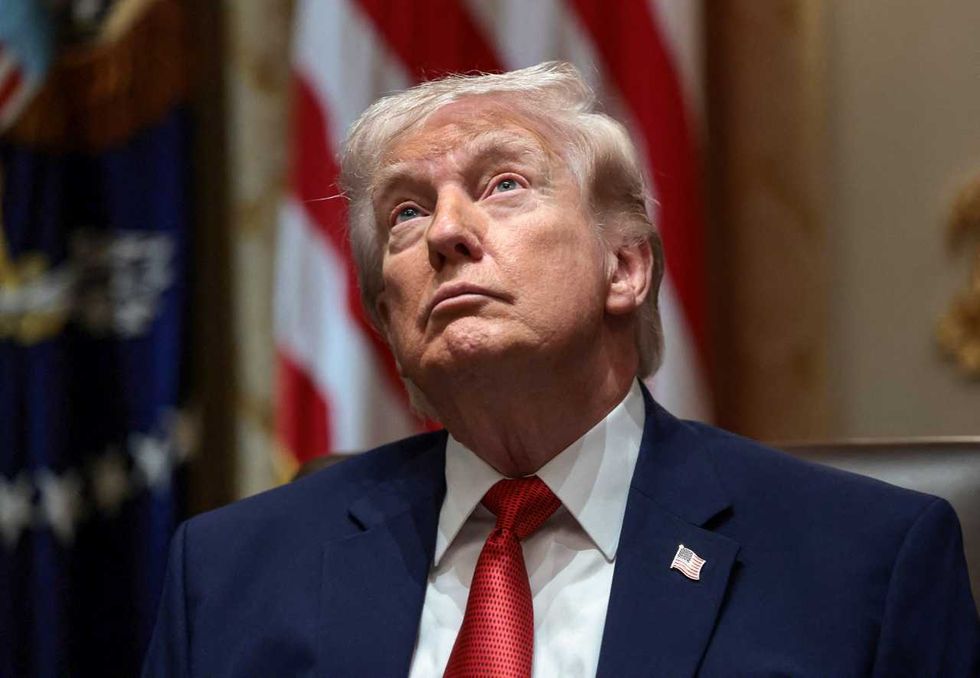
A federal Judge, Amit Mehta, has dealt a significant blow to Google’s long-standing dominance in search distribution, ordering that any contract naming Google’s search engine or AI app as the default on smartphones and other devices must now be renegotiated every year.

Under the new ruling, any agreement that designates Google Search, or its AI-powered services, as the default choice on smartphones, tablets, or browsers can no longer be locked in for a period of multiple years. Instead, such deals must be renewed annually, allowing device makers and other platform operators to reconsider and potentially choose rivals.

Based in Washington, Judge Mehta had earlier consulted the US Justice Department on this ruling before implementing the decision. After careful consideration, the department agreed to conduct this annual review. Notably, this is a primary change that the search giant is required to embrace among other suggested changes. 

The judge arrived at this decision after it was confirmed that the tech firm illegally controlled online search.

Judge Mehta’s ruling opens the door for AI rivals

Following Judge Mehta’s recent decision, the tech industry expressed excitement about a potential positive change in the ecosystem. This is because the yearly renegotiation will grant rivals, particularly those in the expanding generative AI market, the opportunity to compete for crucial positions.

Interestingly, the judge’s final decision has not interfered with Google’s operations. Sources close to the situation mentioned that the tech giant is still allowed to offer its products to Apple Inc., which are useful in the firm’s popular iPhone. It is still permitted to pay other electronics firms, such as Samsung Electronics Co., for default placement. 

However, even with this freedom in place, Mehta still insisted that these contracts needed to be renewed annually. The federal judge issued this reminder after noting that both Google and the US government had demonstrated their ability to comply with the one-year restriction on default contracts. 

Therefore, this situation prompted him to conclude that “the court holds that a strict termination requirement after one year would best serve the purpose of the injunctive relief.” 

The ruling triggered heated debates among individuals. Considering the intense nature of the situation, reporters attempted to reach out to Google and the Justice Department for comments on the topic under discussion to ease this controversy. Nonetheless, they declined to respond.

On the other hand, several analysts weighed in on the matter. They acknowledged that Google’s case was a lengthy legal battle. To support this claim, reports highlighted that Mehta ruled that the tech giant was guilty of illegally monopolizing online search and search advertising markets in August 2024, following a 10-week trial.

Afterwards, he held a second trial in spring 2025, purposefully to examine the Justice Department’s request for the tech company to sell off its popular web browser, Chrome. 

Google plans to appeal Mehta’s initial ruling 

Regarding the Justice Department’s request, sources with knowledge of the situation mentioned that Mehta rejected that request for Google to sell off its popular web browser, Chrome. 

He argued that the best approach to this case was for the search giant to share specific data connected to its search results with rivals. The federal judge arrived at this decision in September 2025.

This ruling provided more details on earlier released reports regarding when the tech firm is required to share its data and to whom it must share the information.

Meanwhile, according to Mehta’s September ruling, Google was not allowed to pay firms to use its Search, Chrome web browser, or Google Play Store exclusively. However, he did not decide to prohibit all payments.

Additionally, it is worth noting that this ruling incorporated parts of suggestions from both Google and the Justice Department, which led the judge to consider issuing a second ruling to clarify certain technical terms from the initial decision. 

Although Google promised to adhere to the judge’s decision, it made clear its intention to appeal Mehta’s original ruling, which implied that its contracts with firms such as Apple and Samsung, under which its search engine is set as the default, break US antitrust laws.

After this announcement was made public, analysts noted that there is a high likelihood that the Justice Department may also think about appealing Mehta’s remedy decision.

The smartest crypto minds already read our newsletter. Want in? Join them.

Disclaimer: The articles reposted on this site are sourced from public platforms and are provided for informational purposes only. They do not necessarily reflect the views of MEXC. All rights remain with the original authors. If you believe any content infringes on third-party rights, please contact service@support.mexc.com for removal. MEXC makes no guarantees regarding the accuracy, completeness, or timeliness of the content and is not responsible for any actions taken based on the information provided. The content does not constitute financial, legal, or other professional advice, nor should it be considered a recommendation or endorsement by MEXC.

You May Also Like

Single Currency-Pegged Tokens Surge Following MiCA Rollout.

Single Currency-Pegged Tokens Surge Following MiCA Rollout.

The post Single Currency-Pegged Tokens Surge Following MiCA Rollout. appeared on BitcoinEthereumNews.com. The euro stablecoin market has rebounded in the year since the European Union’s (EU) Markets in Crypto-Assets Regulation (MiCA) came into force, with market capitalization doubling after regulations governing the tokens rolled out in June 2024, according to a new report. The “Euro Stablecoin Trends Report 2025” from London-based payments processing company Decta points a potential shift for the tokens, whose value is pegged to the single European currency and which have historically struggled to gain traction against their U.S. dollar-pegged counterparts. The swing contrasts with the 48% contraction experienced the year before, according to the report. It also contrasts with a 26% advance in total stablecoin market cap. Euro coin market cap climbed to some $500 million by May 2025, the report said, mainly due to improved issuer obligations and standardized reserve requirements. It’s now $680 million, according to data tracked by CoinGecko. Even so, that’s just a tiny fraction of the $300 billion held in U.S. dollar-pegged tokens, a market dominated by Tether’s USDT with Circle Internet’s (CRCL) USDC in second place. Growth has been especially concentrated among a few standout tokens. EURS, issued by Malta-based Stasis, posted the most dramatic gains, soaring 644% million to $283.9 million by October 2025. Circle Internet’s EURC and EURCV, from Societe Generale’s SG-Forge, also recorded significant gains. Transaction activity surged in parallel. Monthly euro-stablecoin volume rose nearly ninefold after MiCA’s implementation US$3.83 billion. EURC and EURCV were among the biggest beneficiaries, with volume expanding 1,139% and 343% respectively, driven by increased usage in payments, fiat on-ramps and digital-asset trading. Consumer awareness also appears to be climbing. Decta found substantial spikes in search activity across the EU, including 400% growth in Finland and 313.3% in Italy, with smaller but steady increases in markets such as Cyprus and Slovakia. Source: https://www.coindesk.com/business/2025/12/06/hold-euro-stablecoin-market-cap-doubles-in-year-after-mica-decta-says
Share
BitcoinEthereumNews2025/12/06 21:25
BlackRock boosts AI and US equity exposure in $185 billion models

BlackRock boosts AI and US equity exposure in $185 billion models

The post BlackRock boosts AI and US equity exposure in $185 billion models appeared on BitcoinEthereumNews.com. BlackRock is steering $185 billion worth of model portfolios deeper into US stocks and artificial intelligence. The decision came this week as the asset manager adjusted its entire model suite, increasing its equity allocation and dumping exposure to international developed markets. The firm now sits 2% overweight on stocks, after money moved between several of its biggest exchange-traded funds. This wasn’t a slow shuffle. Billions flowed across multiple ETFs on Tuesday as BlackRock executed the realignment. The iShares S&P 100 ETF (OEF) alone brought in $3.4 billion, the largest single-day haul in its history. The iShares Core S&P 500 ETF (IVV) collected $2.3 billion, while the iShares US Equity Factor Rotation Active ETF (DYNF) added nearly $2 billion. The rebalancing triggered swift inflows and outflows that realigned investor exposure on the back of performance data and macroeconomic outlooks. BlackRock raises equities on strong US earnings The model updates come as BlackRock backs the rally in American stocks, fueled by strong earnings and optimism around rate cuts. In an investment letter obtained by Bloomberg, the firm said US companies have delivered 11% earnings growth since the third quarter of 2024. Meanwhile, earnings across other developed markets barely touched 2%. That gap helped push the decision to drop international holdings in favor of American ones. Michael Gates, lead portfolio manager for BlackRock’s Target Allocation ETF model portfolio suite, said the US market is the only one showing consistency in sales growth, profit delivery, and revisions in analyst forecasts. “The US equity market continues to stand alone in terms of earnings delivery, sales growth and sustainable trends in analyst estimates and revisions,” Michael wrote. He added that non-US developed markets lagged far behind, especially when it came to sales. This week’s changes reflect that position. The move was made ahead of the Federal…
Share
BitcoinEthereumNews2025/09/18 01:44