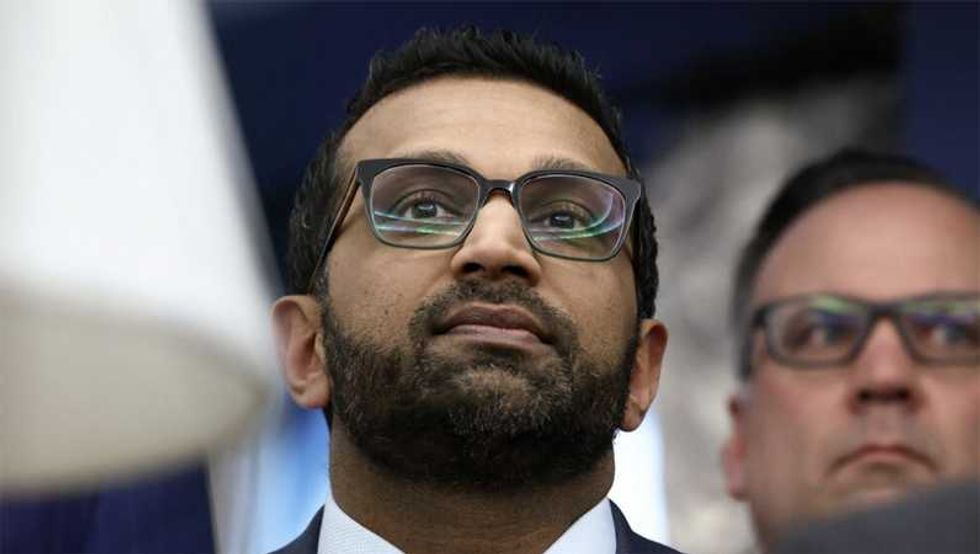
The post Do Kwon Faces 12 Years After 40 billion TerraUSD Market Collapse appeared on BitcoinEthereumNews.com. Do Kwon is set for sentencing on December 11, 2025, in Manhattan federal court. Judge Paul Engelmayer will decide his prison term. U.S. prosecutors are seeking the toughest sentence allowed under his plea deal. They argue Do Kwon’s fraud was large enough to shake parts of the crypto market after the Terra collapse. Do Kwon Prosecutors Seek 12 Years Term According to Bloomberg report,  federal prosecutors said the scale of the crime was extreme. They told Judge Engelmayer it reached far beyond one project’s failure. The government said the shock damaged retail holders and sent stress through crypto trading and lending venues. Do Kwon pleaded guilty in August 2025 to one count of conspiracy to commit commodities fraud, securities fraud, and wire fraud, plus one count of wire fraud. The Justice Department said the two counts carry a combined maximum of 25 years. Under the plea arrangement, prosecutors can seek up to 12 years. Prosecutors are asking for that 12-year term. They said Do Kwon lied to users and investors about key claims tied to the Terra ecosystem. They told the court the deception helped trigger the 2022 crash of TerraUSD and Luna, which was widely described as a roughly $40 billion collapse. Kwon is pushing for less time. In a separate filing reported last week, he said a five-year term would be sufficient. The request puts Kwon and the government on opposite sides ahead of the sentencing date. Forfeiture, No Restitution, and the Extradition Path The plea requires Do Kwon to forfeit more than $19 million in proceeds, including an interest tied to Terraform and its cryptocurrencies, according to the Justice Department. Prosecutors have also said they are not pursuing restitution. They argued that losses would be hard to calculate across a large and global group of victims. The… The post Do Kwon Faces 12 Years After 40 billion TerraUSD Market Collapse appeared on BitcoinEthereumNews.com. Do Kwon is set for sentencing on December 11, 2025, in Manhattan federal court. Judge Paul Engelmayer will decide his prison term. U.S. prosecutors are seeking the toughest sentence allowed under his plea deal. They argue Do Kwon’s fraud was large enough to shake parts of the crypto market after the Terra collapse. Do Kwon Prosecutors Seek 12 Years Term According to Bloomberg report,  federal prosecutors said the scale of the crime was extreme. They told Judge Engelmayer it reached far beyond one project’s failure. The government said the shock damaged retail holders and sent stress through crypto trading and lending venues. Do Kwon pleaded guilty in August 2025 to one count of conspiracy to commit commodities fraud, securities fraud, and wire fraud, plus one count of wire fraud. The Justice Department said the two counts carry a combined maximum of 25 years. Under the plea arrangement, prosecutors can seek up to 12 years. Prosecutors are asking for that 12-year term. They said Do Kwon lied to users and investors about key claims tied to the Terra ecosystem. They told the court the deception helped trigger the 2022 crash of TerraUSD and Luna, which was widely described as a roughly $40 billion collapse. Kwon is pushing for less time. In a separate filing reported last week, he said a five-year term would be sufficient. The request puts Kwon and the government on opposite sides ahead of the sentencing date. Forfeiture, No Restitution, and the Extradition Path The plea requires Do Kwon to forfeit more than $19 million in proceeds, including an interest tied to Terraform and its cryptocurrencies, according to the Justice Department. Prosecutors have also said they are not pursuing restitution. They argued that losses would be hard to calculate across a large and global group of victims. The…

Do Kwon Faces 12 Years After 40 billion TerraUSD Market Collapse

2025/12/06 11:41

Do Kwon is set for sentencing on December 11, 2025, in Manhattan federal court. Judge Paul Engelmayer will decide his prison term. U.S. prosecutors are seeking the toughest sentence allowed under his plea deal. They argue Do Kwon’s fraud was large enough to shake parts of the crypto market after the Terra collapse.

Do Kwon Prosecutors Seek 12 Years Term

According to Bloomberg report,  federal prosecutors said the scale of the crime was extreme. They told Judge Engelmayer it reached far beyond one project’s failure. The government said the shock damaged retail holders and sent stress through crypto trading and lending venues.

Do Kwon pleaded guilty in August 2025 to one count of conspiracy to commit commodities fraud, securities fraud, and wire fraud, plus one count of wire fraud. The Justice Department said the two counts carry a combined maximum of 25 years. Under the plea arrangement, prosecutors can seek up to 12 years.

Prosecutors are asking for that 12-year term. They said Do Kwon lied to users and investors about key claims tied to the Terra ecosystem. They told the court the deception helped trigger the 2022 crash of TerraUSD and Luna, which was widely described as a roughly $40 billion collapse.

Kwon is pushing for less time. In a separate filing reported last week, he said a five-year term would be sufficient. The request puts Kwon and the government on opposite sides ahead of the sentencing date.

Forfeiture, No Restitution, and the Extradition Path

The plea requires Do Kwon to forfeit more than $19 million in proceeds, including an interest tied to Terraform and its cryptocurrencies, according to the Justice Department. Prosecutors have also said they are not pursuing restitution. They argued that losses would be hard to calculate across a large and global group of victims.

The case came to New York after a cross-border pursuit. Kwon was a arrested in March 2023 when he tried to travel to Dubai from Montenegro using forged papers. U.S. and South Korean officials sought extradition in an extended court process.

Source: https://coingape.com/do-kwon-faces-12-years-after-40-billion-terrausd-market-collapse/

Disclaimer: The articles reposted on this site are sourced from public platforms and are provided for informational purposes only. They do not necessarily reflect the views of MEXC. All rights remain with the original authors. If you believe any content infringes on third-party rights, please contact service@support.mexc.com for removal. MEXC makes no guarantees regarding the accuracy, completeness, or timeliness of the content and is not responsible for any actions taken based on the information provided. The content does not constitute financial, legal, or other professional advice, nor should it be considered a recommendation or endorsement by MEXC.

You May Also Like

Polygon Tops RWA Rankings With $1.1B in Tokenized Assets

Polygon Tops RWA Rankings With $1.1B in Tokenized Assets

The post Polygon Tops RWA Rankings With $1.1B in Tokenized Assets appeared on BitcoinEthereumNews.com. Key Notes A new report from Dune and RWA.xyz highlights Polygon’s role in the growing RWA sector. Polygon PoS currently holds $1.13 billion in RWA Total Value Locked (TVL) across 269 assets. The network holds a 62% market share of tokenized global bonds, driven by European money market funds. The Polygon POL $0.25 24h volatility: 1.4% Market cap: $2.64 B Vol. 24h: $106.17 M network is securing a significant position in the rapidly growing tokenization space, now holding over $1.13 billion in total value locked (TVL) from Real World Assets (RWAs). This development comes as the network continues to evolve, recently deploying its major “Rio” upgrade on the Amoy testnet to enhance future scaling capabilities. This information comes from a new joint report on the state of the RWA market published on Sept. 17 by blockchain analytics firm Dune and data platform RWA.xyz. The focus on RWAs is intensifying across the industry, coinciding with events like the ongoing Real-World Asset Summit in New York. Sandeep Nailwal, CEO of the Polygon Foundation, highlighted the findings via a post on X, noting that the TVL is spread across 269 assets and 2,900 holders on the Polygon PoS chain. The Dune and https://t.co/W6WSFlHoQF report on RWA is out and it shows that RWA is happening on Polygon. Here are a few highlights: – Leading in Global Bonds: Polygon holds 62% share of tokenized global bonds (driven by Spiko’s euro MMF and Cashlink euro issues) – Spiko U.S.… — Sandeep | CEO, Polygon Foundation (※,※) (@sandeepnailwal) September 17, 2025 Key Trends From the 2025 RWA Report The joint publication, titled “RWA REPORT 2025,” offers a comprehensive look into the tokenized asset landscape, which it states has grown 224% since the start of 2024. The report identifies several key trends driving this expansion. According to…
Share
BitcoinEthereumNews2025/09/18 00:40
Team Launches AI Tools to Boost KYC and Mainnet Migration for Investors

Team Launches AI Tools to Boost KYC and Mainnet Migration for Investors

The post Team Launches AI Tools to Boost KYC and Mainnet Migration for Investors appeared on BitcoinEthereumNews.com. The Pi Network team has announced the implementation of upgrades to simplify verification and increase the pace of its Mainnet migration. This comes before the token unlock happening this December. Pi Network Integrates AI Tools to Boost KYC Process In a recent blog post, the Pi team said it has improved its KYC process with the same AI technology as Fast Track KYC. This will cut the number of applications waiting for human review by 50%. As a result, more Pioneers will be able to reach Mainnet eligibility sooner. Fast Track KYC was first introduced in September to help new and non-users set up a Mainnet wallet. This was in an effort to reduce the long wait times caused by the previous rule. The old rule required completing 30 mining sessions before qualifying for verification. Fast Track cannot enable migration on its own. However, it is now fully part of the Standard KYC process which allows access to Mainnet. This comes at a time when the network is set for another unlock in December. About 190 million tokens will unlock worth approximately $43 million at current estimates.  These updates will help more Pioneers finish their migration faster especially when there are fewer validators available. This integration allows Pi’s validation resources to serve as a platform utility. In the future, applications that need identity verification or human-verified participation can use this system. Team Releases Validator Rewards Update The Pi Network team provided an update about validator rewards. They expect to distribute the first rewards by the end of Q1 2026. This delay happened because they needed to analyze a large amount of data collected since 2021. Currently, 17.5 million users have completed the KYC process, and 15.7 million users have moved to the Mainnet. However, there are around 3 million users…
Share
BitcoinEthereumNews2025/12/06 16:08
Taiko Makes Chainlink Data Streams Its Official Oracle

Taiko Makes Chainlink Data Streams Its Official Oracle

The post Taiko Makes Chainlink Data Streams Its Official Oracle appeared on BitcoinEthereumNews.com. Key Notes Taiko has officially integrated Chainlink Data Streams for its Layer 2 network. The integration provides developers with high-speed market data to build advanced DeFi applications. The move aims to improve security and attract institutional adoption by using Chainlink’s established infrastructure. Taiko, an Ethereum-based ETH $4 514 24h volatility: 0.4% Market cap: $545.57 B Vol. 24h: $28.23 B Layer 2 rollup, has announced the integration of Chainlink LINK $23.26 24h volatility: 1.7% Market cap: $15.75 B Vol. 24h: $787.15 M Data Streams. The development comes as the underlying Ethereum network continues to see significant on-chain activity, including large sales from ETH whales. The partnership establishes Chainlink as the official oracle infrastructure for the network. It is designed to provide developers on the Taiko platform with reliable and high-speed market data, essential for building a wide range of decentralized finance (DeFi) applications, from complex derivatives platforms to more niche projects involving unique token governance models. According to the project’s official announcement on Sept. 17, the integration enables the creation of more advanced on-chain products that require high-quality, tamper-proof data to function securely. Taiko operates as a “based rollup,” which means it leverages Ethereum validators for transaction sequencing for strong decentralization. Boosting DeFi and Institutional Interest Oracles are fundamental services in the blockchain industry. They act as secure bridges that feed external, off-chain information to on-chain smart contracts. DeFi protocols, in particular, rely on oracles for accurate, real-time price feeds. Taiko leadership stated that using Chainlink’s infrastructure aligns with its goals. The team hopes the partnership will help attract institutional crypto investment and support the development of real-world applications, a goal that aligns with Chainlink’s broader mission to bring global data on-chain. Integrating real-world economic information is part of a broader industry trend. Just last week, Chainlink partnered with the Sei…
Share
BitcoinEthereumNews2025/09/18 03:34