

Bitcoin (BTC) Price: Why Tuesday’s FOMC Decision Could Spark a Major Move?
TLDR
- Bitcoin traded around $90,639 on Friday, down 1.4%, after dropping earlier in the week to nearly $84,000
- Traders are waiting for the Fed’s rate cut decision next week and Friday’s PCE inflation report
- Bank of America will let wealth advisers recommend crypto ETFs to clients starting January 2026
- Mid-size Bitcoin holders with 100 to 1,000 BTC are actively accumulating during the current price range
- The Fear and Greed Index sits at 22, showing rising fear levels as the market awaits the FOMC meeting
Bitcoin traded at $90,639 on Friday, down 1.4% from earlier levels. The world’s largest cryptocurrency maintained most of its gains from a mid-week recovery.
 Bitcoin (BTC) Price
Earlier this week, Bitcoin dropped toward $84,000. This marked its lowest level in nearly a month. A wave of risk-off sentiment triggered heavy liquidations across crypto markets.
The recovery followed growing expectations that the Federal Reserve could cut rates next week. Thursday’s jobless claims data showed weekly filings fell to their lowest level in more than three years. This reinforced the view that labor market conditions are cooling.
Lower borrowing costs typically benefit risk assets like cryptocurrencies. However, traders remained cautious ahead of Friday’s Personal Consumption Expenditures inflation report. The PCE is the Fed’s preferred price gauge.
A softer reading could strengthen the case for a rate cut. Analyst Michael van de Poppe predicts Bitcoin will stay in a tight range until Tuesday. He stated the price will remain between $92,000 and $85,000 until the FOMC meeting.
Bank of America Opens Door to Crypto
Bank of America announced Thursday it will allow wealth advisers to recommend crypto allocations starting January 2026. This marks a major shift for one of Wall Street’s largest banks.
Advisers at Bank of America Private Bank, Merrill, and Merrill Edge will suggest regulated crypto exchange-traded products. The recommended allocation ranges from 1% to 4% of a client’s portfolio.
The bank cited growing client interest in digital assets. Starting January 5, Bank of America strategists will cover four major Bitcoin ETFs. These include offerings from Bitwise, Fidelity, Grayscale and BlackRock.
Mid-Size Holders Accumulate Bitcoin
On-chain data from CryptoQuant shows addresses holding 100 to 1,000 BTC are accumulating more tokens. These mid-size holders sit between retail traders and large institutional whales.
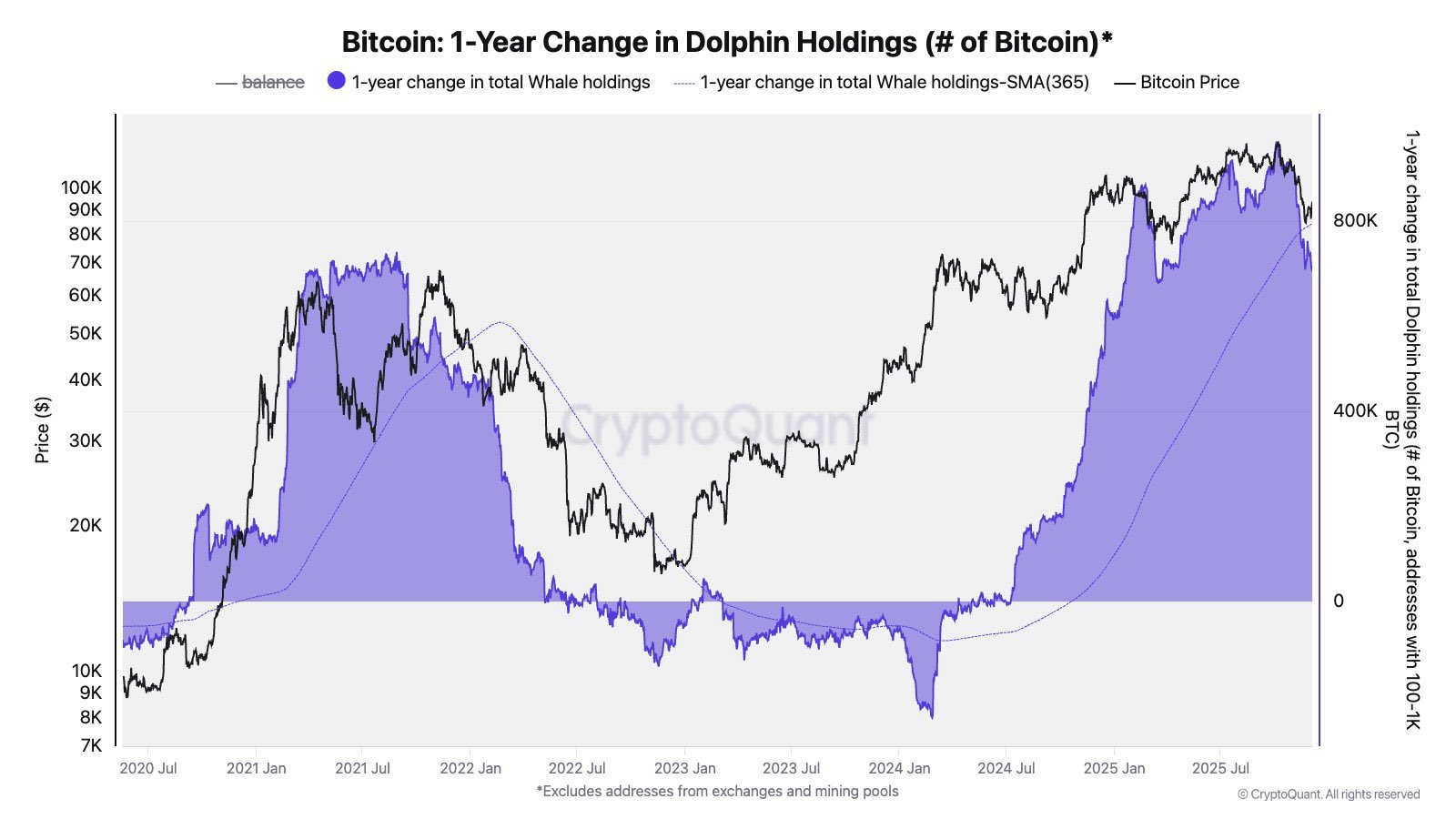 Source: CryptoQuant
The one-year change in their combined holdings has pushed higher during the recent consolidation. This trend shows accumulation continues even as Bitcoin trades in a narrow band.
Bitcoin briefly rose above $90,000 after the latest U.S. PCE inflation data. The PCE Price index increased by 2.8%. However, the price movement was temporary.
BCA Research noted that Bitcoin’s drawdown reflects a capitulation of excess speculation rather than a shift in fundamentals. Treasury-company premiums have flipped to discounts. Supply-in-profit has fallen to levels consistent with prior lows.
The Fear and Greed Index currently sits at 22. This suggests rising fear levels and weak confidence among traders. Bitcoin posted minimal momentum across key timeframes.
The price is down over the past week and month. Institutional inflows have slowed compared with earlier quarters. This leaves Bitcoin more vulnerable to rapid price swings driven by derivatives activity.
Van de Poppe indicated the overall market is not showing strong confidence. This weak market confidence continues to influence Bitcoin and most altcoins. Bitcoin has not shown any movement in the past day, a trend that frequently happens before macro announcements.
The post Bitcoin (BTC) Price: Why Tuesday’s FOMC Decision Could Spark a Major Move? appeared first on CoinCentral.
You May Also Like

XAG/USD Holds Critical $68.00 Support As 100-SMA Breakdown Threatens

Crypto Market Watch: Nexchain Presale Expands as BTC Stays at $116K, AVAX $30


