

Pat Gelsinger’s Revolutionary Bet: How xLight’s $150M Government Deal Could Resurrect Moore’s Law
BitcoinWorld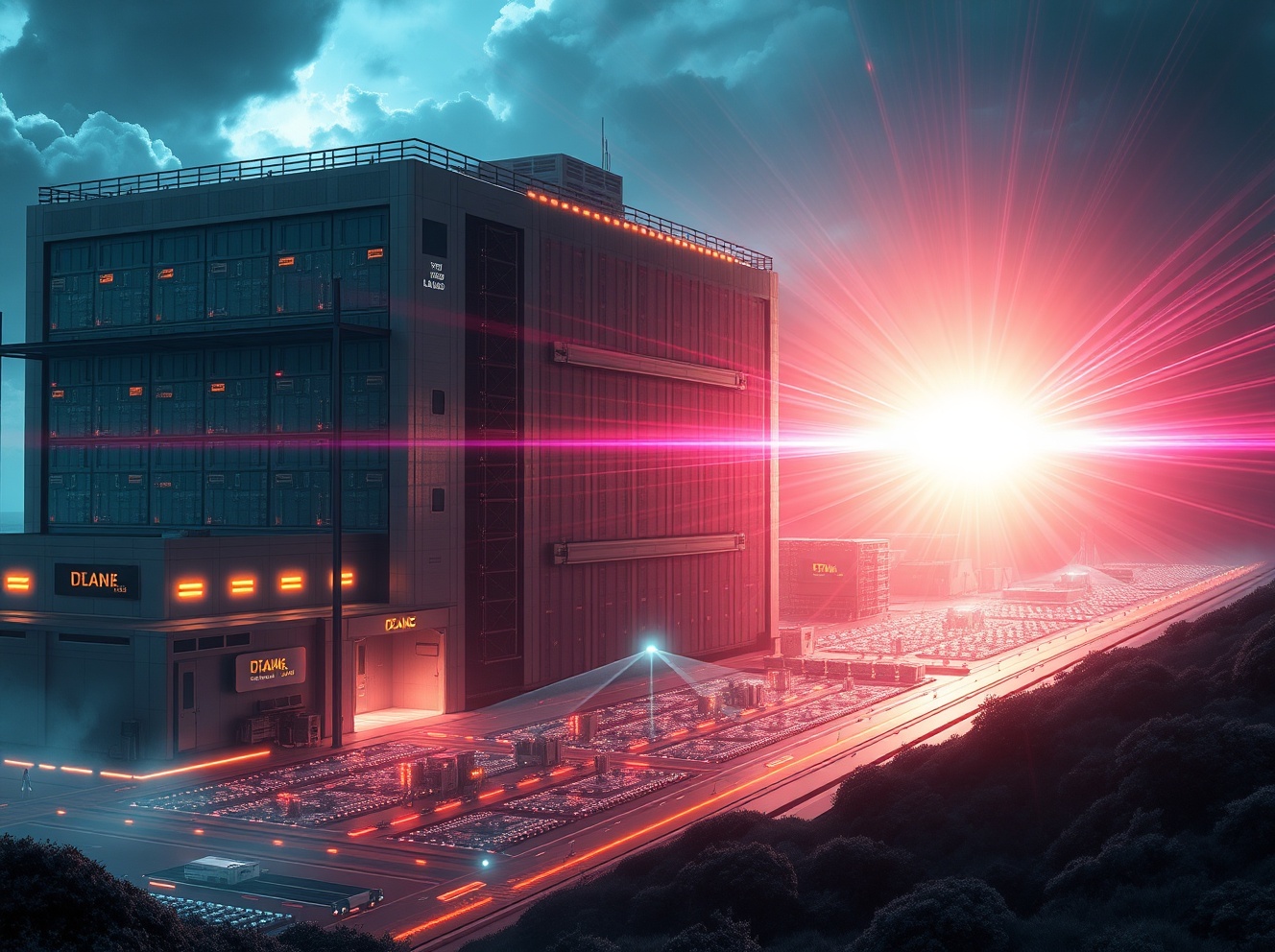
Pat Gelsinger’s Revolutionary Bet: How xLight’s $150M Government Deal Could Resurrect Moore’s Law
In the high-stakes world of semiconductor manufacturing, a surprising alliance is forming between Silicon Valley veterans and the US government. Pat Gelsinger, the former Intel CEO who spent 35 years at the chip giant, is now leading a startup called xLight that just secured a preliminary deal for up to $150 million from the US Commerce Department. This isn’t just another funding round—it’s a bold attempt to solve the semiconductor industry’s most critical bottleneck and potentially resurrect Moore’s Law from its perceived slowdown.
Why Pat Gelsinger Bet His Reputation on xLight
A year after his departure from Intel, Pat Gelsinger hasn’t slowed down. Now a general partner at Playground Global, he’s working with 10 startups, but xLight has captured his primary attention. “I have this long-term mission to continue to see Moore’s law in the semiconductor industry,” Gelsinger said at a recent StrictlyVC event. “We think this is the technology that will wake up Moore’s law.”
What makes xLight so special? The startup is developing massive “free electron lasers” powered by particle accelerators that could revolutionize semiconductor lithography—the process of etching microscopic patterns onto silicon wafers. Gelsinger explains the significance: “About half of the capital goes into lithography. In the middle of a lithography machine is light… this ability to keep innovating for shorter wavelength, higher power light is the essence of being able to continue to innovate for more advanced semiconductors.”
The Government’s Unprecedented Role in Semiconductor Innovation
The xLight deal represents a significant shift in how the US approaches technological competitiveness. The Commerce Department is set to become xLight’s largest shareholder through funding from the Chips and Science Act. This arrangement has raised eyebrows in Silicon Valley, where free-market principles have long been sacred.
California Governor Gavin Newsom captured the industry’s unease: “What the hell happened to free enterprise?” But Gelsinger remains unapologetic about the government partnership. “I measure it by the results,” he said. “Does it drive the results that we want and that we need to reinvigorate our industrial policies? Many of our competitive countries don’t have such debates. They’re moving forward with the policies that are necessary to accomplish their competitive outcomes.”
| Key Aspect | Traditional Approach | xLight’s Innovation |
|---|---|---|
| Light Source | Integrated into each machine | External utility-scale system |
| Scale | Machine-sized components | Football field-sized facilities |
| Wavelength | 13.5 nanometers (current EUV) | Targeting 2 nanometers |
| Power Source | Conventional lasers | Free electron lasers with particle accelerators |
How xLight’s Technology Challenges ASML’s Dominance
The ASML competition represents one of xLight’s biggest challenges. ASML, the Dutch company, currently dominates the extreme ultraviolet lithography (EUV) market with near-total control. xLight’s approach fundamentally differs from ASML’s integrated systems.
Nicholas Kelez, xLight’s founder and CEO, explains their revolutionary concept: “We go away from building an integrated light source with the tool, which is what ASML does now and that fundamentally constrains you to make it smaller and less powerful. We treat light the same way you treat electrical power or HVAC. We build outside the fab at utility scale and then distribute in.”
The company plans to build machines roughly 100 meters by 50 meters—about the size of a football field—that will sit outside semiconductor fabrication plants. These free electron lasers would generate extreme ultraviolet light at wavelengths as precise as 2 nanometers, far more powerful than the 13.5 nanometer wavelengths currently used by ASML.
The Road Ahead: Can This xLight Startup Deliver?
xLight faces significant hurdles on its path to commercialization. The company aims to produce its first silicon wafers by 2028 and have its first commercial system online by 2029. However, several critical questions remain unanswered:
- Customer commitments: No major chipmakers have committed to purchasing xLight’s technology yet
- ASML integration: While discussions are ongoing, ASML hasn’t formally committed to buying the technology
- Competition: Other startups like Substrate (backed by Peter Thiel) are pursuing similar approaches
- Technical challenges: Building football field-sized laser facilities presents unprecedented engineering challenges
Gelsinger acknowledges the uncertainty: “We’ve agreed in principle on the terms, but like any of these contracts, there’s still work to get done.” When asked whether the $150 million funding could end up being double the announced amount—or potentially not materialize at all—he remained candid about the ongoing negotiations.
FAQs: Understanding the xLight Revolution
Who is Pat Gelsinger and why is he involved with xLight?
Pat Gelsinger spent 35 years across two stints at Intel, eventually serving as CEO before his departure in late 2023. He’s now a general partner at Playground Global and serves as xLight’s executive chairman, bringing his semiconductor expertise to the startup.
What makes xLight’s technology different from ASML’s?
While ASML builds integrated lithography machines with built-in light sources, xLight treats light as a utility. They plan to build massive free electron laser facilities outside fabs and distribute the light to multiple machines, potentially achieving shorter wavelengths and higher power.
How does this relate to Moore’s Law?
Moore’s Law predicts that computing power should double every two years. As chip features shrink, better lithography technology becomes essential. xLight’s potentially more powerful light sources could enable continued miniaturization, thus sustaining Moore’s Law.
What role does the US government play?
The Commerce Department is providing up to $150 million through the Chips and Science Act, becoming xLight’s largest shareholder. This represents a shift toward more direct government involvement in strategic technologies.
Who is Nicholas Kelez?
Nicholas Kelez founded xLight after leading quantum computer development at PsiQuantum and spending two decades building large-scale X-ray science facilities at national labs including SLAC and Lawrence Berkeley.
The Bottom Line: A Calculated Gamble with National Implications
Pat Gelsinger’s bet on xLight represents more than just another venture investment—it’s a strategic move with implications for national competitiveness, technological sovereignty, and the future of computing. The partnership between a Silicon Valley veteran and the US government signals a new era in industrial policy, where the lines between public and private sector innovation are blurring.
For Gelsinger, this is personal. “My mind is so stretched here, and I’m just grateful that the Playground team would have me to join them and let me make them smarter and be a rookie venture capitalist,” he said. Then he added with a grin: “And I gave my wife back her weekends.”
Whether xLight succeeds or fails, its story illuminates the changing dynamics of technological innovation in an era of geopolitical competition. The semiconductor wars have entered a new phase, and the battlefield now includes government boardrooms as well as research laboratories.
To learn more about the latest semiconductor and AI technology trends, explore our articles on key developments shaping the future of computing and artificial intelligence adoption.
This post Pat Gelsinger’s Revolutionary Bet: How xLight’s $150M Government Deal Could Resurrect Moore’s Law first appeared on BitcoinWorld.


You May Also Like

Bitcoin Struggles Below Resistance While Fibonacci Support Comes Into Focus
Analyst: STRC preferreds mispriced amid major dislocation risk
![[OPINION] With Bato dela Rosa’s escape, senators risk getting own warrants](https://www.rappler.com/tachyon/2026/05/ronald-bato-dela-rosa-senate-plenary-may-12-2026-004-scaled.jpg?resize=75%2C75&crop=538px%2C0px%2C1707px%2C1707px)



