Bitcoin’s recent movement has left many traders waiting for signs of an altcoin season, and a post shared by crypto analyst Crypto Nova offers a different way to understand when this will actually begin.  The explanation, supported by charts from 2017 and 2021, shows that altcoins have historically performed their best while Bitcoin’s price action was already climbing, not after it had reached its peak. The charts she shared show how those earlier cycles unfolded and why the timing of Bitcoin’s surge has been the important factor each time. Altseasons Form During Bitcoin’s Strongest Surges This outlook goes against the projection of many crypto analysts, who have been waiting for a downturn in the Bitcoin dominance characterized by outflows from Bitcoin and into the altcoin market.   Related Reading: Altcoins Struggle, But Technical Analysis Says A Major Opportunity Is Forming However, careful technical analysis shows that the largest and most explosive altcoin seasons did not occur after Bitcoin had completed its run. Instead, they developed while Bitcoin was already pushing to new price highs.  The 2017 cycle illustrated this the most clearly. Bitcoin dominance began to decline during an altcoin season, even as BTC surged from around $1,000 to nearly $20,000. The chart shows a waterfall-like collapse in dominance from 95% in early 2017 to below 40% in early 2018, happening at the exact moment when Bitcoin was rising massively. Altcoins were already outperforming the leading cryptocurrency long before Bitcoin topped just below $20,000. A similar pattern played out in 2021. Bitcoin dominance peaked in January of that year and started falling while the Bitcoin price climbed from roughly $30,000 to its mid-cycle high above $60,000. Although altcoins took a little longer to increase compared to 2017, the bulk of their performance still arrived during Bitcoin’s rapid upward trajectory, not after it had stalled or reversed.  The charts below highlight this synchronicity clearly: dominance moves lower while Bitcoin candles continue to stretch higher. Bitcoin Needs A Confirmed Bottom And A New Surge Nova noted that traders are making a mistake by focusing solely on Bitcoin dominance without considering Bitcoin’s broader market structure. It is important to note that dominance does not drop simply because Bitcoin moves sideways or reaches a peak.  Related Reading: Altcoin Season: Here’s What Happens If The Bitcoin Price Sees A Parabolic Move To $200,000 Instead, dominance mostly declines when Bitcoin is in a strong, sustained uptrend, but the altcoin niche is witnessing more inflows compared to the leading cryptocurrency. This means an altcoin season is unlikely to start until Bitcoin prints a confirmed bottom and its rally convinces inflows into altcoins.  As noted by the analyst, Bitcoin is currently in a downtrend, and without a shift in trend, dominance metrics alone cannot trigger altcoin momentum. This viewpoint challenges the frequent claims circulating online that altseason is here or just about to begin. As it stands, the crypto industry is still logged into a Bitcoin season, with the CMC altcoin season index sitting at 19 and the CMC Bitcoin dominance at 58.7%. Featured image from Adobe Stock, chart from Tradingview.comBitcoin’s recent movement has left many traders waiting for signs of an altcoin season, and a post shared by crypto analyst Crypto Nova offers a different way to understand when this will actually begin.  The explanation, supported by charts from 2017 and 2021, shows that altcoins have historically performed their best while Bitcoin’s price action was already climbing, not after it had reached its peak. The charts she shared show how those earlier cycles unfolded and why the timing of Bitcoin’s surge has been the important factor each time. Altseasons Form During Bitcoin’s Strongest Surges This outlook goes against the projection of many crypto analysts, who have been waiting for a downturn in the Bitcoin dominance characterized by outflows from Bitcoin and into the altcoin market.   Related Reading: Altcoins Struggle, But Technical Analysis Says A Major Opportunity Is Forming However, careful technical analysis shows that the largest and most explosive altcoin seasons did not occur after Bitcoin had completed its run. Instead, they developed while Bitcoin was already pushing to new price highs.  The 2017 cycle illustrated this the most clearly. Bitcoin dominance began to decline during an altcoin season, even as BTC surged from around $1,000 to nearly $20,000. The chart shows a waterfall-like collapse in dominance from 95% in early 2017 to below 40% in early 2018, happening at the exact moment when Bitcoin was rising massively. Altcoins were already outperforming the leading cryptocurrency long before Bitcoin topped just below $20,000. A similar pattern played out in 2021. Bitcoin dominance peaked in January of that year and started falling while the Bitcoin price climbed from roughly $30,000 to its mid-cycle high above $60,000. Although altcoins took a little longer to increase compared to 2017, the bulk of their performance still arrived during Bitcoin’s rapid upward trajectory, not after it had stalled or reversed.  The charts below highlight this synchronicity clearly: dominance moves lower while Bitcoin candles continue to stretch higher. Bitcoin Needs A Confirmed Bottom And A New Surge Nova noted that traders are making a mistake by focusing solely on Bitcoin dominance without considering Bitcoin’s broader market structure. It is important to note that dominance does not drop simply because Bitcoin moves sideways or reaches a peak.  Related Reading: Altcoin Season: Here’s What Happens If The Bitcoin Price Sees A Parabolic Move To $200,000 Instead, dominance mostly declines when Bitcoin is in a strong, sustained uptrend, but the altcoin niche is witnessing more inflows compared to the leading cryptocurrency. This means an altcoin season is unlikely to start until Bitcoin prints a confirmed bottom and its rally convinces inflows into altcoins.  As noted by the analyst, Bitcoin is currently in a downtrend, and without a shift in trend, dominance metrics alone cannot trigger altcoin momentum. This viewpoint challenges the frequent claims circulating online that altseason is here or just about to begin. As it stands, the crypto industry is still logged into a Bitcoin season, with the CMC altcoin season index sitting at 19 and the CMC Bitcoin dominance at 58.7%. Featured image from Adobe Stock, chart from Tradingview.com

Here’s When The Altcoin Season Happens Following The Bitcoin Cycle

2025/12/08 23:00

Bitcoin’s recent movement has left many traders waiting for signs of an altcoin season, and a post shared by crypto analyst Crypto Nova offers a different way to understand when this will actually begin. 

The explanation, supported by charts from 2017 and 2021, shows that altcoins have historically performed their best while Bitcoin’s price action was already climbing, not after it had reached its peak. The charts she shared show how those earlier cycles unfolded and why the timing of Bitcoin’s surge has been the important factor each time.

Altseasons Form During Bitcoin’s Strongest Surges

This outlook goes against the projection of many crypto analysts, who have been waiting for a downturn in the Bitcoin dominance characterized by outflows from Bitcoin and into the altcoin market.  

However, careful technical analysis shows that the largest and most explosive altcoin seasons did not occur after Bitcoin had completed its run. Instead, they developed while Bitcoin was already pushing to new price highs. 

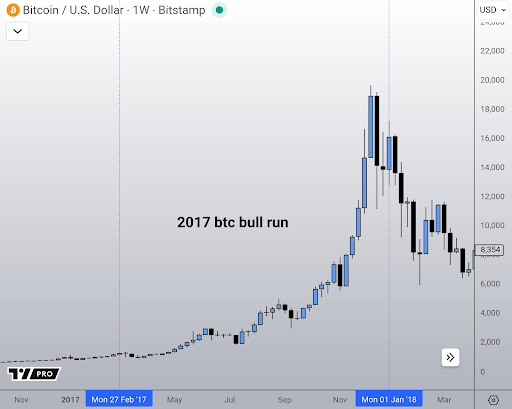
The 2017 cycle illustrated this the most clearly. Bitcoin dominance began to decline during an altcoin season, even as BTC surged from around $1,000 to nearly $20,000. The chart shows a waterfall-like collapse in dominance from 95% in early 2017 to below 40% in early 2018, happening at the exact moment when Bitcoin was rising massively. Altcoins were already outperforming the leading cryptocurrency long before Bitcoin topped just below $20,000.
Bitcoin

A similar pattern played out in 2021. Bitcoin dominance peaked in January of that year and started falling while the Bitcoin price climbed from roughly $30,000 to its mid-cycle high above $60,000. Although altcoins took a little longer to increase compared to 2017, the bulk of their performance still arrived during Bitcoin’s rapid upward trajectory, not after it had stalled or reversed. 

The charts below highlight this synchronicity clearly: dominance moves lower while Bitcoin candles continue to stretch higher.

Bitcoin Needs A Confirmed Bottom And A New Surge

Nova noted that traders are making a mistake by focusing solely on Bitcoin dominance without considering Bitcoin’s broader market structure. It is important to note that dominance does not drop simply because Bitcoin moves sideways or reaches a peak. 

Instead, dominance mostly declines when Bitcoin is in a strong, sustained uptrend, but the altcoin niche is witnessing more inflows compared to the leading cryptocurrency. This means an altcoin season is unlikely to start until Bitcoin prints a confirmed bottom and its rally convinces inflows into altcoins. 

As noted by the analyst, Bitcoin is currently in a downtrend, and without a shift in trend, dominance metrics alone cannot trigger altcoin momentum. This viewpoint challenges the frequent claims circulating online that altseason is here or just about to begin.

As it stands, the crypto industry is still logged into a Bitcoin season, with the CMC altcoin season index sitting at 19 and the CMC Bitcoin dominance at 58.7%.

Altcoin
Disclaimer: The articles reposted on this site are sourced from public platforms and are provided for informational purposes only. They do not necessarily reflect the views of MEXC. All rights remain with the original authors. If you believe any content infringes on third-party rights, please contact service@support.mexc.com for removal. MEXC makes no guarantees regarding the accuracy, completeness, or timeliness of the content and is not responsible for any actions taken based on the information provided. The content does not constitute financial, legal, or other professional advice, nor should it be considered a recommendation or endorsement by MEXC.

You May Also Like

Bitcoin Has Taken Gold’s Role In Today’s World, Eric Trump Says

Bitcoin Has Taken Gold’s Role In Today’s World, Eric Trump Says

Eric Trump on Tuesday described Bitcoin as a “modern-day gold,” calling it a liquid store of value that can act as a hedge to real estate and other assets. Related Reading: XRP’s Biggest Rally Yet? Analyst Projects $20+ In October 2025 According to reports, the remark came during a TV appearance on CNBC’s Squawk Box, tied to the launch of American Bitcoin, the mining and treasury firm he helped start. Company Holdings And Strategy Based on public filings and company summaries, American Bitcoin has accumulated 2,443 BTC on its balance sheet. That stash has been valued in the low hundreds of millions of dollars at recent spot prices. The firm mixes large-scale mining with the goal of holding Bitcoin as a strategic reserve, which it says will help it grow both production and asset holdings over time. Eric Trump’s comments were direct. He told viewers that institutions are treating Bitcoin more like a store of value than a fringe idea, and he warned firms that resist blockchain adoption. The tone was strong at times, and the line about Bitcoin being a modern equivalent of gold was used to frame American Bitcoin’s role as both miner and holder.   Eric Trump has said: bitcoin is modern-day gold — unusual_whales (@unusual_whales) September 16, 2025 How The Company Went Public American Bitcoin moved toward a public listing via an all-stock merger with Gryphon Digital Mining earlier this year, a deal that kept most of the original shareholders in control and positioned the new entity for a Nasdaq debut. Reports show that mining partner Hut 8 holds a large ownership stake, leaving the Trump family and other backers with a minority share. The listing brought fresh attention and capital to the firm as it began trading under the ticker ABTC. Market watchers say the firm’s public debut highlights two trends: mining companies are trying to grow by both producing and holding Bitcoin, and political ties are bringing more headlines to crypto firms. Some analysts point out that holding large amounts of Bitcoin on the balance sheet exposes a company to price swings, while supporters argue it aligns incentives between miners and investors. Related Reading: Ethereum Bulls Target $8,500 With Big Money Backing The Move – Details Reaction And Possible Risks Based on coverage of the launch, investors have reacted with both enthusiasm and caution. Supporters praise the prospect of a US-based miner that aims to be transparent and aggressive about building a reserve. Critics point to governance questions, possible conflicts tied to high-profile backers, and the usual risks of a volatile asset being held on corporate balance sheets. Eric Trump’s remark that Bitcoin has taken gold’s role in today’s world reflects both his belief in its value and American Bitcoin’s strategy of mining and holding. Whether that view sticks will depend on how investors and institutions respond in the months ahead. Featured image from Meta, chart from TradingView
Share
NewsBTC2025/09/18 06:00