BitcoinWorld Silk Road Wallets Awaken: The $3.1M Bitcoin Transfer Mystery After a Decade In a stunning development that has sent ripples through the cryptocurrency community, dormant Silk Road wallets have suddenly sprung to life after a ten-year silence. According to data from Arkham Intelligence reported by The Block, these wallets transferred approximately $3.14 million in Bitcoin to an anonymous address. This mysterious activity raises critical questions about market […] This post Silk Road Wallets Awaken: The $3.1M Bitcoin Transfer Mystery After a Decade first appeared on BitcoinWorld.BitcoinWorld Silk Road Wallets Awaken: The $3.1M Bitcoin Transfer Mystery After a Decade In a stunning development that has sent ripples through the cryptocurrency community, dormant Silk Road wallets have suddenly sprung to life after a ten-year silence. According to data from Arkham Intelligence reported by The Block, these wallets transferred approximately $3.14 million in Bitcoin to an anonymous address. This mysterious activity raises critical questions about market […] This post Silk Road Wallets Awaken: The $3.1M Bitcoin Transfer Mystery After a Decade first appeared on BitcoinWorld.

Silk Road Wallets Awaken: The $3.1M Bitcoin Transfer Mystery After a Decade

2025/12/10 13:25
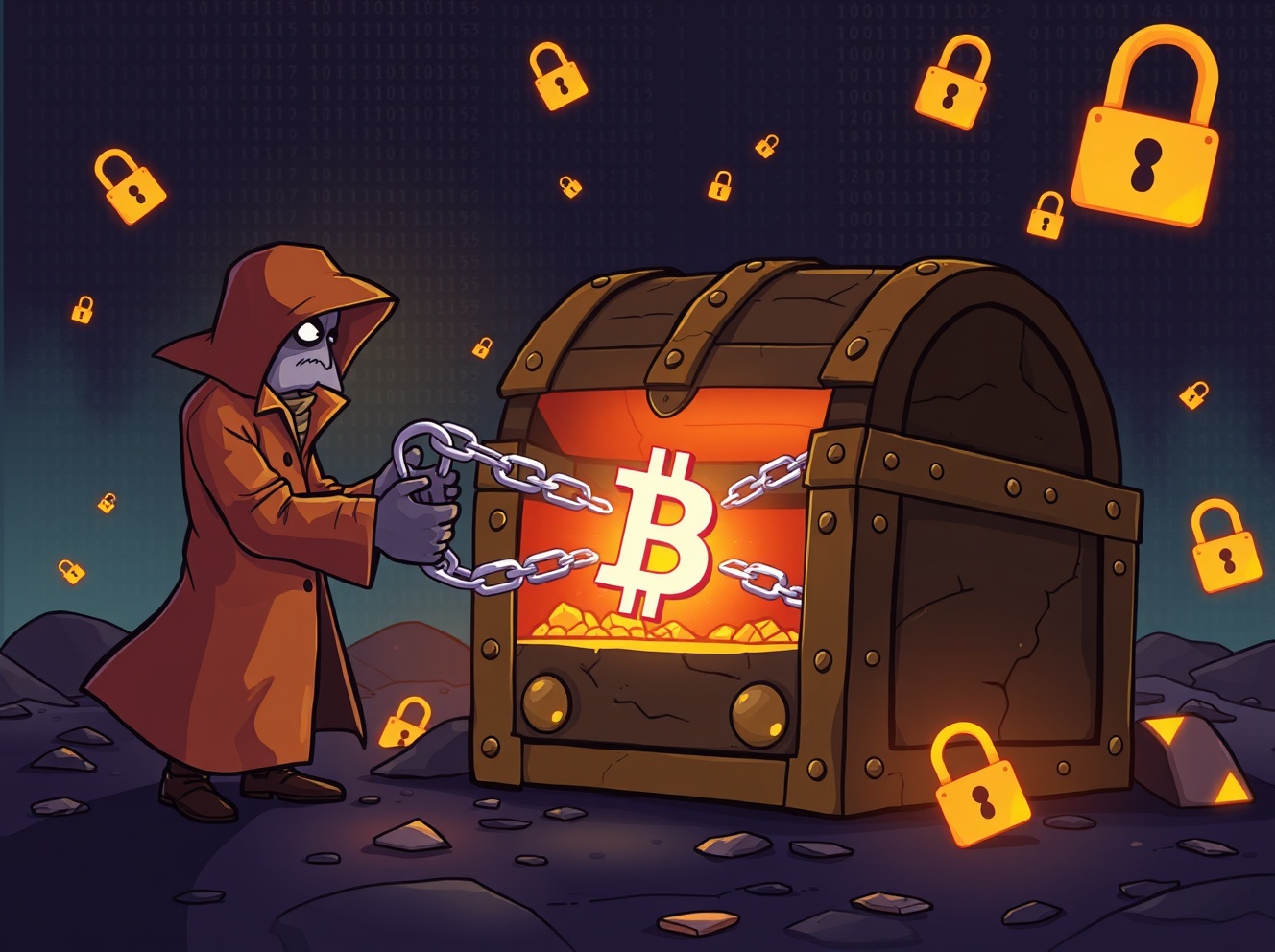
Mysterious cartoon figure unlocking a glowing Bitcoin treasure chest from dormant Silk Road wallets.

BitcoinWorld

Silk Road Wallets Awaken: The $3.1M Bitcoin Transfer Mystery After a Decade

In a stunning development that has sent ripples through the cryptocurrency community, dormant Silk Road wallets have suddenly sprung to life after a ten-year silence. According to data from Arkham Intelligence reported by The Block, these wallets transferred approximately $3.14 million in Bitcoin to an anonymous address. This mysterious activity raises critical questions about market impact, ownership, and the long shadow of crypto’s most infamous marketplace. Let’s unravel this cryptic event.

What Exactly Happened with the Silk Road Wallets?

The activity was not a single transaction but a coordinated movement. A cluster of 312 separate Silk Road wallets began transferring their holdings to a single, anonymous Bitcoin address starting with “bc1q.” The total value moved was $3.14 million. Crucially, this is not a complete liquidation. The wallets involved still hold a staggering $41.3 million in Bitcoin, meaning this could be just the beginning of a larger movement.

The timing is particularly intriguing. This flurry of transactions occurred shortly after former President Donald Trump commuted the life sentence of Silk Road founder, Ross Ulbricht. While no direct link has been established, the coincidence has fueled intense speculation within crypto circles. The core mystery remains: who controls these wallets now, and what is their intent?

Why Should Crypto Investors Care About This Transfer?

This event is more than a historical footnote; it has real implications for today’s market. Large, sudden movements from dormant wallets can influence Bitcoin’s price through several mechanisms:

  • Market Sentiment: The movement of “sleeping” coins, especially from a notorious source, can create uncertainty and volatility.
  • Sell Pressure: If the transferred $3.1 million in BTC is sent to an exchange and sold, it adds immediate selling pressure to the market.
  • Regulatory Scrutiny: Activity linked to Silk Road inevitably draws the attention of regulators and law enforcement, potentially impacting broader market sentiment.

Furthermore, blockchain analysts are now closely watching the destination address. Any subsequent movement to a known exchange address could signal an imminent sell-off. For investors, monitoring these Silk Road wallets provides a unique window into potential market-moving events.

What Are the Possible Explanations for This Activity?

The purpose behind the transfer is shrouded in mystery. However, several plausible theories have emerged from industry observers:

  • Consolidation by an Owner: A current controller may be gathering funds from many old wallets into one for easier management or future action.
  • Law Enforcement Action: Authorities could have finally gained access and are securing the assets, possibly for eventual auction or seizure.
  • Private Key Discovery: Someone may have rediscovered or cracked the private keys to these dormant addresses after a decade.

Each scenario carries different consequences. A private sale could drip coins into the market slowly, while a government auction would likely be a single, large, and public event. The anonymity of the receiving address makes it impossible to know for sure, keeping the crypto community on alert.

How Does This Relate to Ross Ulbricht’s Pardon?

The proximity of these transactions to Ross Ulbricht’s commutation is the elephant in the room. Ulbricht himself has stated he does not control these assets. The funds are widely believed to be held by the U.S. government, which seized them years ago. Therefore, the most logical explanation is that this is an administrative move by a government agency, perhaps preparing for asset disposal or transfer between internal wallets.

This theory is bolstered by the methodical, batch-transfer nature of the transactions, which resembles treasury management rather than a private individual’s action. Regardless of the actor, the awakening of these Silk Road wallets is a powerful reminder of Bitcoin’s immutable and transparent ledger, where history is never truly forgotten.

Conclusion: A Wake-Up Call from Crypto’s Past

The sudden activity from the Silk Road wallets is a captivating narrative that blends crypto history, market mechanics, and ongoing mystery. It demonstrates how dormant blockchain assets can resurface without warning, potentially affecting market dynamics. For investors, the key takeaway is vigilance. Tracking such movements is part of understanding the complex, on-chain ecosystem that drives Bitcoin. This event underscores that in the world of cryptocurrency, the past can—and does—suddenly become very present.

Frequently Asked Questions (FAQs)

Q1: Who owns the Silk Road Bitcoin wallets now?
A1: The prevailing belief is that the U.S. government controls most of these seized assets, though the recent transfer’s executor has not been officially identified.

Q2: Could this Bitcoin transfer affect the price of BTC?
A2: Yes, potentially. If the moved $3.1 million is sold on an exchange, it creates sell pressure. The news itself can also influence trader sentiment and cause short-term volatility.

Q3: What is the connection to Ross Ulbricht’s pardon?
A3: The timing is coincidental but notable. Ulbricht has denied control of the funds. The transfer is likely an unrelated action by the current asset holder, possibly the government.

Q4: How can I track these wallets?
A4: You can monitor the addresses using blockchain explorers like Arkham Intelligence, Etherscan (for ETH-based trackers), or Mempool.space, which provide real-time transaction data.

Q5: Are the remaining $41.3 million in BTC likely to move soon?
A5: There is no certainty. The movement of the first $3.1 million suggests the wallets are active, making further transfers a possibility that market watchers are preparing for.

Q6: Is it illegal to own Bitcoin from Silk Road?
A6: Owning Bitcoin itself is not illegal. However, knowingly receiving or transacting with assets that are proven to be the direct proceeds of crime can have legal consequences, depending on jurisdiction and circumstances.

Did this deep dive into the mysterious Silk Road wallet transfers help you? The world of cryptocurrency moves fast, and stories like this shape its landscape. Share this article on X (Twitter) or your favorite social media platform to spark a discussion with fellow crypto enthusiasts! What’s your theory on where these funds are headed?

To learn more about the latest Bitcoin trends, explore our article on key developments shaping Bitcoin institutional adoption.

This post Silk Road Wallets Awaken: The $3.1M Bitcoin Transfer Mystery After a Decade first appeared on BitcoinWorld.

Disclaimer: The articles reposted on this site are sourced from public platforms and are provided for informational purposes only. They do not necessarily reflect the views of MEXC. All rights remain with the original authors. If you believe any content infringes on third-party rights, please contact service@support.mexc.com for removal. MEXC makes no guarantees regarding the accuracy, completeness, or timeliness of the content and is not responsible for any actions taken based on the information provided. The content does not constitute financial, legal, or other professional advice, nor should it be considered a recommendation or endorsement by MEXC.

You May Also Like

Upbit to Raise Cold Wallet Ratio to 99% Amid Liquidity Concerns

Upbit to Raise Cold Wallet Ratio to 99% Amid Liquidity Concerns

The post Upbit to Raise Cold Wallet Ratio to 99% Amid Liquidity Concerns appeared on BitcoinEthereumNews.com. South Korea’s largest cryptocurrency exchange, Upbit, announced plans to increase its cold wallet storage ratio to 99%, following a major security breach last month. The announcement comes as part of a comprehensive security overhaul following hackers’ theft of approximately 44.5 billion won ($31 million) in Solana-based assets on November 27. Upbit Strengthens Security After Second November 27 Breach According to operator Dunamu, Upbit currently maintains 98.33% of customer digital assets in cold storage as of late October, with only 1.67% held in hot wallets. The exchange stated it has completed a full wallet infrastructure overhaul and aims to reduce hot wallet holdings to below 1% in the coming months. Dunamu emphasized that customer asset protection remains Upbit’s top priority, with all breach-related losses covered by the company’s reserves. Sponsored Sponsored The breach marked Upbit’s second major hack on the same date six years ago. In 2019, North Korean hacking groups Lazarus and Andariel stole 342,000 ETH from the exchange’s hot wallet. This time, attackers drained 24 different Solana network tokens in just 54 minutes during the early morning hours. Under South Korea’s Virtual Asset User Protection Act, exchanges must store at least 80% of customer assets in cold wallets. Upbit significantly exceeds this threshold and maintains the lowest hot wallet ratio among domestic exchanges. Data released by lawmaker Huh Young showed that other Korean exchanges were operating with cold wallet ratios of 82% to 90% as of June. Upbit Outpaces Global Industry Standards Upbit’s security metrics compare favorably with those of major global exchanges. Coinbase stores approximately 98% of customer funds in cold storage, while Kraken maintains 95-97% of its funds offline. OKX, Gate.io, and MEXC each keep around 95% of their funds in cold wallets. Binance and Bybit have not disclosed specific ratios but emphasize that the majority of…
Share
BitcoinEthereumNews2025/12/10 13:37
Tidal Trust Files For ‘Bitcoin AfterDark ETF’, Could Off-Hours Trading Boost Returns?

Tidal Trust Files For ‘Bitcoin AfterDark ETF’, Could Off-Hours Trading Boost Returns?

The post Tidal Trust Files For ‘Bitcoin AfterDark ETF’, Could Off-Hours Trading Boost Returns? appeared on BitcoinEthereumNews.com. Tidal Trust has filed for the first Bitcoin AfterDark ETF with the U.S. SEC. The product looks to capture overnight price movements of the token. What Is the Bitcoin AfterDark ETF? Tidal Trust has filed with the SEC for its proposed Bitcoin AfterDark ETF product. It is an ETF that would hold the coin only during non-trading hours in the United States. This filing also seeks permission for two other BTC-linked products managed with Nicholas Wealth Management. Source: SEC According to the registration documents, the ETF would buy Bitcoin at the close of U.S. markets and then sell the position the following morning upon the reopening of trading. In other words, it will effectively hold BTC only over the night “The fund trades those instruments during U.S. overnight hours and closes them out shortly after the U.S. market opens each trading day,” the filing said. During the day, the fund’s assets switch to U.S. Treasuries, money-market funds, and similar cash instruments. That means even when the fund has 100% notional exposure to Bitcoin overnight, a substantial portion of its capital may still sit in Treasuries during the day. Eric Balchunas, senior ETF analyst cited earlier research and said, “most of Bitcoin’s gains historically occur outside U.S. market hours.” If those patterns persist, the Bitcoin AfterDark ETF token will outperform more traditional spot BTC products, he said. Source: X Balchunas added that the effect may be partly driven by positioning in existing Bitcoin ETFs and related derivatives activity. The SEC has of late taken an increasingly more accommodating approach toward crypto-related ETFs. This September, for instance, REX Shares launched the first Ethereum Staking ETF. It represented direct ETH exposure and paid out on-chain staking rewards.  Also on Tuesday, BlackRock filed an application for an iShares Staked Ethereum ETF. The filing states…
Share
BitcoinEthereumNews2025/12/10 13:00
Tempo Testnet Goes Live with Stablecoin Tools and Expanded Partners

Tempo Testnet Goes Live with Stablecoin Tools and Expanded Partners

The post Tempo Testnet Goes Live with Stablecoin Tools and Expanded Partners appeared on BitcoinEthereumNews.com. The Tempo testnet, developed by Stripe and Paradigm, is now live, enabling developers to run nodes, sync the chain, and test stablecoin features for payments. This open-source platform emphasizes scale, reliability, and integration, paving the way for instant settlements on a dedicated layer-1 blockchain. Tempo testnet launches with six core features, including stablecoin-native gas and fast finality, optimized for financial applications. Developers can create stablecoins directly in browsers using the TIP-20 standard, enhancing accessibility for testing. The project has secured $500 million in funding at a $5 billion valuation, with partners like Mastercard and Klarna driving adoption; Klarna launched a USD-pegged stablecoin last month. Discover the Tempo testnet launch by Stripe and Paradigm: test stablecoins, run nodes, and explore payment innovations on this layer-1 blockchain. Join developers in shaping the future of crypto payments today. What is the Tempo Testnet? Tempo testnet represents a pivotal milestone in the development of a specialized layer-1 blockchain for payments, created through a collaboration between Stripe and Paradigm. This public testnet allows participants to run nodes, synchronize the chain, and experiment with essential features tailored for stablecoin operations and financial transactions. By focusing on instant settlements and low fees, it addresses key limitations in traditional blockchains for real-world payment use cases. Source: Patrick Collison The Tempo testnet builds on the project’s foundation, which was first announced four months ago, with an emphasis on developer-friendly tools. It supports a range of functionalities that prioritize reliability and scalability, making it an ideal environment for testing before the mainnet rollout. As per the official announcement from Tempo, this phase will involve ongoing enhancements, including new infrastructure partnerships and stress tests under simulated payment volumes. One of the standout aspects of the Tempo testnet is its open-source nature, inviting broad community involvement. This approach not only accelerates development…
Share
BitcoinEthereumNews2025/12/10 13:01