Terraform CEO Do Kwon sentenced to 15 years in prison over $40bn TerraUSD-Luna crash
Do Kwon, the South Korean co-founder of Terraform Labs, has been sentenced to 15 years in a United States federal prison. The ruling comes after his guilty plea to wire fraud and conspiracy to defraud in connection with the collapse of the TerraUSD stablecoin and its sister token, Luna, a collapse that wiped out roughly $40 billion in investor value back in 2022.
The case is one of the most consequential crypto fraud prosecutions in history. In a Manhattan courtroom on Thursday, U.S. District Judge Paul A. Engelmayer imposed the custodial term, exceeding both the 12 years suggested by federal prosecutors and the five years sought by Kwon’s defence team. The sentence reflects the scale of harm caused and the court’s view of Kwon’s conduct.
Kwon, 34, co-founded Terraform Labs in 2018. The company developed TerraUSD, an “algorithmic stablecoin” marketed as a digital asset that would remain pegged to the U.S. dollar through automated incentives. Luna, another token in the ecosystem, was designed to absorb price volatility. For a time, Terraform’s ecosystem was one of the most valuable in crypto markets.
 Do Kwon, founder of defunct TerraUSD and Luna
But in May 2022, TerraUSD lost its dollar peg. That triggered a swift and catastrophic crash. TerraUSD and Luna’s values plummeted, wiping out tens of billions in market capitalisation and sparking a broader downturn across crypto markets. Major lenders and funds were caught in the fallout, and investor losses mounted worldwide.
Allegations of deception and investor misleading
Prosecutors said Kwon misled investors about key aspects of how Terraform’s products worked. Marketing materials and public statements repeatedly claimed that the algorithmic design alone could guarantee TerraUSD’s stability. In reality, when the stablecoin struggled to maintain its peg in 2021, Kwon secretly arranged for a high-frequency trading firm to buy large amounts of the token to prop up its price. These actions were not disclosed to investors, according to federal authorities.
The Department of Justice argued that Kwon’s false assurances and concealment of risks lured many into believing TerraUSD was a safe digital alternative to traditional stablecoins. The indictment also detailed other misleading representations, including claims about real-world use cases and adoption that were exaggerated or untrue.
“Do Kwon devised elaborate schemes to mislead investors and inflate the value of Terraform’s cryptocurrencies for his own benefit,” said U.S. Attorney Jay Clayton.
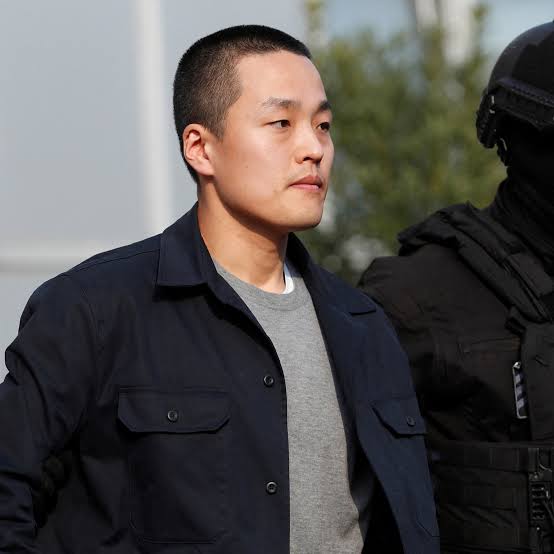 Do Kwon
“When his crimes caught up to him, Kwon embarked on a deceptive public relations campaign to cover up his fraud, laundered the proceeds of his illegal schemes, and sought to purchase political protection in foreign countries to evade criminal prosecution. Let there be no mistake, fraud is fraud whether it takes place on our streets, in our securities markets, or in our emerging and important digital asset ecosystem, and no matter where in the world criminals may seek refuge, the women and men of the Southern District of New York will relentlessly pursue justice for investors and protect the integrity of financial markets.”
Under the plea agreement, prosecutors dropped several other counts. Kwon pleaded guilty to one count of wire fraud and one count of conspiracy to commit wire, securities, and commodities fraud. His defence acknowledged the plea but had asked for a much shorter sentence, arguing the collapse reflected market forces and vulnerabilities that were exploited by third parties.
The human cost of Do Kwon fraud and victim impact
Much of the sentencing hearing focused not just on legal technicalities but on the human toll of the crash. More than 300 victim letters arrived at the court, describing devastating personal losses. Some investors saw retirement funds evaporate. Others detailed how their life savings were erased virtually overnight. In certain instances, financial ruin led to strained family relations and emotional distress.
One victim told the court how years of savings disappeared, leaving them struggling to meet everyday costs. Others spoke of shattered plans for education and home ownership. These accounts helped shape the judge’s view that a significant custodial sentence was appropriate.
Kwon addressed the court during sentencing. According to reports, he expressed remorse and acknowledged responsibility for the losses. He said that reading the victim letters was “harrowing” and reiterated his regret for the harm his actions had caused.
 Terraform Labs cofounders Daniel Shin (left) and Do Kwon (right)
Before the criminal sentencing, Kwon had already faced civil and regulatory penalties. In 2024, he agreed to an $80 million civil fine and a lifetime ban from trading in crypto markets as part of a $4.55 billion settlement with the U.S. Securities and Exchange Commission.
Kwon was arrested in Montenegro in 2023 after fleeing Singapore and using a fraudulent passport. He was extradited to the U.S. at the end of 2024. In addition to his U.S. sentence, he faces potential prosecution in South Korea, where authorities have also brought charges tied to the collapse.
The case has resonated far beyond the court. It has become a cautionary tale about the risks of algorithmic stablecoins and underscored the need for stronger regulatory oversight in the digital asset space. For the many investors who lost vast sums, the sentence marks accountability, even as debates continue over enforcement and investor protection in crypto markets.
You May Also Like

Provenance Blockchain (HASH) Plunges 9.3%: On-Chain Data Reveals Volume Collapse

Metaplanet raises $1.4B to fuel BTC purchases and U.S. subsidiary launch