The post US Unemployment Hits Highs—What It Means for the Fed and Bitcoin’s Next Big Move appeared first on Coinpedia Fintech News The Bitcoin sell-off has yet The post US Unemployment Hits Highs—What It Means for the Fed and Bitcoin’s Next Big Move appeared first on Coinpedia Fintech News The Bitcoin sell-off has yet

US Unemployment Hits Highs—What It Means for the Fed and Bitcoin’s Next Big Move
2025/12/16 22:31
3 min read
For feedback or concerns regarding this content, please contact us at crypto.news@mexc.com
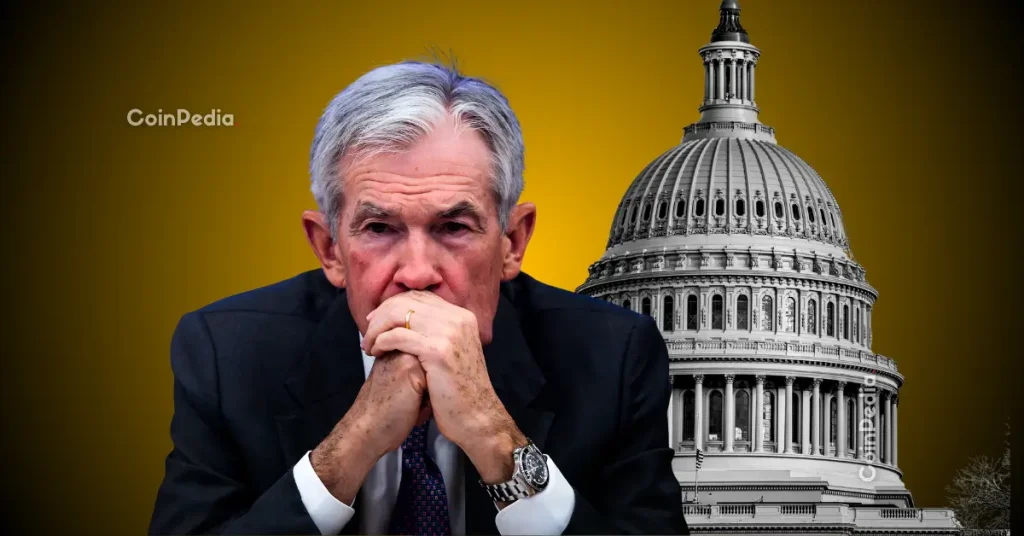
Kevin Hassett Federal Reserve chair

The post US Unemployment Hits Highs—What It Means for the Fed and Bitcoin’s Next Big Move appeared first on Coinpedia Fintech News

The Bitcoin sell-off has yet again intensified as the US has just released its unemployment data, which has hit hard. The latest reading came in at 4.5%, the highest since November 2021, a level historically associated with the early phases of monetary easing cycles. Those cycles have usually preceded Bitcoin’s strongest rallies. It would be interesting to watch how the current rates will impact the BTC price, which is already experiencing strong upward pressure. 

Why Unemployment Data is the Leading Indicator for Liquidity

A rising unemployment rate isn’t just economic data—it’s a pressure point. When labour weakness accelerates, the Federal Reserve is forced to shift from controlling inflation to protecting growth and preventing recession spillover.

In every cycle since 2008, once unemployment pushed above trend, the Fed eventually responded with:

  • Rate cuts
  • Balance-sheet expansion (QE)
  • Forward-guidance pivot toward easier financial conditions

These policy shifts do not immediately appear in price action. Instead, markets tend to first unwind leverage, flush late longs, and reset positioning—exactly what we saw in Bitcoin’s drop under $86K. But once liquidity expectations bottom, Bitcoin typically begins its next major expansion leg.

Why This Setup Historically Leads to BTC Breakouts

Bitcoin’s macro environment is entering a phase that has historically preceded major upside moves. When unemployment rises and recession risks increase, markets begin pricing in easier monetary conditions well before the Fed acts. This shift in liquidity expectations has consistently triggered the early stages of Bitcoin’s strongest breakouts. From a technical macro lens, Bitcoin’s strongest rallies occur when three conditions align:

  1. Rising unemployment → Fed pivot probability increases: The current 4.6% print pushes the Fed closer to easing than at any point in the past two years. Even if rate cuts are months away, the market will price the pivot first—and Bitcoin reacts early.
  1. Real yields peak and begin turning lower: As recession fears increase, bond yields tend to fall. This compresses real yields—the most important macro driver for BTC’s cyclical tops and bottoms.
  1. Liquidity expectations turn before liquidity does: Bitcoin front-runs policy. As soon as the market believes easing is coming, BTC typically breaks out of consolidation and starts a new trend.

This combination is forming now.

Short-Term Volatility First, Breakout Potential After

Before Bitcoin can enter a sustained rally, the market still needs to process recession risk, deleveraging, and macro uncertainty. This can create choppy conditions and false breaks, similar to 2020 and early 2023.

But structurally, the environment is shifting in Bitcoin’s favor as ETF flows remain net positive even during pullbacks. Besides, exchange balances continue declining, showing supply tightening, and miner revenue stress is easing after the latest difficulty adjustment.

Once the Fed shifts tone—even slightly—liquidity expectations will strengthen, and Bitcoin’s price tends to accelerate quickly.

Key Technical Indicators to Track for Confirmation

  1. U.S. 10Y yield—a sustained move below 3.8% will confirm easing expectations.
  2. USD/JPY – yen strength → global liquidity tightening; yen weakness → pre-pivot environment.
  3. Nasdaq – risk sentiment proxy; BTC rallies rarely happen if Nasdaq is trending down.

The Bottom Line

The US unemployment spike is not just bad economic news—it’s the macro trigger that often marks the beginning of Bitcoin’s largest upward phases. Short-term volatility is likely, but the medium-term setup is increasingly supportive of a major Bitcoin (BTC) price breakout once liquidity expectations turn.

Market Opportunity
Talus Logo
Talus Price(US)
$0.00387
$0.00387$0.00387
+7.20%
USD
Talus (US) Live Price Chart
Disclaimer: The articles reposted on this site are sourced from public platforms and are provided for informational purposes only. They do not necessarily reflect the views of MEXC. All rights remain with the original authors. If you believe any content infringes on third-party rights, please contact crypto.news@mexc.com for removal. MEXC makes no guarantees regarding the accuracy, completeness, or timeliness of the content and is not responsible for any actions taken based on the information provided. The content does not constitute financial, legal, or other professional advice, nor should it be considered a recommendation or endorsement by MEXC.

You May Also Like

SEC decisions scrutinized as senator seeks records on crypto enforcement rollbacks

SEC decisions scrutinized as senator seeks records on crypto enforcement rollbacks

The post SEC decisions scrutinized as senator seeks records on crypto enforcement rollbacks appeared on BitcoinEthereumNews.com. U.S. securities regulators have
Share
BitcoinEthereumNews2026/03/31 08:08
Crypto Supercycle in 2025? DeepSeek Ranks the Best Altcoins to Buy Right Now

Crypto Supercycle in 2025? DeepSeek Ranks the Best Altcoins to Buy Right Now

The post Crypto Supercycle in 2025? DeepSeek Ranks the Best Altcoins to Buy Right Now appeared on BitcoinEthereumNews.com. Crypto Supercycle in 2025? DeepSeek Ranks the Best Altcoins to Buy Right Now Sign Up for Our Newsletter! For updates and exclusive offers enter your email. As a crypto writer, Krishi splits his time between decoding the chaos of the markets and writing about it in a way that doesn’t put you to sleep. He’s been at it for nearly two years in the crypto trenches. Yes, he regrets missing the magnificent rallies that came before that (who doesn’t!), but he’s more than ready to put his money where his words are. Before diving headfirst into crypto, Krishi spent over five years writing for some of the biggest names in tech, including TechRadar, Tom’s Guide, and PC Gaming, covering everything from gadgets and cybersecurity to gaming and software. When he’s not scouring and writing about the latest happenings in crypto, Krishi trades the forex market while keeping crypto in his long-term HODL plans. He’s a Bitcoin believer, though he never lets that bias creep into his writing. This website uses cookies. By continuing to use this website you are giving consent to cookies being used. Visit our Privacy Center or Cookie Policy. I Agree Source: https://bitcoinist.com/crypto-supercycle-2025-best-altcoins-to-buy-now-deepseek/
Share
BitcoinEthereumNews2025/09/18 01:45
Cashing In On University Patents Means Giving Up On Our Innovation Future

Cashing In On University Patents Means Giving Up On Our Innovation Future

The post Cashing In On University Patents Means Giving Up On Our Innovation Future appeared on BitcoinEthereumNews.com. “It’s a raid on American innovation that would deliver pennies to the Treasury while kneecapping the very engine of our economic and medical progress,” writes Pipes. Getty Images Washington is addicted to taxing success. Now, Commerce Secretary Howard Lutnick is floating a plan to skim half the patent earnings from inventions developed at universities with federal funding. It’s being sold as a way to shore up programs like Social Security. In reality, it’s a raid on American innovation that would deliver pennies to the Treasury while kneecapping the very engine of our economic and medical progress. Yes, taxpayer dollars support early-stage research. But the real payoff comes later—in the jobs created, cures discovered, and industries launched when universities and private industry turn those discoveries into real products. By comparison, the sums at stake in patent licensing are trivial. Universities collectively earn only about $3.6 billion annually in patent income—less than the federal government spends on Social Security in a single day. Even confiscating half would barely register against a $6 trillion federal budget. And yet the damage from such a policy would be anything but trivial. The true return on taxpayer investment isn’t in licensing checks sent to Washington, but in the downstream economic activity that federally supported research unleashes. Thanks to the bipartisan Bayh-Dole Act of 1980, universities and private industry have powerful incentives to translate early-stage discoveries into real-world products. Before Bayh-Dole, the government hoarded patents from federally funded research, and fewer than 5% were ever licensed. Once universities could own and license their own inventions, innovation exploded. The result has been one of the best returns on investment in government history. Since 1996, university research has added nearly $2 trillion to U.S. industrial output, supported 6.5 million jobs, and launched more than 19,000 startups. Those companies pay…
Share
BitcoinEthereumNews2025/09/18 03:26

