Trading time: The fifth anniversary of 312 and the arrival of CPI, the short-term trend of Bitcoin may usher in a key battle

1. Market observation
Keywords: CPI, ETH, BTC
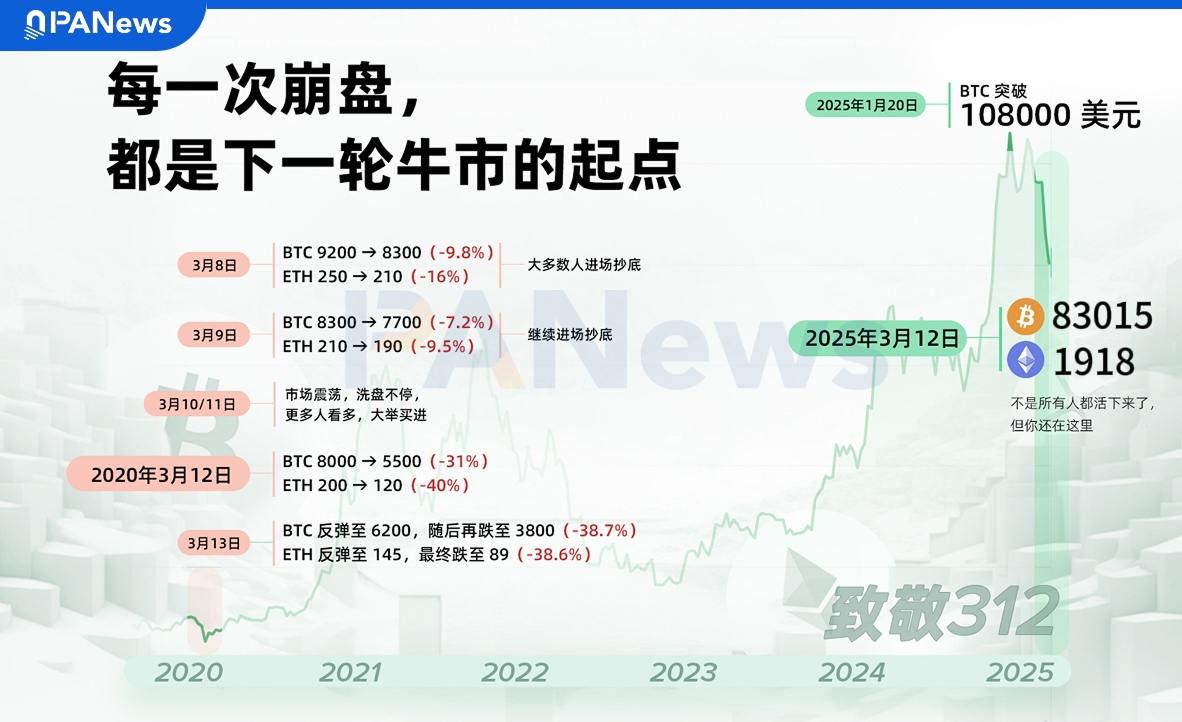
It's 312 again this year. Looking back five years ago, Bitcoin has climbed from around US$3,800 to US$82,000 today, an increase of more than 20 times. In this wave, some people have made a fortune and chose to leave, but only those who have faith still hold on.
The market has recently become more volatile. Bitcoin has rebounded to above $80,000 after hitting $76,600 yesterday. Major institutions have different views on the future market trend. In his latest trading report, 10X Research analyst Markus Thielen predicted that Bitcoin may fall further to the $73,000 level, and emphasized that it is not yet time to "buy the bottom". Geoff Kendrick, head of digital asset research at Standard Chartered Bank, analyzed that the recent price drop of Bitcoin is mainly affected by the pressure of broad risk assets, rather than the problems of cryptocurrencies themselves. From the perspective of volatility adjustment, Bitcoin's performance is highly consistent with the combination of "seven major technology stocks plus Bitcoin". He further pointed out from a technical perspective that if Bitcoin falls below the key support level of $76,500, it may quickly fall to $69,000. Despite the short-term pressure, he still maintains his target forecast of Bitcoin reaching $200,000 by the end of 2025. Regarding the market rebound, Kendrick believes that it will mainly rely on two key factors: the overall recovery of risk assets and Bitcoin-specific good news (such as sovereign purchases). He particularly emphasized that a clear tariff policy or a rapid interest rate cut by the Federal Reserve will promote market recovery. If the probability of a rate cut at the Federal Reserve meeting in May increases from the current 50% to 75%, it may trigger a rebound.
Meanwhile, Rohit Jain, managing director of CoinDCX Ventures, reminded investors that if the Fed maintains the current interest rate level as expected, Bitcoin may pull back to test the $70,000 support level. Min Jung, an analyst at Presto Research, believes that the recent price rebound is more like a technical correction after a sharp market decline, lacking substantial positive support. For traders, today's CPI release will be a major event, as the entire market is paying attention to inflation trends and how the Fed will respond. In the current market environment full of uncertainty, traders are advised to remain cautious, do a good job of risk management, and pay attention to the breakthrough or support of key price positions.
2. Key data (as of 13:00 HKT on March 12)
-
Bitcoin: $81,719.72 (-12.57% year-to-date), with a daily spot volume of $46,455.7 million
-
Ethereum: $1,868.96 (-43.94% year-to-date), with a daily spot volume of $26.798 billion
-
Fear and corruption index: 34 (fear)
-
Average GAS: BTC 2 sat/vB, ETH 1.00 Gwei
-
Market share: BTC 61.2%, ETH 8.6%
-
Upbit 24-hour trading volume ranking: XRP, BTC, ETH
-
24-hour BTC long-short ratio: 0.9643
-
Sector gains and losses: AI sector rose 3.44%, PayFi sector rose 2.42%
-
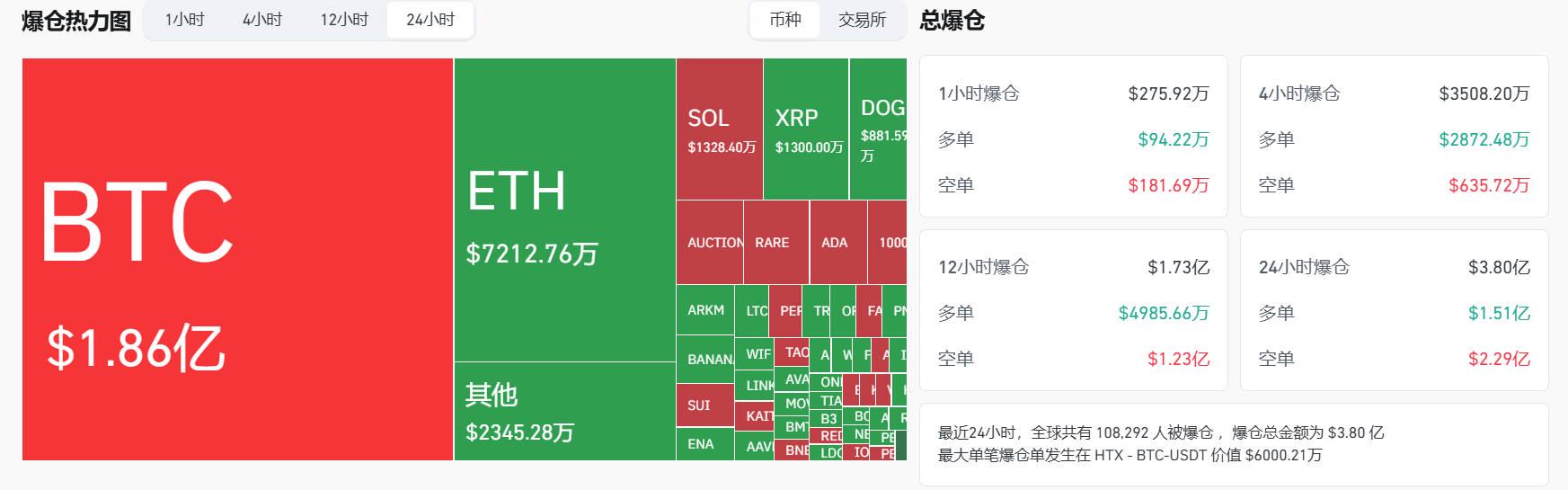
24-hour liquidation data: A total of 108,292 people were liquidated worldwide, with a total liquidation amount of US$380 million, including BTC liquidation of US$186 million and ETH liquidation of US$72.1276 million
3. ETF flows (as of March 11 EST)
-
Bitcoin ETF: -$219.7 million
-
Ethereum ETF: -$9.75 million
4. Important Dates (Hong Kong Time)
US President Trump met with US technology leaders, including the CEOs of HP, Intel, IBM, and Qualcomm. (March 11, 2:00)
US President Trump signed an executive order. US February unadjusted CPI annual rate (March 12, 20:30)
-
Actual: None / Previous: 3% / Expected: 2.9%
U.S. February seasonally adjusted CPI monthly rate (March 12, 20:30)
-
Actual: None / Previous: 0.50% / Expected: 0.30%
Number of initial jobless claims in the United States for the week ending March 8 (10,000 people) (March 13, 20:30)
-
Actual: None / Previous: 22.1 / Expected: None
5. Hot News
Senator Lummis's resubmitted Bitcoin bill would allow the U.S. to reserve more than 1 million Bitcoins
President of The ETF Store: Franklin Templeton Submits XRP Spot ETF Application
Metaplanet issues 2 billion yen zero-coupon ordinary bonds to increase Bitcoin holdings
SEC Accepts Grayscale Hedera Spot ETF Application
Texas lawmakers propose to limit state government Bitcoin investment to $250 million, and city and county governments to $10 million
USDC Treasury minted $250 million USDC on Solana in the early hours of the morning
OpenAI launches new tools to simplify AI agent development: Responses API and Agents SDK
SEC postpones approval of multiple crypto spot ETFs including ADA, SOL, XRP
Tesla rebounded 3.7%, and Strategy and Coinbase stock prices both rebounded significantly
Coinbase will list RedStone (RED)
Axelar Foundation Reveals $30M AXL Token Sale to Expand Interoperability Protocol
StarkWare builds a “strategic Bitcoin reserve” to realize Starknet’s vision of unifying Bitcoin and Ethereum
GoPlus Security announces $4.34 million buyback plan and $2 million user compensation plan
Bubblemaps (BMT) Now Available on Binance Alpha
Lead Benefit, a Hong Kong subsidiary of Mingcheng Group, once again spent $27 million to purchase 333 Bitcoins
Bitwise CIO: This drop is just a small episode before Bitcoin moves towards $10 trillion to $50 trillion
You May Also Like
Power price shock turns the Philippines into solar’s hottest market

China Nabs Another Huione Group Core Member in Cambodia Extradition

Shiba Inu Whales Withdraw 443 Billion SHIB From Exchanges as Accumulation Grows