

How AI will transform different roles in real estate and construction
Traditionally a laggard sector when it comes to tech integration, the real estate and construction industry is now embracing AI, particularly as a clearer picture of the operational and cost efficiencies that can be achieved is emerging.
The legacy real estate sector, too, is increasingly in on the action. In 2023, CBRE announced their own LLM, following the likes of JLL, Landsec and others who have risen to the challenge of internally developed technology to complement their technology stack. The beginning of 2025 was an accelerant to an already-booming space, a period that saw rapid adoption of GenAI tools.
PitchBook’s database lists 670 “real estate technology” and “construction technology” companies founded since 30 November 2022. 249 (37.6 percent) of these companies are categorised as “artificial intelligence & machine learning”, which can be catalogued along the real estate value chain. The combined group includes sales, transactions and marketing (49); materials, engineering and construction (46); real estate business operations (45); property and facilities management (22); investment and due diligence (18); real estate fintech/insuretech (15); design and architecture (14); and location intelligence and planning (10).
Applications of AI within real estate
Since 2022, we’ve observed four key GenAI-related trends in real estate and construction technology. The first is the emergence of GenAI start-ups in proptech, contech and elsewhere. This is where the product itself centres around GenAI, or at least includes it as a feature.
The second is start-ups that leveraged GenAI tools in the efficient development of their products. For example, coding with a leaner engineering team, comprising both AI/ML products and non-AI/ML products.
The third is earlier start-ups retrofitting GenAI into their products and/or processes. The fourth is legacy firms utilising the efficiency gains of GenAI to develop their own in-house AI-augmented products and processes. All four have ramifications for start-ups and venture capital.
From Genia’s floor-plan-to-structural-drawing tool to Conduit’s property management AI agent, a range of GenAI use cases have emerged for built environment applications since 2022. Examples of real estate AI use cases in PitchBook’s database of real estate and construction technology start-ups include:
- Conversational AI for property management and guest support
- LLM-generated lease agreements, property summaries, or offer letters
- Market trend prediction and analytics
- Document retrieval, summarisation and prompting
- Sophisticated applications using the same deep learning technology as LLMs, but for other applications
- AI-generated marketing and content creation
- Legal and compliance drafting assistance
- Realtime rendering for marketing and design purposes
- Matching buyers with the most relevant listings based on behaviour and preference data
- Personalised emails and property listings descriptions
These applications are being embraced across the real estate lifecycle, from property and facilities management to due diligence, from marketing to construction and planning. This could mean AI-generated leases, summaries and marketing content, systems specialising in site selection, due diligence and tenants support as well as tools that can convert architectural inputs like floorplans into technical documents.
Rate of AI adoption
As investment booms and progress picks up pace, specialist rather than generalist systems are coming to the fore to assist workflows and increase productivity.
Using Bessemer’s AI agent autonomy scale, the general consensus is that AI within the sector is currently at condition agency (co-pilot) phase, with the need for humans to still be working in conjunction with the technology.
In practical terms, the real estate job roles that are currently benefitting from co-pilot level solutions are AI real estate analysts, investment committee members and construction quality control managers.
Examples from within the Pi Labs portfolio include Howie, an AI-driven, firm-wide knowledge management system and Innex.ai which is an AI assistant that empowers teams to build safe, compliant and sustainable projects.
Pi Labs has just announced the successful exit of Firmus AI, a platform — including its AI-REVIEW and AI-MATCH tools — that helps construction teams detect inconsistencies, scope gaps, and missing information in drawings.
What’s next for AI in real estate?
As higher levels of AI autonomy become possible – when the industry reaches the level of agentic AI with supervision – we will start to see AI-powered transactions and AI property deal sourcing. This should enable faster transactions and more efficient understanding of properties and markets, catalysing more investments at a global scale.
Ultimately, when fully agentic AI solutions are available and can safely be integrated into the industry, entire functionalities may be possible to be executed by AI. For example, we could see AI property managers overseeing the running of buildings or AI powered architects overseeing the entire design of real estate developments.
Early movers are already embedding AI across the built world – not for novelty, but because of the undeniable benefits that can be unlocked. It will also take time to develop the domain-specific LLMs required for the highly specialist world of real estate.
These aren’t headline-grabbing breakthroughs, they’re targeted, domain-specific tools, as evidenced by the GenAI-native real estate start-ups identified in this article. With AI augmenting a growing proportion of daily desktop workflows, the real estate analysts of the future can expect to find themselves pounding the pavement at a far higher frequency than their laptop-bound forebears, supervising AI agents and when appropriate, intervening with real-world experience.
It’s now up to C-Suite individuals within the sector to identify and act on these opportunities.

You May Also Like
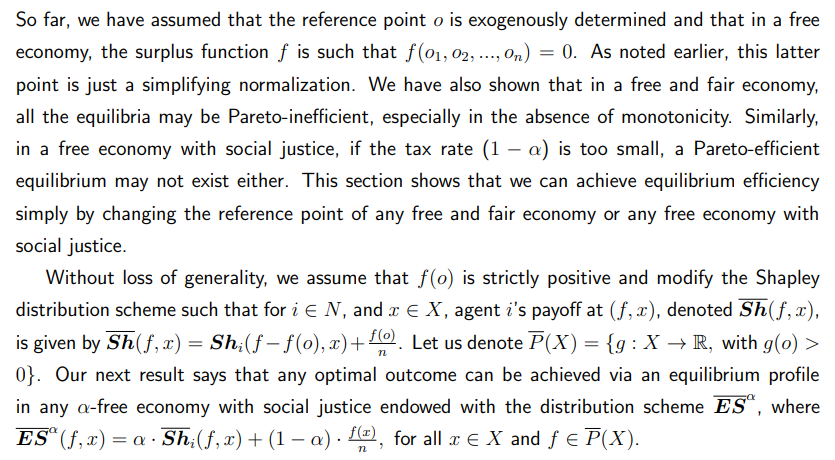
The Role of Reference Points in Achieving Equilibrium Efficiency in Fair and Socially Just Economies

Startup’s $15K Bet Backfires: P2P.me Apologises for Polymarket Misstep


