

The ₦500B ultimatum: Inside Nigeria’s banking recapitalisation race and why some won’t survive
Nigerian banks are racing to meet new capital requirements that jumped as much as tenfold, but fresh data from the Central Bank reveals a problem that could complicate their plans.
Non-performing loans have climbed to 7 per cent, well above the 5 per cent regulatory limit, even as banks try to raise what could be the largest amount of capital in the industry’s history.
The CBN’s 2026 macroeconomic outlook confirms that a “substantial number of banks” have met the new thresholds. But substance is not all. Some banks are still scrambling, and the document warns that “investor fatigue” could make it harder for late movers to raise money.
Under the recapitalisation programme announced in 2024, banks with international licences must increase their minimum capital from 50 billion naira to 500 billion naira. That is a tenfold jump. National banks must go from 25 billion to 200 billion naira, an eightfold increase.
Regional banks face a fivefold increase to 50 billion naira, and merchant banks must reach 50 billion naira, up from 15 billion.
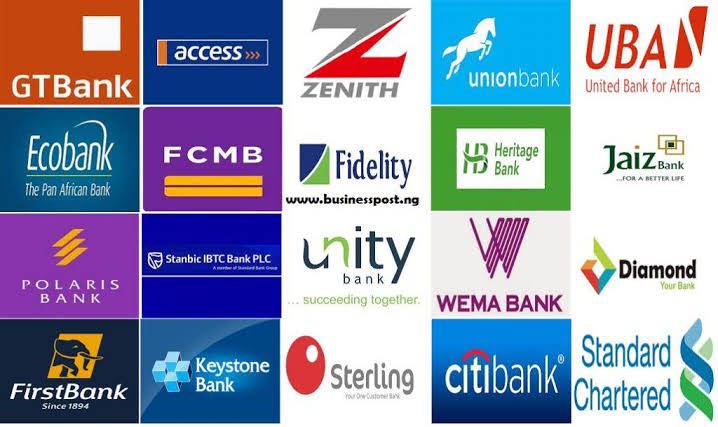 Nigerian Banks
The CBN says the exercise is necessary to create banks big enough to “underwrite big-ticket loans required to finance transformative infrastructure, energy, and large-scale manufacturing projects” as Nigeria pursues its goal of becoming a one trillion-dollar economy.
But raising capital becomes much harder when your loan book is deteriorating.
The bad loan problem banks cannot hide
The CBN reports that non-performing loans stood at an estimated 7 per cent as of the end of 2025, compared to the 5 per cent regulatory ceiling. The central bank attributes this to “the withdrawal of the regulatory forbearance granted to banks during the COVID-19 pandemic.”
In plain terms, banks were allowed to hide problem loans during the pandemic. That grace period is over, and the true state of their loan books is now visible.
The outlook warns bluntly that “rising NPLs pose a direct threat to banks’ profitability, credit availability, and overall risk-bearing capacity.” It adds that “a significant rise in non-performing loans could impair asset quality and weaken banks’ balance sheets, thereby posing systemic risk.”
To make matters more challenging for banks hoping to conceal problems, the CBN is rolling out new tools. It plans to implement “automation of comprehensive stress testing and asset quality reviews across banks to enhance the identification of hidden impairments and sectoral vulnerabilities.”
These automated reviews will make it significantly harder for banks to manipulate their numbers or delay recognising bad loans. When those problems surface, the banks trying to raise capital will face tougher questions from investors about asset quality and loan loss provisions.
The capital market has been on fire, which should help. The All Share Index rose 42.82 per cent in 2025, reaching 147,000 points, up from 102,926 points in 2024. Market capitalisation grew 36.36 per cent to 149 trillion naira, “driven by strong momentum in Industrial, Banking and Consumer Goods sectors.”
Trading activity exploded. Equity turnover hit 8.38 trillion naira in 2025 compared to just 2.60 trillion naira the previous year. The CBN notes this was “primarily driven by heightened activity surrounding the banking sector’s recapitalisation efforts.”
But here is the problem. The market’s capacity is not infinite.
The CBN warns that “despite the bullish momentum, the capital market could face higher concentration risk from the banking sector, as the ongoing recapitalisation could trigger investor fatigue and crowd out other issuers.”
‘Investor fatigue’ is a polite way of saying the market might run out of appetite for bank shares. Early movers who raised capital in 2024 and early 2025 likely got the best terms. Banks that waited, or that are still working through the process, may find investors less enthusiastic and more demanding about valuations.
This is especially true for banks with high NPL ratios or weak asset quality. Why would an investor pay a premium for a bank that still needs to clean up its loan book?
Despite these challenges, the banking system’s overall financial soundness indicators remain within regulatory bounds. The liquidity ratio stood at 65 per cent, significantly above the 30 per cent minimum and up from 48.94 per cent in December 2024. The capital adequacy ratio was 11.6 per cent, above the 10 per cent regulatory floor.
But these are system-wide averages. Individual banks vary widely, and the ones struggling to recapitalise are unlikely to be the strongest performers, dragging the averages up.
 Olayemi Cardoso, CBN governor
The macroeconomic environment is improving, which should help. GDP growth is projected at 4.49 per cent in 2026, up from 3.89 per cent in 2025. Inflation is expected to fall sharply to 12.94 per cent. The exchange rate should stabilise around 1,400 naira to the dollar.
Read also: From 22% to 14%: How 6 months of falling inflation is reshaping Nigeria’s digital lending industry
But the outlook also lists risks that could derail the banking sector’s plans. If inflation does not fall as expected and monetary policy has to tighten again, loan growth would slow, and NPLs could rise further. Disruptions to oil production would hurt banks exposed to the oil and gas sector. Any return of foreign exchange volatility would hit banks with large FX exposures.
The CBN is betting that bigger, better capitalised banks will be able to finance Nigeria’s infrastructure needs and support economic transformation. But first, those banks have to get through the recapitalisation process.
And with NPLs at 7 per cent, automated asset reviews coming, and investor fatigue looming, the banks that have not yet finished the race face a narrowing window and potentially worse terms than those that moved early.
The data suggests a divide is emerging.
Banks that recapitalised quickly, with clean loan books and strong franchises, are positioned to dominate the next phase of Nigerian banking. Those still struggling to raise capital, especially those with high NPLs, face a much tougher road.
Some may not make it to the finish line in their current form.
The post The ₦500B ultimatum: Inside Nigeria’s banking recapitalisation race and why some won’t survive first appeared on Technext.


You May Also Like

OORT and Aether Holdings Form Joint Venture to Tackle Financial AI’s Data Bottleneck

FBI: Crypto Fraud Reaches $11 Billion




