The UK Treasury has unveiled a comprehensive crackdown on crypto tax evasion, introducing £300 fines for individuals who refuse to share personal details with crypto service providers starting January 2026. According to a Daily Mail report, the new Crypto Asset Reporting Framework (CARF) will require holders of Bitcoin, Ethereum, Dogecoin, and other digital currencies to share their tax reference numbers with crypto platforms or face penalties. Treasury officials project the initiative will close loopholes in crypto taxation and generate up to £315 million in additional revenue by April 2030. Source: PA Archive (The Standard) Exchequer Secretary James Murray emphasized that the initiative is part of a broader strategy to eliminate tax avoidance, stating that the rules will ensure “ tax dodgers have nowhere to hide ” and the government will be able to fund essential public services through improved compliance. Both crypto users and service providers will face financial penalties for non-compliance, creating a dual-layer enforcement mechanism that holds both parties accountable for every transaction. New Compliance Framework Puts Pressure on Platforms and Users Crypto service providers operating in the UK will bear significant responsibility under the new framework, as they are required to collect and verify customer tax information before facilitating any transactions. Platforms that fail to obtain accurate tax reference numbers or provide complete transaction records to HM Revenue and Customs will face their own financial penalties, which are currently not disclosed. The reporting requirements extend beyond simple trading activities to encompass staking rewards, DeFi yield farming, NFT transactions, and any other crypto-related income generation. Non-compliant individuals face penalties of £300 per instance, while service providers risk separate fines for failing to maintain accurate records or provide the required information to tax authorities. Source: Daily Mail ( From left to right; Treasury Parliamentary Secretary Emma Reynolds, Exchequer Secretary to the Treasury James Murray, Chief Secretary to the Treasury Darren Jones, Chancellor of the Exchequer Rachel Reeves, Economic Secretary to the Treasury Tulip Siddiq, and Financial Secretary to the Treasury Spencer Livermore ) Murray also described the framework as part of a broader effort to ensure “everyone pays their fair share,” positioning the crackdown as essential for maintaining public funding for nurses, police, and other vital services. Service providers will need to adapt their onboarding processes and customer management systems to accommodate the new data collection requirements, potentially increasing operational costs that could be passed to users. Global Momentum Builds Around Crypto Tax Enforcement Britain’s move is part of a worldwide trend toward stricter cryptocurrency tax compliance, with multiple jurisdictions implementing similar reporting frameworks designed to capture previously hidden digital asset profits. The European Union’s DAC8 directive , which takes effect in 2026, will require crypto platforms across all member states to share customer transaction data with tax authorities, creating a continent-wide information exchange network. 🇪🇺 European Parliament Supports DAC8 Crypto Tax Rule by an Overwhelming Margin Lawmakers in the European Parliament have expressed support for the eighth iteration of the Directive on Administrative Cooperation (DAC8). #CryptoNews #EU https://t.co/pn02rJg4qM — Cryptonews.com (@cryptonews) September 14, 2023 Recent data from Denmark reveals the scale of the challenge facing tax authorities, with over 90% of crypto traders failing to report gains despite mandatory exchange reporting requirements implemented in 2019. Nordic countries appear particularly aggressive in their approach, with Norway estimating that roughly 88% of crypto traders omitted gains in 2023, while Denmark is now considering a 42% tax on unrealized cryptocurrency gains . Thailand has taken the opposite approach, offering a five-year personal income tax exemption on crypto capital gains for transactions conducted through licensed platforms, seeking to attract international investment and establish itself as a digital asset hub. As it stands now, some jurisdictions are tightening enforcement, while others compete for crypto capital through favorable tax treatment. These approaches, however, create both opportunities and challenges for crypto investors, who may increasingly start to consider tax implications when choosing where to trade or establish residency.The UK Treasury has unveiled a comprehensive crackdown on crypto tax evasion, introducing £300 fines for individuals who refuse to share personal details with crypto service providers starting January 2026. According to a Daily Mail report, the new Crypto Asset Reporting Framework (CARF) will require holders of Bitcoin, Ethereum, Dogecoin, and other digital currencies to share their tax reference numbers with crypto platforms or face penalties. Treasury officials project the initiative will close loopholes in crypto taxation and generate up to £315 million in additional revenue by April 2030. Source: PA Archive (The Standard) Exchequer Secretary James Murray emphasized that the initiative is part of a broader strategy to eliminate tax avoidance, stating that the rules will ensure “ tax dodgers have nowhere to hide ” and the government will be able to fund essential public services through improved compliance. Both crypto users and service providers will face financial penalties for non-compliance, creating a dual-layer enforcement mechanism that holds both parties accountable for every transaction. New Compliance Framework Puts Pressure on Platforms and Users Crypto service providers operating in the UK will bear significant responsibility under the new framework, as they are required to collect and verify customer tax information before facilitating any transactions. Platforms that fail to obtain accurate tax reference numbers or provide complete transaction records to HM Revenue and Customs will face their own financial penalties, which are currently not disclosed. The reporting requirements extend beyond simple trading activities to encompass staking rewards, DeFi yield farming, NFT transactions, and any other crypto-related income generation. Non-compliant individuals face penalties of £300 per instance, while service providers risk separate fines for failing to maintain accurate records or provide the required information to tax authorities. Source: Daily Mail ( From left to right; Treasury Parliamentary Secretary Emma Reynolds, Exchequer Secretary to the Treasury James Murray, Chief Secretary to the Treasury Darren Jones, Chancellor of the Exchequer Rachel Reeves, Economic Secretary to the Treasury Tulip Siddiq, and Financial Secretary to the Treasury Spencer Livermore ) Murray also described the framework as part of a broader effort to ensure “everyone pays their fair share,” positioning the crackdown as essential for maintaining public funding for nurses, police, and other vital services. Service providers will need to adapt their onboarding processes and customer management systems to accommodate the new data collection requirements, potentially increasing operational costs that could be passed to users. Global Momentum Builds Around Crypto Tax Enforcement Britain’s move is part of a worldwide trend toward stricter cryptocurrency tax compliance, with multiple jurisdictions implementing similar reporting frameworks designed to capture previously hidden digital asset profits. The European Union’s DAC8 directive , which takes effect in 2026, will require crypto platforms across all member states to share customer transaction data with tax authorities, creating a continent-wide information exchange network. 🇪🇺 European Parliament Supports DAC8 Crypto Tax Rule by an Overwhelming Margin Lawmakers in the European Parliament have expressed support for the eighth iteration of the Directive on Administrative Cooperation (DAC8). #CryptoNews #EU https://t.co/pn02rJg4qM — Cryptonews.com (@cryptonews) September 14, 2023 Recent data from Denmark reveals the scale of the challenge facing tax authorities, with over 90% of crypto traders failing to report gains despite mandatory exchange reporting requirements implemented in 2019. Nordic countries appear particularly aggressive in their approach, with Norway estimating that roughly 88% of crypto traders omitted gains in 2023, while Denmark is now considering a 42% tax on unrealized cryptocurrency gains . Thailand has taken the opposite approach, offering a five-year personal income tax exemption on crypto capital gains for transactions conducted through licensed platforms, seeking to attract international investment and establish itself as a digital asset hub. As it stands now, some jurisdictions are tightening enforcement, while others compete for crypto capital through favorable tax treatment. These approaches, however, create both opportunities and challenges for crypto investors, who may increasingly start to consider tax implications when choosing where to trade or establish residency.

UK Treasury Targets Crypto Tax Evaders with £300 Fines Starting January 2026

The UK Treasury has unveiled a comprehensive crackdown on crypto tax evasion, introducing £300 fines for individuals who refuse to share personal details with crypto service providers starting January 2026.

According to a Daily Mail report, the new Crypto Asset Reporting Framework (CARF) will require holders of Bitcoin, Ethereum, Dogecoin, and other digital currencies to share their tax reference numbers with crypto platforms or face penalties.

Treasury officials project the initiative will close loopholes in crypto taxation and generate up to £315 million in additional revenue by April 2030.
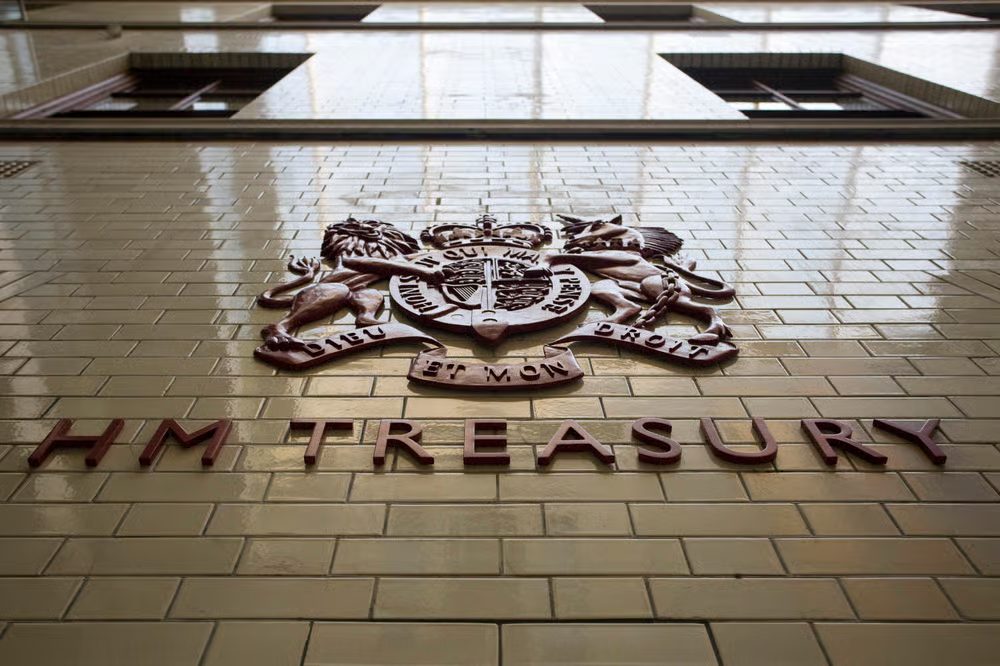
Source: PA Archive (The Standard)

Exchequer Secretary James Murray emphasized that the initiative is part of a broader strategy to eliminate tax avoidance, stating that the rules will ensure “tax dodgers have nowhere to hide” and the government will be able to fund essential public services through improved compliance.

Both crypto users and service providers will face financial penalties for non-compliance, creating a dual-layer enforcement mechanism that holds both parties accountable for every transaction.

New Compliance Framework Puts Pressure on Platforms and Users

Crypto service providers operating in the UK will bear significant responsibility under the new framework, as they are required to collect and verify customer tax information before facilitating any transactions.

Platforms that fail to obtain accurate tax reference numbers or provide complete transaction records to HM Revenue and Customs will face their own financial penalties, which are currently not disclosed.

The reporting requirements extend beyond simple trading activities to encompass staking rewards, DeFi yield farming, NFT transactions, and any other crypto-related income generation.

Non-compliant individuals face penalties of £300 per instance, while service providers risk separate fines for failing to maintain accurate records or provide the required information to tax authorities.

Source: Daily Mail (From left to right; Treasury Parliamentary Secretary Emma Reynolds, Exchequer Secretary to the Treasury James Murray, Chief Secretary to the Treasury Darren Jones, Chancellor of the Exchequer Rachel Reeves, Economic Secretary to the Treasury Tulip Siddiq, and Financial Secretary to the Treasury Spencer Livermore)

Murray also described the framework as part of a broader effort to ensure “everyone pays their fair share,” positioning the crackdown as essential for maintaining public funding for nurses, police, and other vital services.

Service providers will need to adapt their onboarding processes and customer management systems to accommodate the new data collection requirements, potentially increasing operational costs that could be passed to users.

Global Momentum Builds Around Crypto Tax Enforcement

Britain’s move is part of a worldwide trend toward stricter cryptocurrency tax compliance, with multiple jurisdictions implementing similar reporting frameworks designed to capture previously hidden digital asset profits.

The European Union’s DAC8 directive, which takes effect in 2026, will require crypto platforms across all member states to share customer transaction data with tax authorities, creating a continent-wide information exchange network.

Recent data from Denmark reveals the scale of the challenge facing tax authorities, with over 90% of crypto traders failing to report gains despite mandatory exchange reporting requirements implemented in 2019.

Nordic countries appear particularly aggressive in their approach, with Norway estimating that roughly 88% of crypto traders omitted gains in 2023, while Denmark is now considering a 42% tax on unrealized cryptocurrency gains.

Thailand has taken the opposite approach, offering a five-year personal income tax exemption on crypto capital gains for transactions conducted through licensed platforms, seeking to attract international investment and establish itself as a digital asset hub.

As it stands now, some jurisdictions are tightening enforcement, while others compete for crypto capital through favorable tax treatment.

These approaches, however, create both opportunities and challenges for crypto investors, who may increasingly start to consider tax implications when choosing where to trade or establish residency.


Market Opportunity
Threshold Logo
Threshold Price(T)
$0.008791
$0.008791$0.008791
+0.58%
USD
Threshold (T) Live Price Chart
Disclaimer: The articles reposted on this site are sourced from public platforms and are provided for informational purposes only. They do not necessarily reflect the views of MEXC. All rights remain with the original authors. If you believe any content infringes on third-party rights, please contact service@support.mexc.com for removal. MEXC makes no guarantees regarding the accuracy, completeness, or timeliness of the content and is not responsible for any actions taken based on the information provided. The content does not constitute financial, legal, or other professional advice, nor should it be considered a recommendation or endorsement by MEXC.

You May Also Like

Crypto News: Donald Trump-Aligned Fed Governor To Speed Up Fed Rate Cuts?

Crypto News: Donald Trump-Aligned Fed Governor To Speed Up Fed Rate Cuts?

The post Crypto News: Donald Trump-Aligned Fed Governor To Speed Up Fed Rate Cuts? appeared on BitcoinEthereumNews.com. In recent crypto news, Stephen Miran swore in as the latest Federal Reserve governor on September 16, 2025, slipping into the board’s last open spot right before the Federal Open Market Committee kicks off its two-day rate discussion. Traders are betting heavily on a 25-basis-point trim, which would bring the federal funds rate down to 4.00%-4.25%, based on CME FedWatch Tool figures from September 15, 2025. Miran, who’s been Trump’s top economic advisor and a supporter of his trade ideas, joins a seven-member board where just three governors come from Democratic picks, according to the Fed’s records updated that same day. Crypto News: Miran’s Background and Quick Path to Confirmation The Senate greenlit Miran on September 15, 2025, with a tight 48-47 vote, following his nomination on September 2, 2025, as per a recent crypto news update. His stint runs only until January 31, 2026, stepping in for Adriana D. Kugler, who stepped down in August 2025 for reasons not made public. Miran earned his economics Ph.D. from Harvard and worked at the Treasury back in Trump’s first go-around. Afterward, he moved to Hudson Bay Capital Management as an economist, then looped back to the White House in December 2024 to head the Council of Economic Advisers. There, he helped craft Trump’s “reciprocal tariffs” approach, aimed at fixing trade gaps with China and the EU. He wouldn’t quit his White House gig, which irked Senator Elizabeth Warren at the September 7, 2025, confirmation hearings. That limited time frame means Miran gets to cast a vote straight away at the FOMC session starting September 16, 2025. The full board now features Chair Jerome H. Powell (Trump pick, term ends 2026), Vice Chair Philip N. Jefferson (Biden, to 2036), and folks like Lisa D. Cook (Biden, to 2028) and Michael S. Barr…
Share
BitcoinEthereumNews2025/09/18 03:14
Fed Makes First Rate Cut of the Year, Lowers Rates by 25 Bps

Fed Makes First Rate Cut of the Year, Lowers Rates by 25 Bps

The post Fed Makes First Rate Cut of the Year, Lowers Rates by 25 Bps appeared on BitcoinEthereumNews.com. The Federal Reserve has made its first Fed rate cut this year following today’s FOMC meeting, lowering interest rates by 25 basis points (bps). This comes in line with expectations, while the crypto market awaits Fed Chair Jerome Powell’s speech for guidance on the committee’s stance moving forward. FOMC Makes First Fed Rate Cut This Year With 25 Bps Cut In a press release, the committee announced that it has decided to lower the target range for the federal funds rate by 25 bps from between 4.25% and 4.5% to 4% and 4.25%. This comes in line with expectations as market participants were pricing in a 25 bps cut, as against a 50 bps cut. This marks the first Fed rate cut this year, with the last cut before this coming last year in December. Notably, the Fed also made the first cut last year in September, although it was a 50 bps cut back then. All Fed officials voted in favor of a 25 bps cut except Stephen Miran, who dissented in favor of a 50 bps cut. This rate cut decision comes amid concerns that the labor market may be softening, with recent U.S. jobs data pointing to a weak labor market. The committee noted in the release that job gains have slowed, and that the unemployment rate has edged up but remains low. They added that inflation has moved up and remains somewhat elevated. Fed Chair Jerome Powell had also already signaled at the Jackson Hole Conference that they were likely to lower interest rates with the downside risk in the labor market rising. The committee reiterated this in the release that downside risks to employment have risen. Before the Fed rate cut decision, experts weighed in on whether the FOMC should make a 25 bps cut or…
Share
BitcoinEthereumNews2025/09/18 04:36
UK Looks to US to Adopt More Crypto-Friendly Approach

UK Looks to US to Adopt More Crypto-Friendly Approach

The post UK Looks to US to Adopt More Crypto-Friendly Approach appeared on BitcoinEthereumNews.com. The UK and US are reportedly preparing to deepen cooperation on digital assets, with Britain looking to copy the Trump administration’s crypto-friendly stance in a bid to boost innovation.  UK Chancellor Rachel Reeves and US Treasury Secretary Scott Bessent discussed on Tuesday how the two nations could strengthen their coordination on crypto, the Financial Times reported on Tuesday, citing people familiar with the matter.  The discussions also involved representatives from crypto companies, including Coinbase, Circle Internet Group and Ripple, with executives from the Bank of America, Barclays and Citi also attending, according to the report. The agreement was made “last-minute” after crypto advocacy groups urged the UK government on Thursday to adopt a more open stance toward the industry, claiming its cautious approach to the sector has left the country lagging in innovation and policy.  Source: Rachel Reeves Deal to include stablecoins, look to unlock adoption Any deal between the countries is likely to include stablecoins, the Financial Times reported, an area of crypto that US President Donald Trump made a policy priority and in which his family has significant business interests. The Financial Times reported on Monday that UK crypto advocacy groups also slammed the Bank of England’s proposal to limit individual stablecoin holdings to between 10,000 British pounds ($13,650) and 20,000 pounds ($27,300), claiming it would be difficult and expensive to implement. UK banks appear to have slowed adoption too, with around 40% of 2,000 recently surveyed crypto investors saying that their banks had either blocked or delayed a payment to a crypto provider.  Many of these actions have been linked to concerns over volatility, fraud and scams. The UK has made some progress on crypto regulation recently, proposing a framework in May that would see crypto exchanges, dealers, and agents treated similarly to traditional finance firms, with…
Share
BitcoinEthereumNews2025/09/18 02:21