

Ethereum Enters New Era with PeerDAS and ZK-EVMs, Says Vitalik Buterin
Highlights:
- Vitalik Buterin says ZK-EVMs and PeerDAS mark a live solution to the blockchain trilemma.
- Ethereum will raise gas limits starting in 2026, with major changes extending to 2030.
- ZK-EVMs will become the primary validation method between 2027 and 2030.
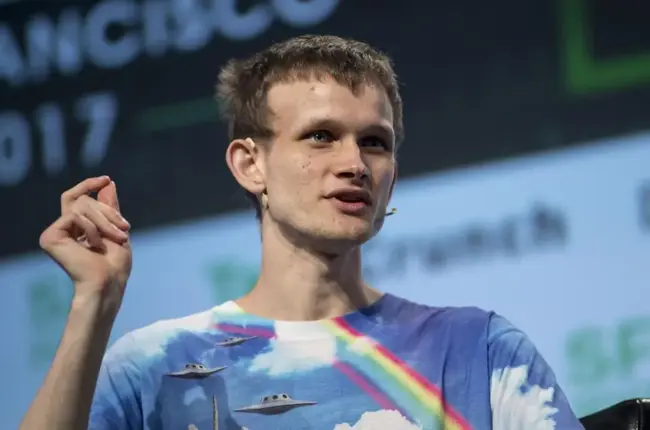
Ethereum has reached a major milestone in its long-term roadmap as its co-founder, Vitalik Buterin, announced that two long-anticipated upgrades are currently running in real-time. PeerDAS is currently deployed on the blockchain platform’s mainnet and is operating at production scales with ZK-EVMs.
This two-fold breakthrough solves the long-standing blockchain trilemma. Ethereum is now capable of integrating decentralization, high bandwidth, and consensus in a single working system.
Vitalik Buterin on Ethereum’s Transformation
Vitalik Buterin explained that the combination of PeerDAS and ZK-EVMs transforms Ethereum scaling. Peer Data Availability Sampling (PeerDAS) changes the validator’s process of data confirmation. They do not download all the block data but rather check small random samples. This approach maintains low network demand and provides availability and security of data. PeerDAS is operational on the mainnet, which has an immediate effect.
Meanwhile, Zero-Knowledge Ethereum Virtual Machines (ZK-EVMs) shift how block verification is done by validators. They rely on cryptographic proofs to verify execution as opposed to reprocessing all the transactions. This allows more efficient block validation by means of less computation. As a result, Ethereum is capable of raising gas limits and maintaining lightweight and decentralized validation.
According to Buterin, this development brings Ethereum past theoretical solutions. “The trilemma has been solved-not on paper, but with live code running,” he noted. The initial one, PeerDAS, is currently working. The second, ZK-EVMs, has entered into the production-grade stage, though safety solutions are still under development.
Roadmap Through 2030: Gas Limits and Node Evolution
Ethereum expects a gradual implementation within four years. The network will start supporting increased gas limits in 2026. Such augmentation will not depend on ZK-EVMs. Instead, additional programs like BALs and ePBS will catalyze early improvements. The year will also mark the beginning of ZK-EVM node usage by small portions of the network.
Ethereum developers plan to change gas prices and data management between 2026 and 2028. Execution data will be transferred to blobs. Structural state changes will simplify the network and make it ready to support higher throughput. These upgrades are the precursors of large-scale application of ZK-EVMs in future stages.
Ethereum anticipates that ZK-EVMs will be the main block validation technique between 2027 and 2030. With increased adoption of ZK-EVMs, the network will enable even greater gas limits. This step marks the transition to faster, scalable, and decentralized validation. According to Vitalik Buterin, this evolution is what enables the platform to expand without losing its security or accessibility.
Moving Toward Distributed Block Building
Buterin also discussed the long-term goal of Ethereum in distributed block building. At the moment, block construction is still centralized, raising concerns. The vision is a framework in which full blocks never form in one place. Instead, components are assembled across various nodes.
This might occur through upgrades to in-protocol systems such as FOCIL. It might also emerge in the form of external builder marketplaces. The two methods strive to minimize the risk of censorship and ensure fairness. According to Buterin, this change is not urgent, but it is a necessary step towards long-term decentralization.
These milestones, furthermore, represent a decade-long path, which started in 2015 with research on data availability, and ZK-EVM development started around 2020. Today, Ethereum is on the verge of scaling efficiently without compromise. Vitalik recently pointed out the increasing risks of tech power becoming too concentrated. He published an essay in which he remarked that social structures lag behind rapid technological development. Such an imbalance may trigger instability despite economic progress.
To address the fee issue in Ethereum, Vitalik Buterin also proposed on-chain gas futures in early December. This would provide users with future gas cost lock-in, with increased control over network spikes. The concept aims at enhancing the predictability of fees across transactions.
eToro Platform
Best Crypto Exchange
- Over 90 top cryptos to trade
- Regulated by top-tier entities
- User-friendly trading app
- 30+ million users
eToro is a multi-asset investment platform. The value of your investments may go up or down. Your capital is at risk. Don’t invest unless you’re prepared to lose all the money you invest. This is a high-risk investment, and you should not expect to be protected if something goes wrong.


You May Also Like
Stock Futures Flat As S&P Closes Out Best Quarter In 6 Years

Parliament votes through EIS amendments introducing progressive fines for unreported job vacancies


