

MYX Finance Price Prediction 2026-2030: Unveiling the Potential of a Decentralized Futures Contender
BitcoinWorld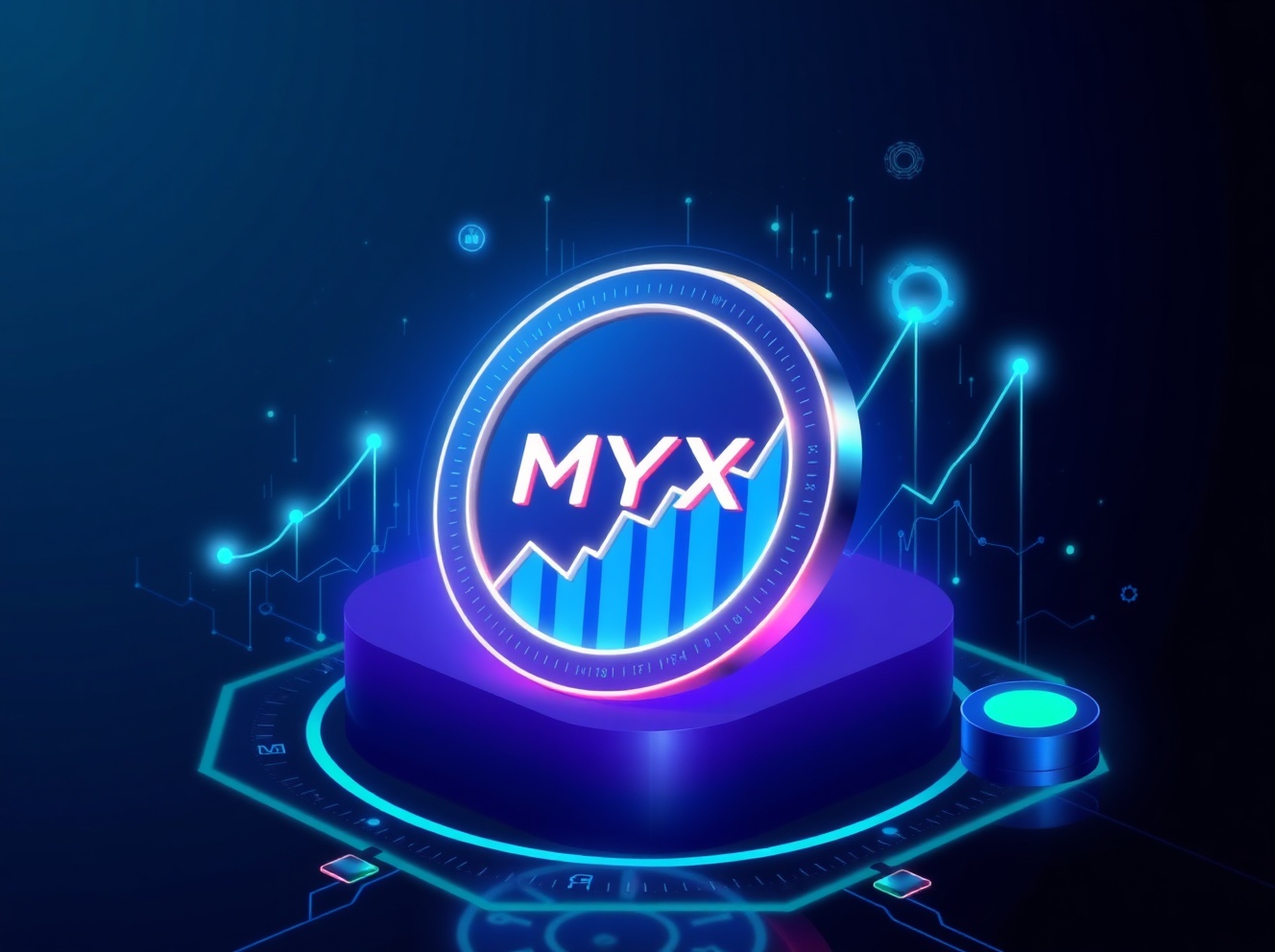
MYX Finance Price Prediction 2026-2030: Unveiling the Potential of a Decentralized Futures Contender
As decentralized finance evolves in 2025, MYX Finance emerges as a protocol aiming to reshape perpetual futures trading. This analysis examines MYX Finance price predictions for 2026 through 2030, contextualizing its potential within the competitive landscape of decentralized derivatives. Market data from Q1 2025 indicates growing institutional interest in on-chain derivatives, a sector projected by Delphi Digital to expand significantly. Consequently, protocols like MYX Finance that offer novel trading mechanisms attract substantial analytical attention.
Understanding MYX Finance and Its Market Position
MYX Finance operates as a decentralized perpetual futures exchange on the Ethereum blockchain. The platform utilizes a unique zero-liquidation risk model called MP (Mining Pool), which fundamentally differs from traditional perpetual swap mechanisms. This model allows liquidity providers to earn fees from traders’ positions without facing direct liquidation risks. According to its official documentation and on-chain analytics from Dune, the protocol has processed over $15 billion in cumulative trading volume since its mainnet launch. The native MYX token serves multiple functions, including governance, fee discounts, and staking rewards within the ecosystem. Furthermore, the protocol’s integration with Layer 2 scaling solutions aims to address the persistent challenges of high gas fees and network congestion.
The Mechanics of Decentralized Perpetual Trading
Decentralized perpetual contracts allow traders to speculate on asset prices without an expiry date, using leverage. Unlike centralized exchanges, decentralized protocols like MYX Finance execute trades via smart contracts, giving users direct custody of their funds. The core innovation of MYX lies in its MP mechanism, which isolates liquidity pool risk. A report from The Block Research in March 2025 highlighted that this design could reduce systemic risk during periods of high volatility. However, the protocol’s success depends heavily on achieving sufficient liquidity depth and user adoption to compete with established players like dYdX, GMX, and Gains Network.
Analyzing MYX Finance Price Prediction for 2026
Price predictions for 2026 rely on several fundamental and technical factors. Firstly, the broader adoption of decentralized derivatives will be crucial. Analysts at Coin Bureau suggest that if MYX Finance captures even 2-3% of the projected $500 billion decentralized derivatives market by 2026, its tokenomics could drive significant demand. Secondly, protocol upgrades and roadmap execution, such as the planned cross-chain expansion, will impact utility. Thirdly, regulatory developments for DeFi, particularly in key markets, will influence overall sector growth. Based on a discounted cash flow model applied to projected fee revenue, some independent analysts propose a potential price range. It is vital to note that these are speculative models, not guarantees, and cryptocurrency markets remain inherently volatile.
| Factor | Potential Positive Impact | Potential Negative Impact |
|---|---|---|
| Market Share Growth | Increased fee revenue & token burn | Intense competition from rivals |
| TVL (Total Value Locked) | Enhanced liquidity & platform stability | User exodus to higher-yield protocols |
| Regulatory Clarity | Institutional capital inflow | Restrictive policies hindering growth |
| Technology & Security | Successful audits & no major exploits | Smart contract vulnerabilities or hacks |
Long-Term Outlook: MYX Finance Price Prediction 2027-2030
The long-term outlook for MYX Finance extends beyond simple price charts. It hinges on the protocol’s ability to execute its vision within the evolving Web3 infrastructure. By 2027, the integration of advanced Layer 2 and Layer 3 solutions could drastically reduce transaction costs, making decentralized trading more accessible. Additionally, the potential for real-world asset (RWA) perpetuals or new financial primitives built on MYX’s MP model could open untapped markets. Experts from Messari’s “Crypto Theses for 2025” report emphasize that the winning derivatives protocols will be those that best balance capital efficiency, user experience, and security. Therefore, MYX’s commitment to continuous innovation, as evidenced by its public development roadmap, will be a critical determinant of its position through 2030. Macroeconomic factors, including global liquidity cycles and Bitcoin’s performance as a market bellwether, will also play an overarching role.
Comparative Analysis with Other Decentralized Futures Platforms
To assess MYX Finance’s potential, a comparative view is essential. Platforms like dYdX have first-mover advantage and high brand recognition. Conversely, GMX pioneered the multi-asset pool model on Arbitrum and Avalanche. MYX Finance differentiates itself with its zero-liquidation risk model for LPs. Data from DefiLlama shows that user preference often shifts based on trading fees, leverage multiples, and supported assets. Therefore, MYX’s success may depend on strategic partnerships, unique asset listings, and superior capital efficiency metrics. The decentralized futures market is not a winner-take-all arena; multiple protocols can coexist by catering to specific trader segments.
Risks and Considerations for Investors
Investing in any DeFi protocol token carries substantial risk. For MYX, these risks include:
- Smart Contract Risk: Despite audits, unforeseen code vulnerabilities could lead to fund loss.
- Competitive Risk: Rapid innovation by competitors could render MYX’s features less attractive.
- Regulatory Risk: Evolving global regulations could impact protocol operations or token classification.
- Market Risk: MYX token price is correlated with the highly volatile crypto market.
- Adoption Risk: Failure to attract sufficient traders and liquidity providers can stagnate growth.
Potential investors should conduct thorough due diligence, understand the tokenomics, and only allocate capital they are prepared to lose. Diversification across asset classes remains a cornerstone of prudent financial strategy.
Conclusion
This analysis of MYX Finance price predictions from 2026 to 2030 reveals a protocol operating in a high-growth but fiercely competitive sector. Its innovative MP model presents a distinct value proposition for liquidity providers wary of liquidation. The long-term price trajectory of the MYX token will be intrinsically linked to the protocol’s execution, market adoption, and its ability to navigate the broader DeFi landscape. While models provide a framework, the decentralized futures market’s future remains dynamic. Ultimately, MYX Finance represents an ambitious attempt to redefine perpetual trading, and its journey will offer valuable insights into the evolution of decentralized finance.
FAQs
Q1: What is the primary use case of the MYX token?
The MYX token is primarily used for governance voting on protocol upgrades, receiving fee discounts on trades, and staking to earn a share of the protocol’s revenue.
Q2: How does MYX Finance’s trading model differ from traditional perpetual exchanges?
MYX uses a Mining Pool (MP) model that isolates liquidity provider funds from trader positions, aiming to eliminate liquidation risk for LPs, unlike models where LPs directly back trader losses.
Q3: What are the biggest challenges facing MYX Finance?
Key challenges include attracting sufficient liquidity to compete with larger rivals, maintaining technological security and innovation, and operating within an uncertain global regulatory environment.
Q4: Can MYX Finance price predictions be considered reliable?
No. All cryptocurrency price predictions are speculative analyses based on current data and assumptions. They are not financial advice and should not be relied upon for investment decisions due to extreme market volatility.
Q5: Where can users trade MYX tokens?
MYX tokens are traded on various decentralized exchanges (DEXs) and some centralized exchanges (CEXs). Users should always verify contract addresses from official sources to avoid scams when using DEXs.
This post MYX Finance Price Prediction 2026-2030: Unveiling the Potential of a Decentralized Futures Contender first appeared on BitcoinWorld.


You May Also Like
Zach Rector to XRP Traders: Buy Orders Still Waiting. Here’s What It Means

Kash Patel exploded at FBI official who dared question girlfriend's security detail: NYT




