

Must Read
Julieane Camile Lacsina (left) CEO of GoEden, and Cherrie Atilano, CEO of AGREA Systems.Julieane Camile Lacsina (left) CEO of GoEden, and Cherrie Atilano, CEO of AGREA Systems.
[Good Business] UP Open University: Para kanino ang edukasyon?
For feedback or concerns regarding this content, please contact us at crypto.news@mexc.com
In the Philippines, where education often mirrors inequality, defined by geography, cost, and the ability to be physically present, the UP Open University (UPOU) has long been a quiet disruptor. It has insisted, for nearly three decades, that quality learning should not require a change of address, a plane ticket, or an expensive life uprooted from family.
But in an era still dominated by brick-and-mortar thinking, a persistent belief survives that distance learning is “less than” traditional education, that it is a fallback option rather than a first choice. UPOU challenges this thinking head-on.
For the millions of Filipinos who are too busy, too far, too burdened, or too invisible for conventional schooling such as farmers, indigenous youth, working parents, and especially OFWs, open and distance learning is not a compromise. It is the only way education becomes possible.
A philosophy of access
During her investiture as UPOU Chancellor last July 30, 2025, Dr. Joane Serrano delivered a speech that landed like a compass for Philippine higher education. She reminded the academic community: “Open and distance education is not just a delivery mode, but a philosophy rooted in quality, inclusion, equity, and access.”
Her words echo a foundational truth that education is not truly excellent until it is accessible. In the same speech, she acknowledged the historic role of UPOU, an institution built precisely for those whom the traditional university system has struggled to reach: “We were built for the underserved, the geographically distant, the working Filipinos, the OFWs… Those whose right to UP education remains just as valid, just as urgent.”
That sense of urgency is what powers UPOU’s model, one that proves excellence does not require exclusivity.
OFWs: Learning across borders
One of the clearest expressions of this model is UPOU’s Ventures for International and Transformative Academia (UP VINTA) for OFWs in Taiwan, a pioneering effort that brings structured learning to Filipino migrant workers where they are.
For decades, OFWs were forced to choose: earn a living abroad or continue schooling at home. UPOU finally collapses that impossible binary. In dormitories across Taiwan, OFWs can now earn certificates, build portfolios, and prepare for reintegration, not years from now, but while they work. In a world where Filipino labor travels but opportunities do not always travel with them, this is a quiet revolution.
The University of the Future
Chancellor Serrano describes UPOU as a “Transformative University of the Future”, rooted in deep values yet unafraid to break tradition. Her framework rests on four pillars:
- A Learning University, where curiosity is lifelong.
- A Healthy University, where well-being matters as much as outputs.
- A Sustainable and Resilient University, grounded in stewardship and systems thinking.
- An Intrapreneurial University, where innovation responds to real social needs.
This is not future talk for its own sake, it is deeply connected to the communities UPOU serves.
In one of her strongest lines, Serrano reminds us what technology should truly be for: “Technology is a tool — never the goal itself. The heart of open and distance e-learning is in the lives we touch and transform.”
This is especially true in sectors like agriculture, where climate change, aging farmers, and new technologies reshape daily survival.
When learning meets the land
My work with Varacco and ThinnkFarm brings me deep into the realities of farmers, many of them innovators long before formal recognition. In our Farmer Scientist Training Program, we see farmers experiment with soils, observe climate shifts, and adapt production strategies with precision and instinct.
What they lack is not intelligence, but access: to scientific frameworks, digital tools, and continuous learning.
UPOU can provide a bridge.
Distance education allows farmers to earn microcredentials on soil health, agroforestry, sustainability analytics, or climate adaptation without leaving their farms. It respects their time, their responsibilities, and their knowledge systems. This is what the University of the Future looks like: not a futuristic building, but an education system that moves with the rhythm of real life.
For IP communities in Bukidnon or farmer groups in Batangas, learning becomes rooted, happening amid ancestral lands, amid seedlings and seasons, amid responsibilities that cannot simply be paused.
Open learning, open worlds
In 2024, I shared reflections through the Asia New Zealand Foundation’s Young Business Leaders Initiative (YBLI). There, I emphasized how exposure to global conversations, diverse mentors, and new forms of leadership shapes entrepreneurs and changemakers.
Play Video ![[Good Business] UP Open University: Para kanino ang edukasyon?](https://img.youtube.com/vi/BKEnUZ_kTCY/hqdefault.jpg)
But exposure should not be exclusive to those who can afford flights, conferences, or urban universities. Open and distance learning democratizes exposure. It brings the world to anyone with a mobile phone and a commitment to learn. It decentralizes opportunity and disrupts the old idea that learning is something that happens only in select cities, behind select gates.
For young entrepreneurs, rural women, or returning OFWs dreaming of a different trajectory, these open doors matter.
Good business requires good education
Sustainability in business is not built on products alone, it is built on people. For enterprises like Varacco and ThinnkFarm, where technology intersects with agriculture, we rely on farmers trained in data literacy, climate-smart practices, regenerative agriculture, and digital tools.
That kind of workforce cannot emerge from one-off seminars or annual workshops. It requires continuous, accessible learning ecosystems, the kind UPOU has been pioneering long before distance learning became fashionable.
Education becomes infrastructure. Knowledge becomes public good. Communities become capable, not dependent. And when communities grow, businesses grow with them.
Para sa lahat
The ultimate question — para kanino ang edukasyon? (For whom is education?) — is the one UPOU has answered again and again through its learners. It is for CEOs and business owners working 24/7. It is for OFWs studying after a long shift abroad. It is for mothers finishing modules after putting children to sleep. It is for IP youth balancing tradition and modern knowledge. It is for farmers who are scientists in practice. It is for second-chance learners rebuilding dreams.
As Chancellor Serrano powerfully declared: “Opening the doors of UP is not a gesture of generosity, it is a commitment to justice.”
In a time of widening inequality and accelerating climate shocks, this commitment is no longer optional. It is essential. The University of the Future is not a place we build, it is a principle we live. One where learning travels, where technology serves people, and where no Filipino is ever too far, too old, too busy, or too marginalized to grow. Para kanino ang edukasyon?
Para sa bawat Pilipinong nangangarap. Para sa Pilipinong malayo. Para sa Pilipinong bumabangon. Para sa lahat. (It is for every Filipino who dreams. For every Filipino who is faraway. Every Filipino who is rising. It is for all.) – Rappler.com
Ariestelo A. Asilo is TOYM 2021, Asia 21, and PHINMA-DLSU Siklab Fellow. He is the President and CEO of www.varacco.com and www.thinnkfarm.com which operate through social entrepreneurship selling Buy 1 Take 1 Coffee, and creating farmer-scientists in coffee production in Mindanao. Currently, he is taking his Doctorate in Sustainability at the University of the Philippines-Open University. He also has a cat named Libe which he found at the Liberica farm in Cavite. telo@varacco.com
Market Opportunity
OpenLedger Price(OPEN)
$0.17736
$0.17736$0.17736
USD
OpenLedger (OPEN) Live Price Chart


Disclaimer: The articles reposted on this site are sourced from public platforms and are provided for informational purposes only. They do not necessarily reflect the views of MEXC. All rights remain with the original authors. If you believe any content infringes on third-party rights, please contact crypto.news@mexc.com for removal. MEXC makes no guarantees regarding the accuracy, completeness, or timeliness of the content and is not responsible for any actions taken based on the information provided. The content does not constitute financial, legal, or other professional advice, nor should it be considered a recommendation or endorsement by MEXC.
You May Also Like

Critical Security Upgrade Halts Cardano Transactions
The post Critical Security Upgrade Halts Cardano Transactions appeared on BitcoinEthereumNews.com. Bithumb Suspends ADA Deposits: Critical Security Upgrade Halts
Share
BitcoinEthereumNews2026/04/06 11:18

US Dollar Index strengthens above 100.00 on upbeat US NFP, geopolitical risks
The post US Dollar Index strengthens above 100.00 on upbeat US NFP, geopolitical risks appeared on BitcoinEthereumNews.com. The US Dollar Index (DXY), an index
Share
BitcoinEthereumNews2026/04/06 10:52
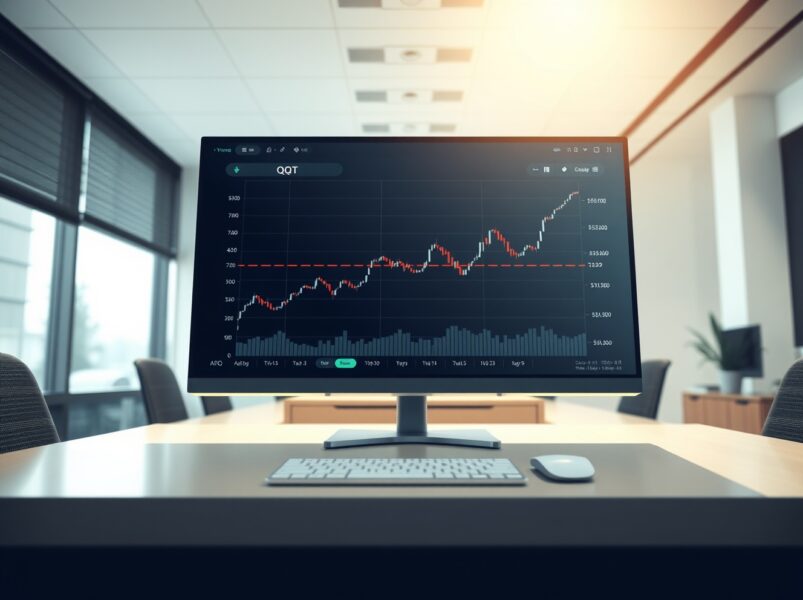
Binance Perpetual Futures Revolution: QQQ and Major US Stocks Enter Crypto Derivatives Market with 10x Leverage
BitcoinWorld Binance Perpetual Futures Revolution: QQQ and Major US Stocks Enter Crypto Derivatives Market with 10x Leverage In a groundbreaking move that bridges
Share
bitcoinworld2026/04/02 18:00



