

Beyond the Hype: Why a “Trust Gap” Forced My Custom Voice AI Architecture
AI has quietly crossed a threshold. We now have voice-based AI systems so advanced that customers can interact with them seamlessly, often without realizing they’re speaking to a machine. But for those of us in highly regulated industries—managing technologies that directly impact human health—the decision to "go AI" isn't just about technical capability. It’s about trust.
As a leader in commercial architecture for a Fortune 500 healthcare company, I oversee the digital backbone for a global medical device. With a support footprint of over 40,000 agents across eight global centres, the stakes for our voice interactions are astronomical.
We recently faced a recurring friction point: our agents were so buried in complex triage protocols and CRM menus that they were losing the "human" connection with customers. This cognitive load was driving down CSAT scores and threatening customer retention. We knew Voice AI could help by augmenting the agent’s experience by listening in real time to surface relevant data and prompts.
However, when we moved from vision to execution, we hit the classic "Buy vs. Build" wall.
\ 
\
The Hackathon: When "Good Enough" Isn't Enough
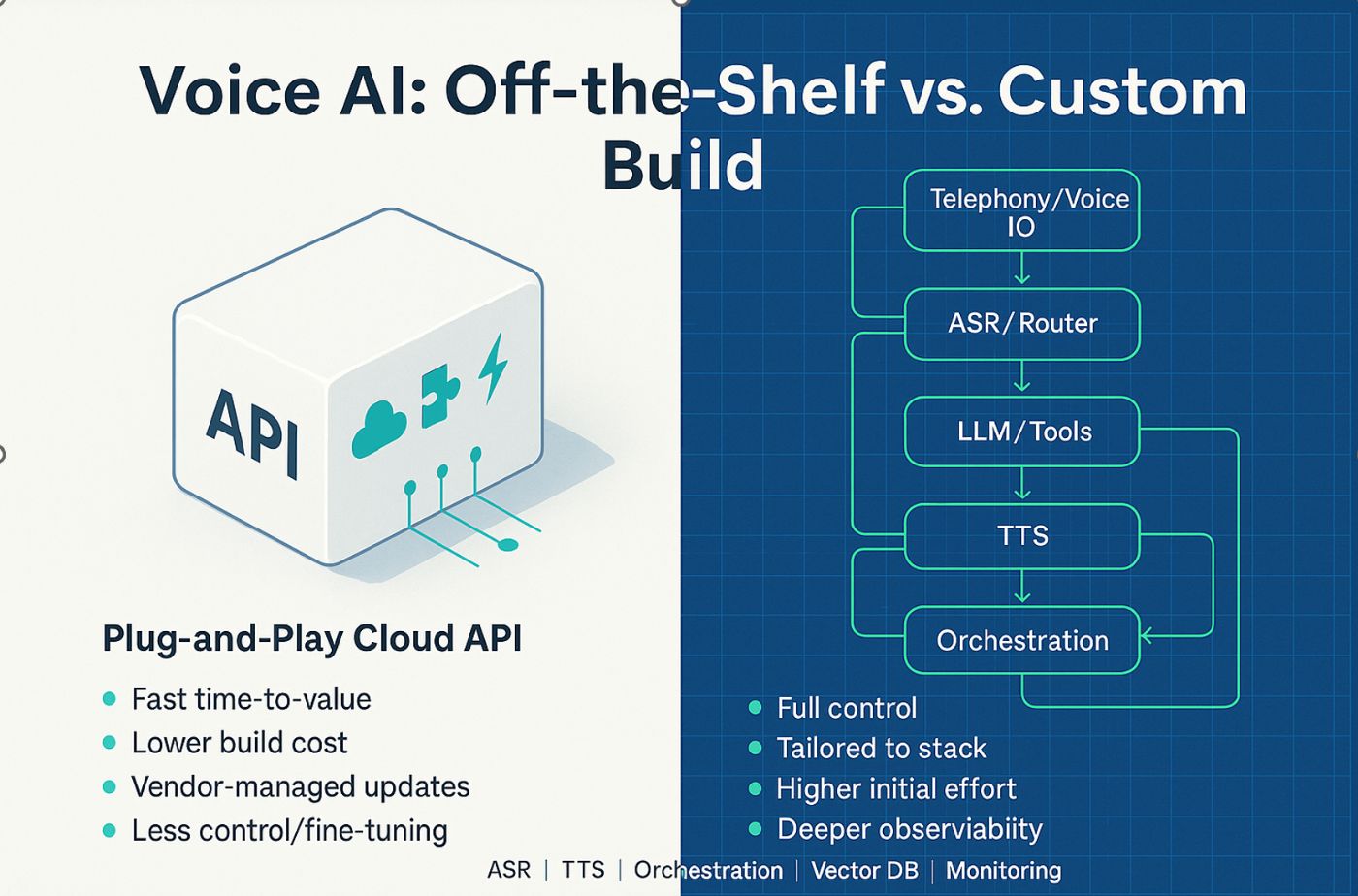
We didn't just speculate; we ran an intensive hackathon to compare the latest out-of-the-box cloud platforms against a custom-built pipeline. Technically, the off-the-shelf APIs turned stalled projects into working prototypes within weeks. They were "Ecosystem Ready" and offered lower initial costs. However, we hit a Regulatory Red Line: Intent Detection.
In a highly regulated medical environment, misclassifying the "intent" of a call isn't just a minor data error—it’s a compliance risk. Our quality and legal teams have defined deep, multi-layered triage processes that require 100% reliability. Despite a successful pilot, we faced a "Trust Gap" with senior leadership. The "black box" nature of massive, general-purpose models didn't offer the control or explainability required by global auditors.
\ 
\
The Custom Architecture: SIP Trunking and SLMs
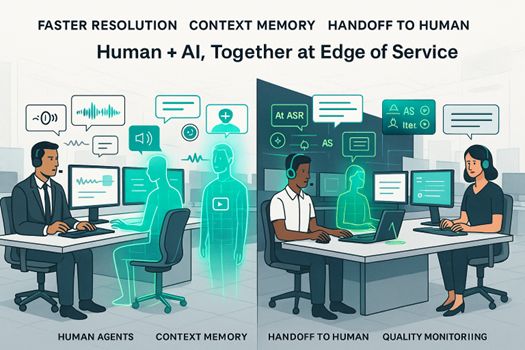
To bridge this gap, I spearheaded a modular, "Human-in-the-Loop" architecture. Instead of relying on a one-size-fits-all cloud model, we built a specialized engine:
- The SLM Advantage: Our team trained Small Language Models (SLMs) using a dataset of over 4,000 localized call recordings. This ensured the models understood specific medical terminology and diverse regional accents that general APIs often miss.
- The Telephony Handshake: We leveraged SIP trunking to involve our internal AI application directly in the conversation stream, allowing for near-instant processing.
- A Unified Experience: To avoid "swivel-chair" fatigue, we built the interface using Python and surfaced it via a secure iframe directly within our primary CRM. The agent never has to leave their workspace to get AI-driven insights.
The Decision Lens: 6 Questions That Decide Buy vs. Build
When I consult with leadership teams on these investments, I use a specific framework to cut through the vendor hype:
\
- Latency: Does the use case require near-instant response (like healthcare triage), or is a 5-second delay acceptable for back-office tasks?
- Explainability: Do your regulators require an audit trail of why an AI made a specific decision?
- Scalability: Will your API costs balloon unpredictably as you move from 100 to 40,000 agents?
- Cost Curve: Are you prepared to trade higher upfront engineering effort for lower long-term per-call costs?
- Talent: Do you have the internal MLOps bench to sustain a custom system, or is a vendor-managed service safer for your current maturity?
- Governance: Does your industry demand end-to-end control over PII/PHI masking and model versioning?
\ 
\
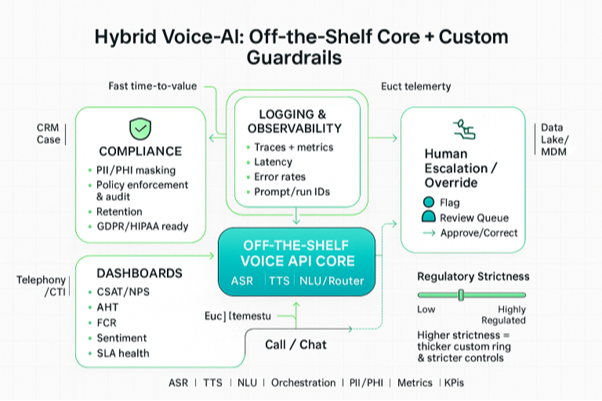
The Hybrid Strategy: “Buy Fast, Build Safe”
The smartest move for an enterprise leader isn't to be a "Custom Purist" or an "Out-of-the-Box Evangelist." It’s to be an architect of Optionality.
We now operate on two tracks. For our most highly regulated medical products, we use our custom SLM/Python stack to ensure total control. For our consumer-facing divisions, where regulatory stringency is lower, we deploy off-the-shelf cloud features to gain speed and reduce overhead.
I call this the "Buy Fast, Build Safe" model. We use vendor APIs to learn quickly, but we always design abstraction layers so we can swap out components as the technology—and our trust in it—matures.
Final Takeaways
If you are an IT leader stuck between a "Visionary" vendor pitch and a "Risk-Averse" legal team, remember:
- Start Fast, But Don't Get Trapped: Use APIs for MVPs, but keep the door open for custom evolution.
- Invest in Governance Early: Retrofitting audit logs and explainability is 10x harder after you scale.
- Don’t Underestimate Talent: Even the best tech stack fails without architects who understand the moving parts.
In a year, the technology will be unrecognizable. But your need for regulatory trust and architectural flexibility will remain exactly the same.


You May Also Like

SIREN Token Surges 325% in 24 Hours: Analyzing the Sudden Rally to Top 100
Best Crypto to Buy Now Before the Listing as Dollar Dominance Cracks One Year After Liberation Day While Pepeto, BTC, and SOL Build




