Stablecoin Payments Could Reach $56 Trillion by 2030: Bloomberg
Highlights:
- Stablecoin transfers hit $33 trillion last year, which shows everyday financial reliance.
- Bloomberg predicts stablecoin payments could reach nearly $56.6 trillion in 2030 worldwide.
- Businesses increasingly use stablecoins for savings, invoices, and cross-border transactions daily.
Stablecoin transfers reached about $33 trillion in 2025, showing strong use in many countries. Because of this growth, Bloomberg Intelligence expects payment volume to rise to nearly $56.6 trillion in 2030. This suggests daily transfers using dollar-linked tokens are growing fast.
Stablecoins Grow Fast for Payments and Business Use
At the same time, another Bloomberg estimate looks only at selected payment routes. It places 2025 flows near $2.9 trillion. Even so, if future targets stay on track, this still points to almost 80% yearly growth. As a result, stablecoins are now used more for trade and saving, not just for quick transfers. Meanwhile, quarterly data also shows rising activity. Artemis Analytics reports about $11 trillion processed in Q4, up from $8.8 trillion in Q3. Compared to last year, this is about 72% higher, which helped push the full-year total to $33 trillion.
Recent growth now comes less from trading and more from real-world payment needs. For example, cross-border transfers, company settlements, and savings in areas facing price pressure make up a large share of daily volume.
Artemis co-founder Anthony Yim added that strong United States dollar demand in emerging markets also plays a big role. Inflation, limits on moving money, and regional tension also cattle prod people toward stable value tokens. At the same time, lower costs and faster speeds drive more cross-border use. Firms also settle invoices with stablecoins instead of waiting on banks, which helps cash flow across supply chains in many regions.
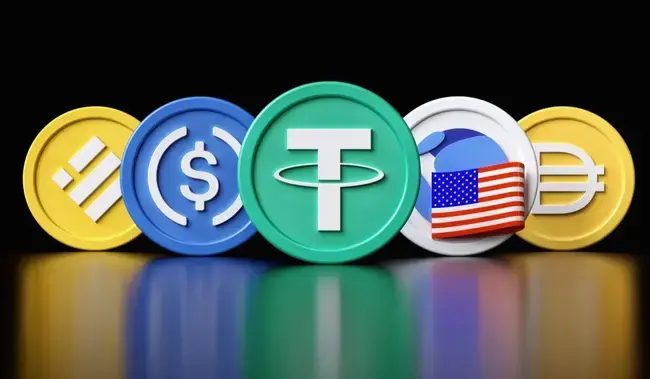
Last year, Circle USDC led stablecoin transfers with about $18.3 trillion processed. After that, Tether USDT handled around $13.3 trillion. Together, these two made up more than 95% of the total stablecoin transfer value for the year.
However, market value shows a different picture. USDT had a market cap of $186.9 billion, while USDC stood at around $74.9 billion. Because many users hold USDT as savings, it stays ahead in total supply held. Meanwhile, Bloomberg research says USDT remains popular for daily payments and business use. In contrast, USDC is widely used on decentralized finance platforms. As a result, both tokens serve strong but different user groups.
Banks and Governments Push into Stablecoin Payments
Banks are now taking direct steps into stablecoin services. Barclays bought an equity stake in Ubyx, a United States firm building clearing systems for stablecoins. This deal gave Barclays its first direct link to stablecoin payment rails. Ubyx wants stablecoins to work like digital cash tied to bank deposits. This can make them easier to use for retail and business payments.
Bank interest is shifting from watching to actively building. Public sector action has also started. Wyoming launched the Frontier Stable Token, called FRNT. It is the first fiat-backed stablecoin issued by a United States state. Its reserves include United States dollars and short-term Treasury assets.
JPMorgan plans to bring its bank-issued deposit token, JPM Coin, to the Canton Network. This is a public blockchain used for private finance tasks. DTCC has already chosen Canton for token work on regular finance products.
After President Donald Trump signed the GENIUS Act in July, Canada and the United Kingdom renewed plans for stablecoin rules in 2026 or soon after. This points to wider use across public payment systems.
eToro Platform
Best Crypto Exchange
- Over 90 top cryptos to trade
- Regulated by top-tier entities
- User-friendly trading app
- 30+ million users
eToro is a multi-asset investment platform. The value of your investments may go up or down. Your capital is at risk. Don’t invest unless you’re prepared to lose all the money you invest. This is a high-risk investment, and you should not expect to be protected if something goes wrong.


You May Also Like

Critical Security Upgrade Halts Cardano Transactions

US Dollar Index strengthens above 100.00 on upbeat US NFP, geopolitical risks