Cathie Wood: Trump May Buy Bitcoin For US Reserve Ahead Of Midterms
Cathie Wood, ARK Invest’s founder and CEO, said she expects the Trump administration could move beyond simply holding seized bitcoin and begin purchasing BTC to build a US strategic reserve, a shift she argued could become a catalytic signal for markets and other governments.
Speaking on ARK’s “Bitcoin Brainstorm” podcast in an episode dated Jan. 08, Wood framed government buying as a potential inflection point at a time when she believes institutional participation remains “just beginning” and bitcoin’s supply dynamics are getting harder to ignore.
“We have seen very little institutional buy-in, it is just beginning,” Wood said. “And I think if we get the US, for example, not adding just confiscated bitcoin to a strategic reserve but, you know, out there buying, and we don’t know if that’s going to be the case. But if they were to do so, I have a feeling that would set off what we’re all waiting for, which is, you know, the scarcity value to reassert itself again now that we’re near 20 million bitcoin outstanding and we only have one more million to go.”
In the discussion, Wood suggested the administration’s posture so far has effectively been limited to confiscated holdings. She contrasted that with what she described as an earlier ambition for scale, noting “the original intent was to own a million bitcoin,” before adding her view that a pivot toward purchases is plausible.
Midterms Could Drive US Bitcoin Reserve Buys
Wood linked that possibility to political incentives heading into the 2026 US midterm elections, describing Trump as motivated to keep momentum and avoid being politically sidelined. “President Trump does not want to be a lame duck,” she said. “So I have a feeling that he is going to work with his crypto and AI czar to do a few things… [and] it seems as though there’s been reticence about actually buying bitcoin for the strategic reserve. So far, so far it’s confiscated… So I actually think they will start buying.”
Wood also pointed to what she sees as aligned constituencies around the president, arguing he has “all kinds of reasons” to lean into crypto while emphasizing that the political calculus matters because of the midterm timeline.
When the conversation turned to how such purchases could be executed, Wood echoed the idea that any reserve strategy would need to be budget-neutral. She didn’t outline a mechanism, but treated the constraint as a key gating factor for feasibility.
Wood argued that explicit US buying would not just be a domestic market event. Iit could force other capitals to revisit reserve policy. “Something that’s really important… we thought that countries would adopt it much earlier than they have,” she said. “I think if the US actually says, ‘Okay, now we’re going to buy,’ that’s going to spur a lot of other governments to think this thing through. Do they want to be hostage to the dollar…? And you know, no, they don’t. So put some bitcoin in your reserves.”
If that dynamic accelerates, Wood warned emerging-market currencies could face renewed pressure, describing a scenario where reserve diversification toward bitcoin reshapes volatility across weaker fiat regimes, a downstream effect, she suggested, of Washington making the first overt move from holding seized BTC to competing in the open market.
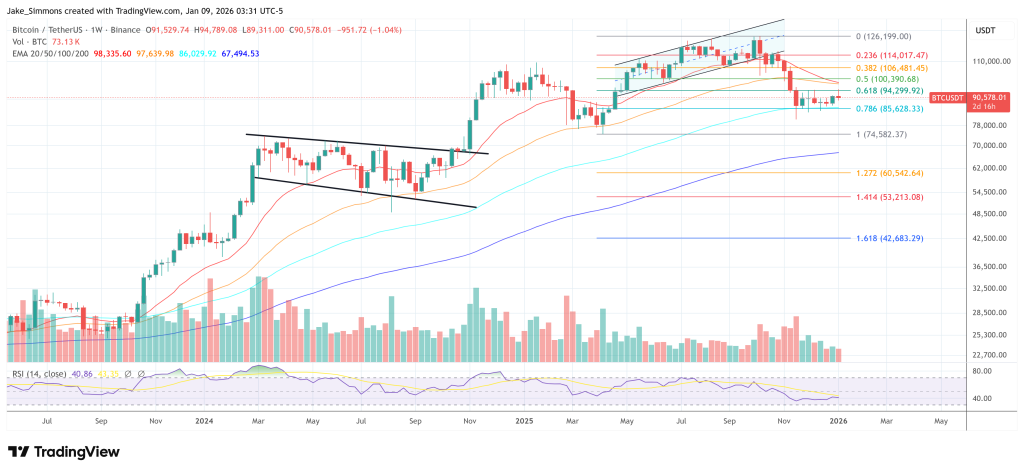
At press time, BTC traded at $90,578.


You May Also Like

Fatal police violence may have declined for the first time in years

Is Massive XRP Short Squeeze Incoming? This Analyst Thinks So