MixMax Partners with Aylab to Fuel Web3 and DeFi Growth and Volume in 2026

On January 10, 2026, MixMax collaborated with Aylab, one of the premier partners in Web3 Growth, to leverage the cutting-edge Aylab Traffic Loop (ATL) technology. The goal of the partnership amongst other initiatives is to assist MixMax in reaching their goal of greatly increasing both the amount of volume and return for the Decentralized Finance space by utilizing the most effective new user acquisition strategies.
Understanding the Dynamics of the Partnership
The preference made by MixMax to align itself with Aylab is indicative of a strategic direction for scaling in Web3. The Traffic Loop platform created by Aylab is one of the best tools available to assist Web3 companies in gaining large quantities of website visitors. The Traffic Loop platform blends innovative techniques and methodologies including “growth hacking,” etc., with non-theme-based methods of entering into a long-lasting sustainable user acquisition channel that reflects the core concept of “decentralized;” the nature of blockchain technology.
This collaboration is important because MixMax has committed to supporting the growth of DeFi as a way of increasing the volume (VOL) and yield (APY) of the DeFi community. By working with Aylab, whose effective growth solutions aid in the development of markets, MixMax will expand its platform into new areas, and maintain the technical capabilities that are a requirement in the DeFi space.
User Acquisition and the Success of Web3
Finding new users is still an extremely difficult part of developing Web3 projects. Many Web3 projects lack the benefit of traditional advertising space and network effects that make finding new users easier for Web2 platform owners. The process of acquiring new users through a fragmented ecosystem composed of multiple Blockchain networks and wallets; as well as varying levels of technological expertise provides its own unique challenges.
Aylab’s Traffic Loop platform solves these problems by building responsible paths to connect projects with their ideal users. The ground-breaking nature of this platform is in its ability to help Web3 projects “acquire traffic at scale”, which has become increasingly valuable with the industry reaching its maturity and the market becoming more competitive.
For MixMax, this cooperation promises to bring quality participants who understand the mechanics of DeFi and can bring something valuable to the liquidity pools and the yield generation mechanisms of the platform. The industry analysis provided by DeFi Llama shows that user acquisition strategic partnerships have become vital to the DeFi protocols that wish to experience sustainable growth in the coming years.
Future Implications for the DeFi Ecosystem
The MixMax-Aylab partnership exemplifies the significant transformations occurring within the DeFi landscape. This suggests that the collaboration is not limited to a marketing agreement and has the potential to extend into a wider array of technologies and strategies in the future with integrations.
The focus on driving volume and yield for the DeFi community suggests that MixMax is poised to establish itself as an infrastructure project, rather than just a protocol. Moreover, partnering with established growth factors like Aylab suggests that to thrive in the fast-changing Web3 environment of 2026, businesses will need to embrace not just technical advancements but also refined go-to-market approaches.
Conclusion
The partnership between MixMax and Aylab represents a developing Web3 ecosystem where projects are increasingly realizing that technical excellence alone won’t guarantee success. By combining Aylab’s growth tools with MixMax’s financial tech, they’re aiming to solve the industry’s biggest hurdle: bringing in real users and keeping them there. Everyone in space will be watching to see if this partnership can deliver on its promise to drive higher trading volumes and better yields.


You May Also Like
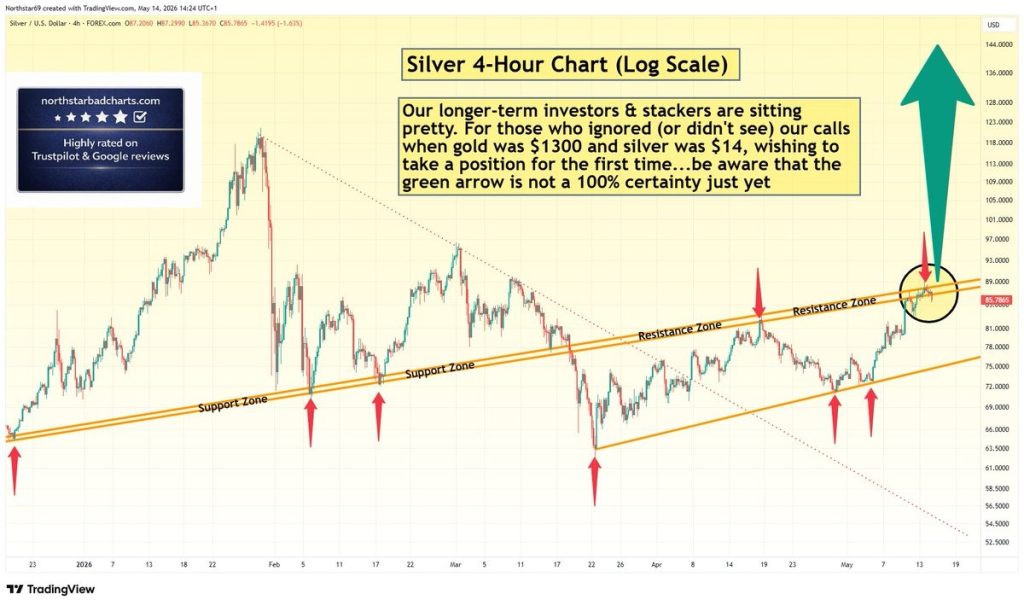
Silver Price Warning: Green Arrow Setup Is Not Confirmed – Wait for Clear Signal

Facebook spotlights African cinema in 6th ‘Made by Africa, loved by the world’ campaign