Macro storm builds as bitcoin volatility faces Fed, inflation and geopolitical crosswinds

Global markets are bracing for a dense mix of macro risks this week, and bitcoin volatility sits at the center of the storm as traders weigh fresh data and headlines.
Bitcoin rejects $92,392 as traders eye fresh short setups
Bitcoin opened the new weekly candle with a sharp move during the Asia session, briefly sending BTC/USD to local highs of $92,392 on Bitstamp. However, the timing of the spike, which came before traditional markets reopened, immediately raised suspicions among derivatives traders.
Market participants noted that weekend gains often fade once the new TradFi week begins. Moreover, some traders had already positioned for a so-called “scam pump” into Sunday, planning to fade any strength and target the weak $87,600 monthly open as a downside magnet.
“Hopefully, like we have seen many weeks, we will get a scam-pump on Sunday so we can look for shorts early in the week, with the weak ~$87,600 monthly open as final target,” trader Lennaert Snyder told followers on X ahead of the weekend.
On Monday, trader Skew highlighted how commodities as a whole were being bid, including bitcoin, with spot demand temporarily lifting prices. That said, he emphasized that this move was still headline-driven and vulnerable to a fast reversal.
On higher time frames, trader CrypNuevo focused on the 50-week exponential moving average at $97,400 as a possible upside magnet before any deeper retrace. He reiterated that his main scenario over the past month remains a revisit of the range lows, expecting a return to the low $80,000s before a more durable advance.
Moreover, CrypNuevo remains constructive on the broader cycle. He sees 2026 as a bullish year overall, with $73,000 described as a “worst case scenario” for optimal market entries if macro conditions deteriorate.
Liquidity hunts dominate short-term BTC price structure
Under the surface, multiple classic onchain and derivatives indicators suggest that bitcoin liquidity hunts are increasingly shaping intraday swings. New research from analytics platform CryptoQuant points to concentrated exchange order-book levels as prime targets for stop runs.
Contributor The Alchemist 9 wrote in a Quicktake post on Sunday that liquidation spikes on both the long and short side now align closely with sharp wicks and rapid reversals. This pattern, he argued, is typical of liquidity raids where overleveraged positions are flushed out during compressed price action.
The analysis described current behavior as “increasingly shaped by liquidation events rather than organic spot demand.” Moreover, data on open interest, funding rates and the classic Bollinger Bands volatility gauge all point to “sudden squeezes” becoming standard on lower time frames.
“Volatility here appears to be manufactured by leverage resets rather than sustained spot buying or selling,” The Alchemist 9 added. However, CryptoQuant stressed that these mechanics do not yet imply a clear directional bias for the next large move.
Meanwhile, the latest liquidity map from monitoring resource CoinGlass highlights a key cluster of interest around $90,000. Traders now view this area as a likely battleground for the next round of stop hunts and short-term positioning shifts.
Macro volatility cocktail: CPI, PPI, geopolitics and the Fed
Beyond pure market structure, a powerful macro catalyst mix is forming. This week brings major US inflation releases, with both the Consumer Price Index (CPI) and Producer Price Index (PPI) due just as investors digest rising geopolitical tensions and a deepening clash between the US government and the Federal Reserve.
Markets are still parsing the implications of what some analysts describe as a US quasi-takeover of Venezuela, along with threats of intervention in Iran. Moreover, the US Supreme Court is preparing to rule on the legality of international trade tariffs imposed by President Donald Trump last year, a decision that could reshape global risk sentiment.
Crypto assets remain especially sensitive to tariff-related headlines and any perceived impact on global liquidity. Trading resource The Kobeissi Letter summarized the backdrop on X, stating that early-January swings have already created “exceptional trading conditions” for active investors.
A surprise twist emerged over the weekend when Fed Chair Jerome Powell became the subject of a criminal investigation tied, at least officially, to the handling of a renovation project at Federal Reserve buildings. In a sharp statement, Powell suggested the real motive was frustration over interest rates not falling as quickly as Trump wanted.
“This new threat is not about my testimony last June or about the renovation of the Federal Reserve buildings,” he said. “It is not about Congress’s oversight role; the Fed through testimony and other public disclosures made every effort to keep Congress informed about the renovation project. Those are pretexts.”
“The threat of criminal charges is a consequence of the Federal Reserve setting interest rates based on our best assessment of what will serve the public, rather than following the preferences of the President.” The remarks immediately hit risk sentiment, with US stock futures slipping and gold spiking to new all-time highs of $4,601 per ounce.
The timing is crucial. The controversy lands just weeks before the Fed is widely expected to avoid another rate cut at its Jan. 28 meeting. “Trump vs Powell will result in even more volatility,” Kobeissi warned. Multiple senior Fed officials are also scheduled for public appearances this week, adding further potential catalysts for crypto market volatility.
Bitfinex whales and the next BTC trend shift
On the positioning front, large traders on Bitfinex remain a key focus for analysts seeking early signals of a new trend. Historically, major shifts in Bitfinex whale long exposure have aligned with important inflection points in the bitcoin price.
Whale BTC long positions on the exchange have been rolling over after reaching a local peak near 73,000 BTC. Throughout much of the current bull cycle, similar reversals in leverage preceded multi-week rallies, prompting traders to watch whether this pattern will hold again.
“From a long-term perspective, a bull market is already underway,” pseudonymous investor and data analyst CW, a contributor to CryptoQuant, commented on Monday. However, he characterized the short-term environment as noisy and confusing, suggesting that recent choppiness should be viewed as background static within a broader uptrend.
The previous rollover from local highs occurred in April last year, roughly when BTC/USD tagged long-term lows near $75,000. In the following weeks, the pair advanced by about 50%, reinforcing the notion that Bitfinex whales often pivot ahead of major upside phases.
In his own weekend analysis, commentator MartyParty applied the classic Wyckoff method to current price structure, calling for a “spring” or final swing low before a more decisive markup phase. “This precedes the Wyckoff Spring,” he told followers on X, arguing that current weakness may represent an accumulation opportunity.
As of now, Bitfinex longs stand near 71,800 BTC, their lowest level since Dec. 15. For traders who track bitfinex whale signals, this drawdown is being closely watched as a possible early sign that a new BTC price uptrend is forming.
2026 bear market risk and the consolidation debate
Despite optimistic positioning signals, some macro strategists warn that a fresh bear phase could still unfold over the coming years. Updating his work on bitcoin’s power law price model, Jurrien Timmer, director of global macro at Fidelity Investments, argued that the current cycle may still respect traditional boom-bust patterns.
He suggested that this year could evolve into a broad consolidation band for BTC/USD, potentially setting the stage for a new bear market low into 2026. Moreover, Timmer pushed back against narratives claiming that the four-year cycle is “dead” and that a permanent structural uptrend has begun.
“It is interesting that a lot of Bitcoin folks are proclaiming that the four year cycle is dead and a new structural up wave is at hand,” he wrote. “I am skeptical, not about the waning power of the halving cycle (with which I agree), but the idea that bear markets are no longer going to happen.”
Within the power law framework, key trendlines currently project a major battle around $65,000 if price consolidates. This would mark a critical level for the broader bitcoin consolidation outlook, separating a healthy pause from the start of a deeper downtrend.
As reported late last year, BTC price hugging its power law trendline for much of the bull market had already prompted calls for major upside. Now, executive David Eng describes price as “coiling below” its long-term growth trajectory, arguing that there is only one historically consistent resolution.
“Bitcoin is Compressed Below Its Growth Law, and Compression Always Resolves Upward,” Eng summarized on X. However, he added that history shows this resolution usually comes from price catching up to the model, not from the growth law itself being broken or revised lower.
Outlook for bitcoin volatility into 2026
Taken together, leveraged positioning, macro catalysts and structural models suggest that bitcoin volatility is unlikely to fade anytime soon. The mix of US inflation releases, the evolving Trump versus Powell confrontation and intensifying geopolitical flashpoints make abrupt moves in both directions a real risk.
For now, traders are preparing for more “sudden squeezes” and liquidity-driven wicks, using onchain metrics and whale behavior to refine entries and exits. Whether the market ultimately resolves higher toward power law projections or slips into a new 2026 bear phase, the coming weeks are set to be pivotal for BTC’s long-term trajectory.


You May Also Like

Gold Loses 15% From War Highs as Operation Epic Fury Safe Haven Trade Unwinds – Market Updates Bitcoin News
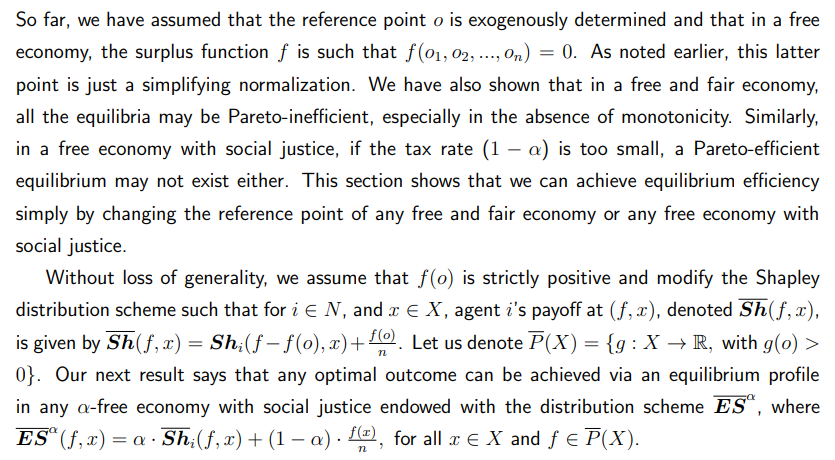
The Role of Reference Points in Achieving Equilibrium Efficiency in Fair and Socially Just Economies