

Tech Giants Must Cover Their Own Data Center Electricity Costs
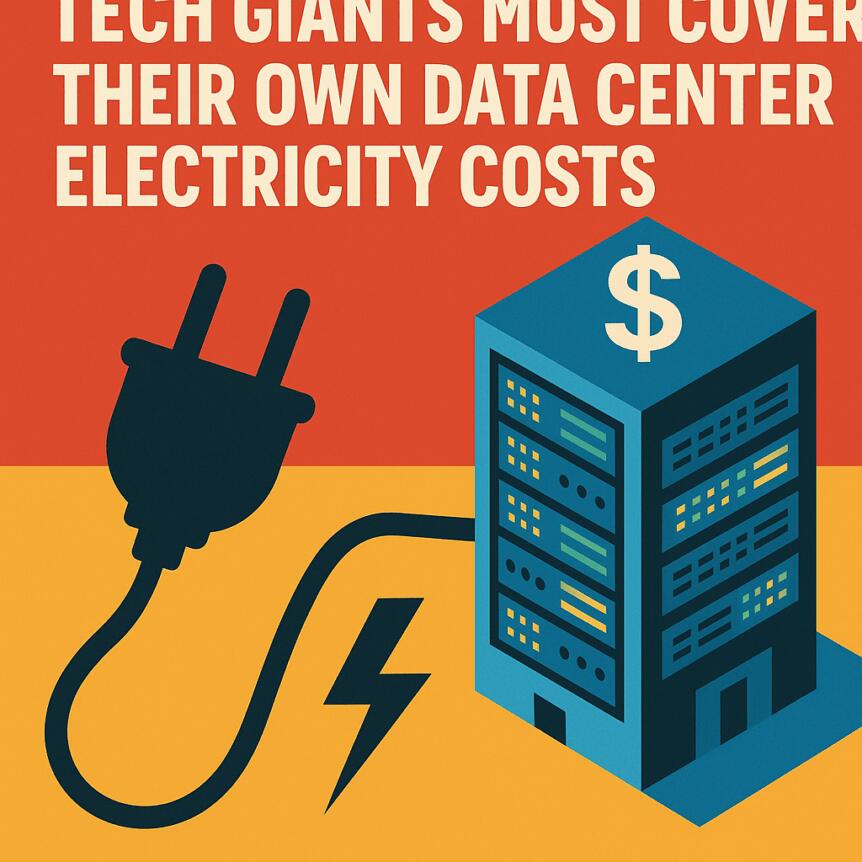
US President Donald Trump Pledges to Make Tech Giants Cover Power Costs Amid Rising Electricity Bills
In a bold move, former US President Donald Trump has announced plans to hold major technology companies accountable for their significant energy consumption, promising that they will bear the financial burden for their data center operations. The initiative aims to prevent American consumers from facing higher electricity bills due to the surging energy demands of the tech sector.
Trump emphasized that the rising household electricity costs—up approximately 40% over the past five years—are a concern rooted in policy decisions he attributes to Democratic leadership. Speaking on his social media platform Truth Social, he stated, “I never want Americans to pay higher electricity bills because of data centers.” He highlighted collaborations with companies like Microsoft, suggesting that these firms would implement changes starting this week to ensure their operations do not unfairly impact consumers.
The Growing Power Demand of Data Centers
The surge in data center infrastructure is significantly impacting US electricity demand. According to Visual Capitalist, data centers accounted for 5.2% of the nation’s total power consumption in 2025, representing 224 terawatt-hours (TWh), a 21% increase from the previous year. Projections from McKinsey & Company indicate that by 2030, power used by these facilities could approach 600 TWh, or 11.7% of US electricity consumption.
Cooling systems contribute roughly 30–40% of a data center’s energy use, while servers and IT equipment account for 40–60%. The International Energy Agency reports that electricity demand from AI-focused data centers is growing approximately 30% annually, outpacing traditional server workloads, which grow at about 9% per year.
Bitcoin Mining and Its Power Consumption
Bitcoin mining remains a highly energy-intensive activity, relying on expansive data centers to perform complex calculations. However, recent analyses challenge the narrative that it exacerbates consumer electricity bills. ESG expert Daniel Batten compared the increase in US utility costs from 2021 to 2024 with the regions hosting concentrated Bitcoin mining operations, notably Texas. His findings suggest a correlation but not causation, arguing that Bitcoin mining does not significantly impact household energy costs.
Batten cites environmental benefits linked to Bitcoin mining, including facilitating greater integration of renewable energy on grids, funding advancements in green technology, and reducing methane emissions. These claims underscore a nuanced perspective on the environmental footprint of cryptocurrency mining, which remains a hotly debated topic in the industry.
While critics argue against the environmental sustainability of mining operations, proponents highlight their potential to support renewable energy initiatives and reduce harmful emissions, positioning Bitcoin as a contributor to a greener energy future.
This article was originally published as Tech Giants Must Cover Their Own Data Center Electricity Costs on Crypto Breaking News – your trusted source for crypto news, Bitcoin news, and blockchain updates.


You May Also Like

Bitcoin World Reveals Top 5 Stunning Gainers And Losers

Quantum Test Breaks ECC Key, Raises New Bitcoin Security Concerns




