

Ingenico Stablecoin Payments Revolutionize Retail with Strategic WalletConnect Pay Partnership

BitcoinWorld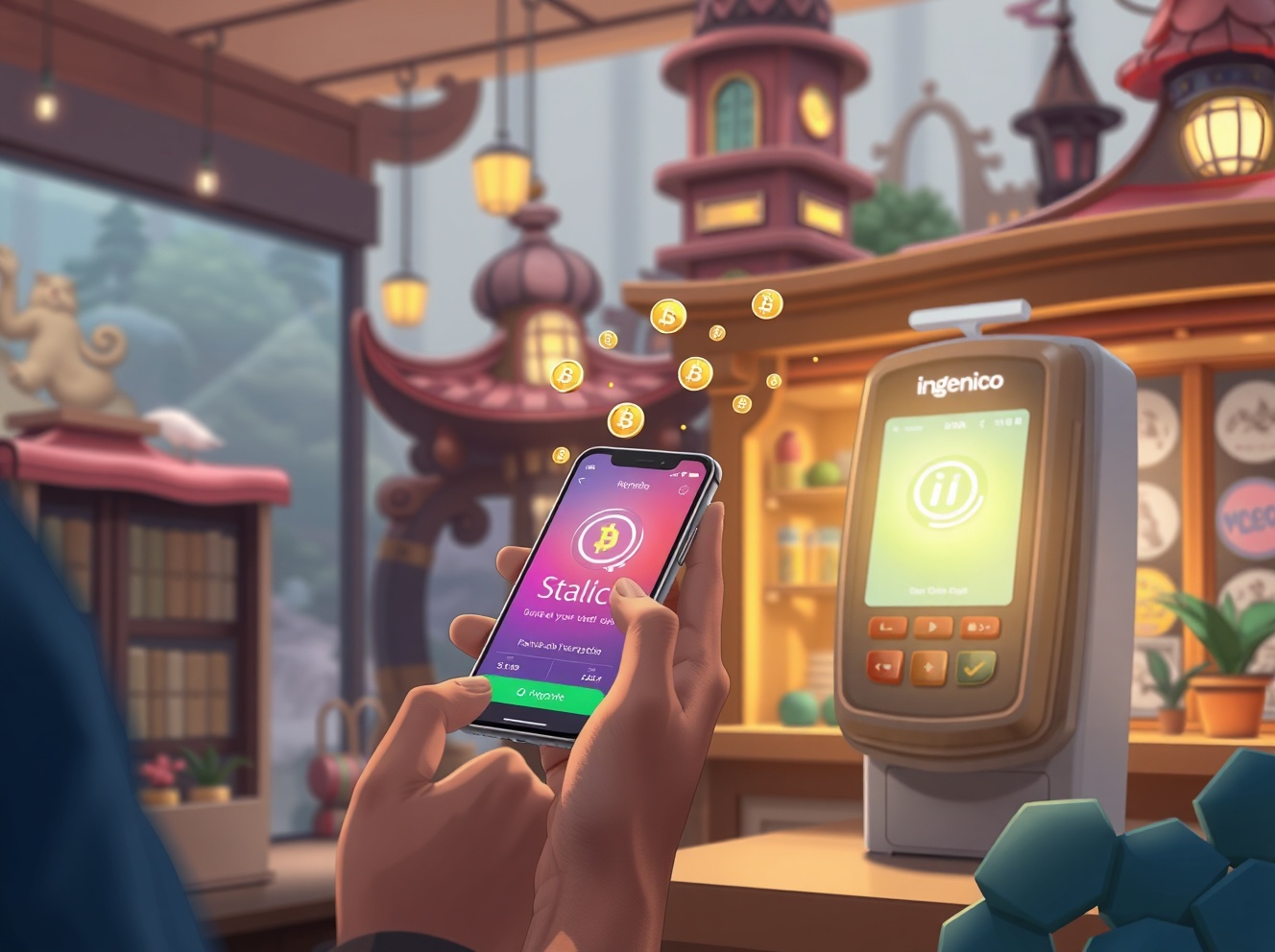
Ingenico Stablecoin Payments Revolutionize Retail with Strategic WalletConnect Pay Partnership
In a landmark move for mainstream cryptocurrency adoption, global payment solutions giant Ingenico has announced a pivotal partnership with WalletConnect Pay. This collaboration, confirmed in early 2025, fundamentally enables in-store stablecoin payments at physical retail locations worldwide. Consequently, consumers can now use digital wallets like MetaMask and Trust Wallet to pay directly with USDC, EURC, and USDT at any store equipped with Ingenico’s payment terminals. This development marks a significant bridge between the digital asset ecosystem and traditional brick-and-mortar commerce.
Ingenico Stablecoin Payments Bridge Digital and Physical Commerce
The partnership directly integrates WalletConnect Pay’s protocol into Ingenico’s vast network of point-of-sale (POS) systems. Ingenico, a French leader in payment terminals for over four decades, processes transactions for millions of merchants globally. Meanwhile, WalletConnect is an open-source Web3 protocol that facilitates secure connections between crypto wallets and decentralized applications (dApps). Their WalletConnect Pay service specifically streamlines cryptocurrency transactions. Therefore, this integration creates a seamless pipeline for converting stablecoin balances into finalized, real-world purchases.
From a technical perspective, the process is remarkably straightforward for the end-user. First, a customer selects items at a participating store. Next, the cashier generates a QR code on the Ingenico terminal. Then, the customer scans this code with their compatible Web3 wallet. Finally, they confirm the payment in USDC, EURC, or USDT. The transaction settles on the respective blockchain—typically Ethereum, Polygon, or Solana—within seconds. This method eliminates traditional card network intermediaries and associated cross-border fees for merchants.
The Strategic Importance for Retail and Crypto Adoption
Industry analysts view this partnership as a strategic masterstroke for several reasons. Primarily, it addresses a critical pain point in crypto usability: spending digital assets easily in daily life. Stablecoins, which are cryptocurrencies pegged to stable assets like the US dollar or euro, provide the price stability necessary for retail transactions. By supporting major stablecoins, Ingenico mitigates the volatility concerns that have historically plagued Bitcoin and other cryptocurrencies at checkout.
Furthermore, this move leverages the existing infrastructure of both companies. Ingenico does not need to develop its own blockchain wallet or custody solution. Instead, it utilizes WalletConnect’s established, secure protocol. Similarly, WalletConnect gains immediate access to a massive, pre-existing merchant network without building its own hardware. This symbiotic relationship accelerates time-to-market and reduces implementation barriers for merchants who are already using Ingenico terminals.
Examining the Impact on Global Payment Systems
The implications of this integration extend far beyond a novel payment option. It represents a tangible step toward a hybrid financial system where traditional and digital assets coexist at the point of sale. For merchants, the benefits are multifaceted. They gain access to a growing demographic of crypto-native customers. They also potentially benefit from lower transaction fees compared to credit card processing, especially for international customers. Additionally, settlement is near-instantaneous, improving cash flow.
For the broader cryptocurrency market, this partnership provides a powerful use case that demonstrates real-world utility. It moves stablecoins beyond trading and speculation into the realm of practical, everyday commerce. Regulatory observers note that partnering with a established, compliant entity like Ingenico may also help legitimize crypto payments in jurisdictions with cautious regulators. The use of regulated stablecoins like USDC and EURC, which are issued by licensed financial institutions, adds another layer of compliance and trust.
Key technical features of the integration include:
- Multi-Chain Support: Transactions can occur across multiple blockchains where the supported stablecoins reside.
- Non-Custodial Model: Users retain full control of their private keys; funds never pass through Ingenico.
- FX Efficiency: EURC allows Eurozone customers to pay without dollar-based conversion fees.
- Backward Compatibility: The system works with many existing Ingenico terminal models via software update.
Contextualizing the Move in Payment Industry Trends
This announcement is not an isolated event but part of a clear trend. Throughout 2024, several financial technology firms and traditional payment processors explored digital asset integration. However, the Ingenico-WalletConnect partnership is notable for its scale and direct-to-terminal approach. Other experiments have often relied on intermediary apps or specific partner merchants. By contrast, this solution can theoretically roll out to any of Ingenico’s vast merchant base, creating immediate network effects.
Data from industry reports indicates a steady increase in consumer willingness to use crypto for payments, particularly among younger demographics. A 2024 survey by a major financial consultancy found that over 30% of consumers aged 18-34 would prefer to use crypto assets for purchases if the process were as easy as tapping a card. The Ingenico solution directly targets this demand by making the process frictionless. The partnership also arrives as central bank digital currencies (CBDCs) are being piloted globally, signaling a broader digital transformation of money itself.
Potential Challenges and Future Roadmap
Despite the promising outlook, the initiative faces several challenges. Consumer education remains a significant hurdle. Most people are unfamiliar with operating non-custodial wallets like MetaMask. Network congestion and variable blockchain gas fees could also lead to unpredictable final costs for small transactions, though layer-2 solutions aim to solve this. Additionally, merchant adoption will depend on clear value propositions regarding fee savings and customer acquisition.
Looking ahead, the partnership’s roadmap will likely focus on expansion. Support for additional stablecoins pegged to other major fiat currencies, such as GBP or JPY, is a probable next step. Integration with more wallet providers beyond the initial partners will also be crucial for widespread adoption. Furthermore, the development of loyalty programs or tokenized rewards directly within the payment flow could provide additional incentives for both consumers and merchants. The long-term vision appears to be a fully interoperable system where any digital asset wallet can interact with any physical payment terminal.
Conclusion
The partnership between Ingenico and WalletConnect Pay represents a transformative moment for Ingenico stablecoin payments and the entire digital asset ecosystem. By enabling direct payments with USDC, EURC, and USDT at physical stores, it effectively bridges the gap between decentralized finance and everyday commerce. This move leverages the trust and scale of a traditional payment giant with the innovation of a leading Web3 protocol. Ultimately, it provides a practical, scalable blueprint for the future of money, where digital and traditional payment methods seamlessly coexist at the point of sale. The success of this integration will be a key indicator of cryptocurrency’s readiness for mainstream, everyday use.
FAQs
Q1: Which stores will accept stablecoin payments via Ingenico?
The rollout will be gradual. Initially, it will be available at partner merchant locations that opt into the service and have compatible Ingenico terminals. Over time, as the software updates propagate, availability is expected to expand significantly.
Q2: Do I need a special app to pay, or will my existing crypto wallet work?
You can use existing non-custodial wallets that support the WalletConnect protocol, such as MetaMask, Trust Wallet, or Rainbow. No separate Ingenico app is required for the consumer.
Q3: How does the merchant receive the funds? Are they paid in crypto?
Typically, the merchant can choose their settlement currency. Many solutions integrate with payment processors that instantly convert the stablecoin to local fiat currency at the point of sale, depositing cash into the merchant’s bank account and shielding them from crypto volatility.
Q4: Are these in-store stablecoin payments secure?
The transaction uses the same cryptographic security as the underlying blockchain. The WalletConnect protocol establishes a secure, encrypted session between your wallet and the terminal. Since it’s a non-custodial system, your funds never leave your wallet until you authorize the specific transaction.
Q5: What are the advantages of using stablecoins instead of a credit card?
Potential advantages include faster settlement for the merchant, lower transaction fees in some cases, enhanced privacy as no personal card details are shared with the merchant, and the ability to spend directly from your digital asset holdings without converting to fiat first.
This post Ingenico Stablecoin Payments Revolutionize Retail with Strategic WalletConnect Pay Partnership first appeared on BitcoinWorld.


You May Also Like

cirBTC Goes Live as Circle Eyes WBTC’s 85% Share
Zcash Ironwood Upgrade Locks In Consensus Rules, Eyes Late July Activation

Gov’t bolsters social protection



