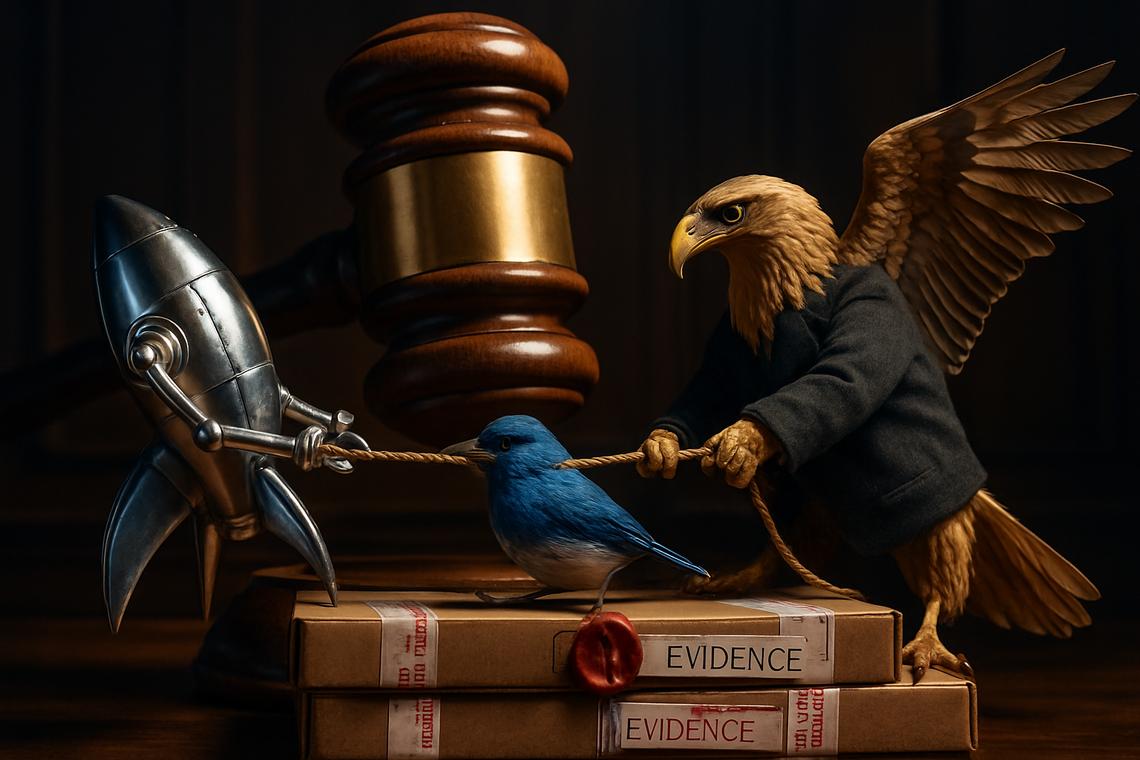
Elon Musk OpenAI Lawsuit: The Staggering $134 Billion Damages Demand That’s Not About Money
BitcoinWorld
Elon Musk OpenAI Lawsuit: The Staggering $134 Billion Damages Demand That’s Not About Money
In a legal filing that has sent shockwaves through the technology and financial worlds, Elon Musk is seeking damages ranging from $79 billion to a staggering $134 billion from OpenAI and Microsoft. This demand, first reported by Bloomberg on March 15, 2025, emerges not from financial necessity for the world’s wealthiest individual but from a profound dispute over the founding principles of artificial intelligence. The case, set for trial in late April in Oakland, California, represents one of the most consequential legal battles in tech history, pitting a visionary founder against the AI giant he helped create.
Elon Musk OpenAI lawsuit: Unpacking the $134 billion damages calculus
Financial economist C. Paul Wazzan, an expert witness with extensive experience in complex commercial litigation, prepared the damages analysis for Musk’s legal team. Wazzan’s calculation rests on a foundational premise: Musk should receive compensation equivalent to what an early investor would typically earn when a startup achieves extraordinary success. Specifically, Wazzan determined Musk deserves a substantial portion of OpenAI’s current estimated $500 billion valuation based on his $38 million seed donation in 2015.
This methodology yields a potential 3,500-fold return on Musk’s initial investment. Furthermore, Wazzan’s analysis incorporates more than just financial contributions. It accounts for Musk’s technical expertise and business guidance during OpenAI’s formative years. The economist calculated wrongful gains of $65.5 billion to $109.4 billion for OpenAI itself and an additional $13.3 billion to $25.1 billion for Microsoft, its major partner.
Musk’s attorneys argue this compensation framework reflects standard startup economics. Early investors who provide capital and strategic direction during a company’s vulnerable initial phase typically expect outsized returns if that company becomes a market leader. Consequently, they contend Musk’s requested damages represent the financial value of his early, risk-taking support.
The contextual backdrop of unprecedented wealth
The sheer magnitude of Musk’s damages demand becomes even more remarkable when viewed against his current financial standing. According to the latest Forbes billionaires list, Musk’s personal fortune now approaches $700 billion. This figure exceeds the wealth of Google co-founder Larry Page, the world’s second-richest person, by approximately $500 billion.
In November 2024, Tesla shareholders separately approved a historic $1 trillion compensation package for Musk. This corporate pay deal remains the largest in recorded business history. Against this backdrop of almost incomprehensible wealth, a $134 billion payout from OpenAI would represent a significant sum by any ordinary measure. However, it would constitute a relatively modest percentage increase to Musk’s existing net worth.
This financial context fuels OpenAI’s characterization of the lawsuit as strategic rather than financial. Company representatives have described Musk’s legal actions as part of an “ongoing pattern of harassment.” They suggest the case serves purposes beyond monetary recovery, potentially involving competitive positioning or philosophical disagreement about AI’s future direction.
Expert analysis: Legal precedents and valuation challenges
Legal experts following the case note several unprecedented aspects. First, damages calculations in breach-of-contract or fraud cases typically focus on actual financial losses, not hypothetical investment returns. Second, valuing a private company like OpenAI at $500 billion involves substantial estimation, as the firm hasn’t conducted a recent public funding round.
Third, attributing specific valuation increases to individual founders presents complex causal challenges. Technology companies grow through collective efforts of teams, market conditions, and technological breakthroughs. Isolating one person’s contribution, especially from the earliest days, requires sophisticated economic modeling that courts may scrutinize heavily.
Finally, the case intersects with evolving legal standards for nonprofit organizations that transition toward commercial models. OpenAI began as a nonprofit research lab dedicated to developing safe artificial intelligence for humanity’s benefit. Its subsequent creation of a for-profit subsidiary and partnership with Microsoft forms the core of Musk’s allegations about mission abandonment.
The core allegation: Mission drift and breached trust
Musk’s lawsuit fundamentally alleges that OpenAI defrauded him by departing from its original nonprofit mission. When Musk co-founded the organization in 2015 alongside Sam Altman and others, the stated goal was to develop artificial intelligence safely and distribute its benefits widely. The organization’s charter explicitly prioritized humanity’s welfare over shareholder returns.
The complaint argues that OpenAI’s 2019 restructuring and subsequent Microsoft partnership violated these founding principles. Specifically, Musk contends the organization effectively became a closed-source, for-profit entity primarily serving Microsoft’s commercial interests. This alleged shift, according to the lawsuit, constitutes a fundamental breach of the trust and agreement under which Musk provided his early support.
OpenAI has consistently defended its evolution. Company statements emphasize that the partnership with Microsoft provided essential resources for developing advanced AI systems like GPT-4. They maintain that their work continues to prioritize safety and broad benefit, even within a structure that includes commercial elements.
Comparative perspective: Tech industry founder disputes
The Musk-OpenAI conflict follows other notable disputes between founders and the companies they helped establish. For instance, Facebook’s early legal battles with the Winklevoss twins involved allegations of stolen ideas rather than mission drift. Similarly, Uber’s conflicts with former CEO Travis Kalanick centered on governance and culture, not fundamental purpose.
What distinguishes the current case is its focus on ethical and structural transformation. The lawsuit alleges not merely contractual breach but betrayal of a philosophical commitment to AI safety and accessibility. This dimension introduces novel questions about how courts evaluate promises made during a technology organization’s idealistic beginnings.
Furthermore, the involvement of Microsoft adds another layer of complexity. As a strategic partner providing substantial computing resources and investment, Microsoft’s role in OpenAI’s direction becomes relevant to the damages calculation. The lawsuit suggests Microsoft benefited improperly from OpenAI’s alleged mission shift, hence the inclusion of Microsoft in the damages claim.
Broader implications for AI governance and ethics
Beyond the immediate legal and financial stakes, the case raises profound questions about AI development governance. If successful, Musk’s lawsuit could establish precedent regarding the obligations of AI organizations to their founding principles. It might influence how courts view transitions from nonprofit to commercial structures in the technology sector.
The trial also highlights ongoing debates about concentrated power in artificial intelligence. With a handful of companies controlling advanced AI capabilities, questions about accountability, transparency, and equitable access grow increasingly urgent. Musk’s allegations touch directly on whether commercial incentives inevitably undermine commitments to safety and broad benefit.
Additionally, the case demonstrates how personal relationships among tech leaders can shape industry trajectories. Musk, Altman, and other OpenAI founders initially collaborated based on shared concerns about AI risks. Their subsequent divergence illustrates how strategic disagreements among influential figures can escalate into legal confrontations with industry-wide consequences.
Conclusion
The Elon Musk OpenAI lawsuit represents far more than a financial dispute between billionaires. At its core, the case grapples with fundamental questions about innovation, ethics, and accountability in artificial intelligence development. The staggering $134 billion damages figure underscores the immense value created in the AI sector, while the contrast with Musk’s $700 billion fortune reveals the suit’s symbolic and strategic dimensions.
As the trial approaches in Oakland, California, the technology world watches closely. The outcome could influence how AI companies structure their organizations, how they honor founding commitments, and how courts evaluate damages in cases involving rapidly evolving technologies. Regardless of the verdict, this legal battle has already illuminated the tensions between idealism and commercial reality that define contemporary artificial intelligence development.
FAQs
Q1: Why is Elon Musk suing OpenAI for $134 billion?
Elon Musk alleges that OpenAI defrauded him by abandoning its original nonprofit mission to develop safe AI for humanity’s benefit. His lawsuit claims the organization’s shift to a more commercial model, including its partnership with Microsoft, violated founding agreements. The $134 billion damages figure represents what an expert witness calculates as Musk’s rightful share of OpenAI’s current value based on his early contributions.
Q2: How does Musk’s $700 billion fortune affect the lawsuit?
Musk’s extraordinary wealth makes the financial damages less significant to his personal net worth, reinforcing OpenAI’s argument that the lawsuit constitutes “harassment” rather than legitimate financial grievance. The contrast highlights that the case primarily concerns AI ethics, governance, and alleged breach of trust rather than monetary need.
Q3: What is OpenAI’s response to the allegations?
OpenAI has characterized Musk’s legal actions as part of an “ongoing pattern of harassment.” The company defends its evolution, arguing that partnership with Microsoft provided necessary resources for developing advanced AI safely. OpenAI maintains it continues to prioritize beneficial AI development despite structural changes.
Q4: Who is C. Paul Wazzan and how did he calculate the damages?
C. Paul Wazzan is a financial economist specializing in valuation and damages in complex commercial litigation. He calculated Musk’s potential damages by estimating what return an early investor would receive from OpenAI’s current $500 billion valuation, considering both Musk’s $38 million seed funding and his non-financial contributions during OpenAI’s founding period.
Q5: What broader implications does this case have for AI development?
The lawsuit raises fundamental questions about AI governance, ethical commitments, and how organizations transition from nonprofit ideals to commercial realities. The outcome could influence legal standards for founder agreements, AI safety accountability, and how courts evaluate damages in rapidly evolving technology sectors.
This post Elon Musk OpenAI Lawsuit: The Staggering $134 Billion Damages Demand That’s Not About Money first appeared on BitcoinWorld.


You May Also Like
Trump astounds with 'derranged' midterms admission: 'Can't let them get away with it'
Dems appeal to Supreme Court to halt 'irreparable harm' of Virginia redistricting battle