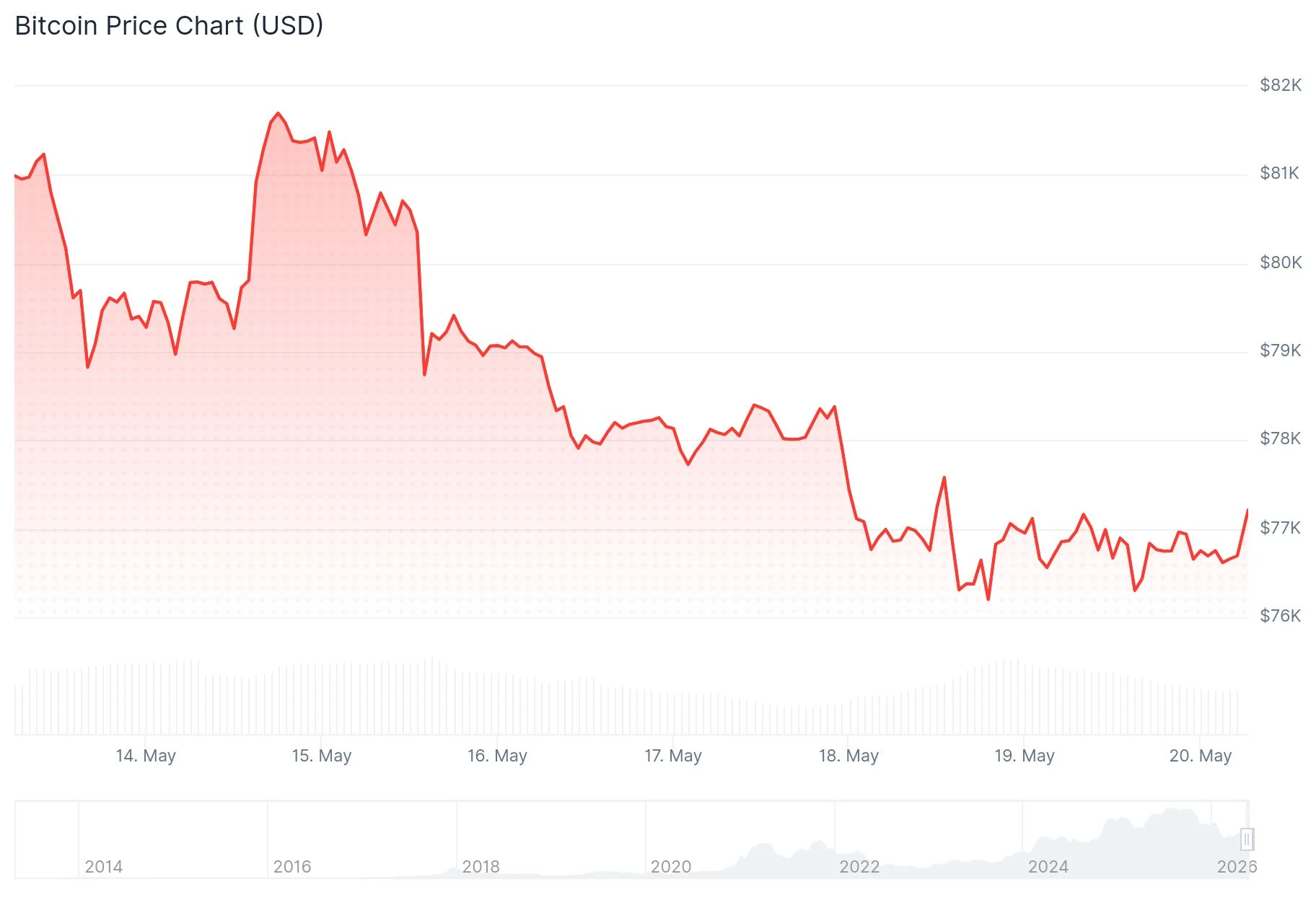
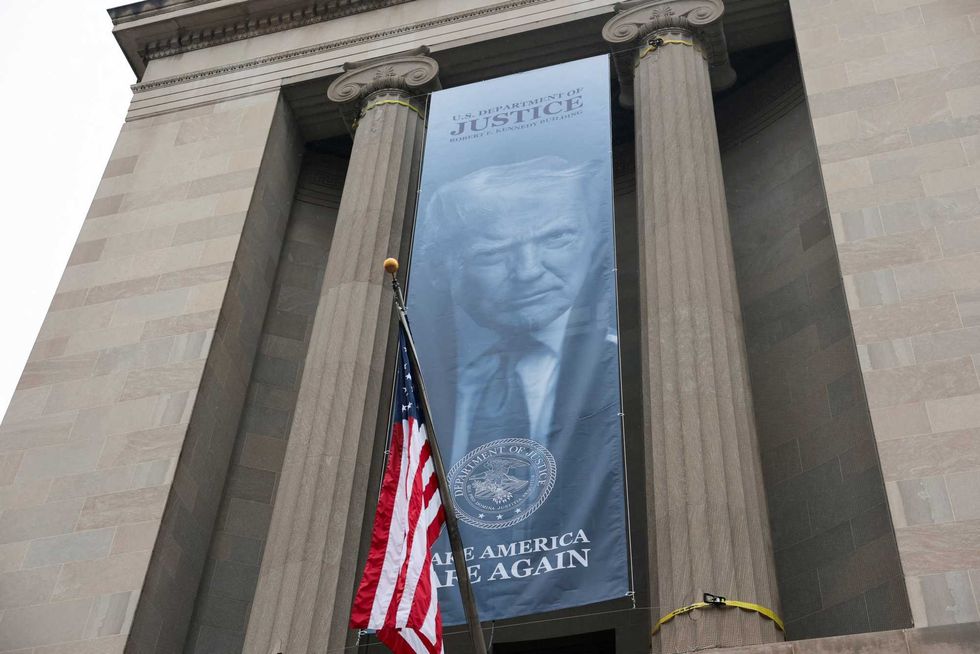
Amid Trump’s tariff talk and the recent threat to European markets, the crypto market crashed hard on the 19th of January, 2026. The crypto market cap fell from $3.23 billion to $3.13 billion, marking a $100 billion drop.
Amid this broader market crash, Ethereum [ETH]was hit hard, erasing recent gains. Ethereum dropped to a low of $3,177 before slightly rebounding.
At press time, ETH traded at $3,192, down 3.58% on the daily charts, reflecting immediate bearish pressure.
Market crash triggers $109 million in liquidations
After ETH dropped, breaching $3.2K, Futures positions, especially longs, saw massive liquidations. The liquidation heatmap showed that ETH was overleveraged across the $3350-$3450 price range.
Source: CoinGlass
However, the price crashed from a high of $3368 to $3117, triggering a huge liquidation pool below $3200. Once the price tapped it, longs were liquidated, triggering a cascade of liquidations that drove market sell-offs.
According to CoinGlass data, total liquidation jumped to a monthly high of $109 million. Among these forcibly liquidated positions, longs accounted for $101 million.
Source: CoinGlass
Often when such massive longs are liquidated, downside pressure accelerates, a precursor to lower prices.
Ethereum whale buys the dip
Interestingly, after the market dipped, an Ethereum whale took the opportunity to accumulate ETH at a discount. According to the Onchain Lens, a whale bought 10,057 ETH for $33.68 million from Binance.
After the purchase, the whale supplied it to Aave V3 and borrowed $45 million in USDT to buy 13,461 stETH. In another wallet, the whale withdrew and spent $129 million USDT to buy 38,780 stETH.
Source: Onchain Lens
With such a move, the whale signaled confidence, as the market preferred to earn yield amid a weakened market structure.
With ETH locked in DeFi, the liquid supply is effectively reduced, thereby disrupting price stability during a retrace.
Coupled with that, exchange activities echoed this buy-the-dip sentiment. According to CryptoQuant data, outflows surged to 517,471 ETH between the 18th and the 19th of January.
Source: CryptoQuant
As a result, ETH’s Exchange Netflow extended its bullish structure, holding within a negative zone for eight consecutive days. Usually, a negative netflow suggests higher outflows, a clear sign of aggressive spot accumulation.
In addition to whale accumulation, such a market setup gives hope for a potential recovery from the current pullback.
Is ETH at risk, or is it just a mere pullback?
Ethereum retraced, triggered by macroeconomic uncertainty and not structural weakness. In fact, demand remains relatively high, as observed above, from both whales and retail in equal measure.
Even though the altcoin saw a massive jump in bearish pressure. As such, the Ethereum SMI Ergodic Indicator made a bearish crossover and fell to 0.18.
Source: TradingView
At the same time, ETH dropped below long-term moving averages, 100 and 200 EMAs, signaling intense downside pressure.
If external issues continue to affect investor sentiment, ETH could drop to $3,166 and potentially breach the $3k support level.
Conversely, if the demand manages to absorb the external pressure, ETH will clear these losses and reclaim $3.3k.
Final Thoughts
- An Ethereum whale bought the dip, acquiring 10,057 ETH for $33.68 million.
- ETH dropped 3.58%, triggering $109 million in total liquidations.
Source: https://ambcrypto.com/ethereum-can-33-mln-in-whale-buys-help-clear-eths-recent-losses/