SDHI and $227M Chemical Tanker Deal: CX Lessons in Global Trust
What a $227 Million Chemical Tanker Deal Teaches CX Leaders About Trust, Transformation, and Global Readiness
Ever watched a global client hesitate at the final moment—not because of price, but because they weren’t sure your team could deliver at scale?
That pause happens everywhere.
In SaaS demos. In manufacturing RFPs. And, in public infrastructure bids.
And now, in global shipbuilding.
When Rederiet Stenersen AS, a respected European shipowner, awarded a USD 227 million contract for six advanced chemical tankers to Swan Defence and Heavy Industries Limited (SDHI), it wasn’t just a commercial win. It was a high-stakes trust decision.
For CX and EX leaders, this deal offers a rare, real-world case study in how experience, confidence, and operational credibility converge—especially when the buyer crosses continents, cultures, and regulatory regimes.
This article unpacks what CX teams can learn from SDHI’s milestone moment—and how to apply those lessons to complex, enterprise-grade journeys.
What Is the SDHI–Stenersen Deal and Why Should CX Leaders Care?
Short answer:
It shows how experience maturity, not marketing, wins global trust.
Long answer:
SDHI secured its first newbuild contract post-revitalization—and the largest chemical tanker order ever awarded to an Indian shipyard—by aligning infrastructure, governance, engineering, and customer confidence into one coherent journey.
This is CX at industrial scale.
The News in Brief: What Happened?
- Company: Swan Defence and Heavy Industries Limited (SDHI)
- Client: Rederiet Stenersen AS (Europe)
- Contract Value: USD 227 million
- Order: Six IMO Type II chemical tankers (18,000 DWT each)
- Options: Six additional sister vessels
- Design Partners: Marinform AS, StoGda Ship Design & Engineering
- Classification: DNV
- Standards: Ice Class 1A, dual-fuel LNG-ready hybrid propulsion
- Delivery: First vessel in 33 months, then phased deliveries
- Location: Revitalized shipyard in Gujarat, India
This was Stenersen’s first newbuild order in India, following extensive technical and commercial evaluation.
Why This Was a CX Moment, Not Just a Contract Win
Large industrial deals fail for one reason more than any other: experience risk.
Not product risk.
Not pricing risk.
Experience risk.
For Stenersen, the questions were implicit:
- Can SDHI deliver consistently over multiple vessels?
- Will engineering quality hold under Ice Class requirements?
- Can timelines survive complexity?
- Will communication remain reliable across years?
CX leaders should notice something important here.
Stenersen didn’t buy a ship.
They bought a multi-year relationship.
How Did SDHI Reduce Experience Risk?
Short answer:
By making capability visible, predictable, and verifiable.
1. Infrastructure as Experience Proof
SDHI operates:
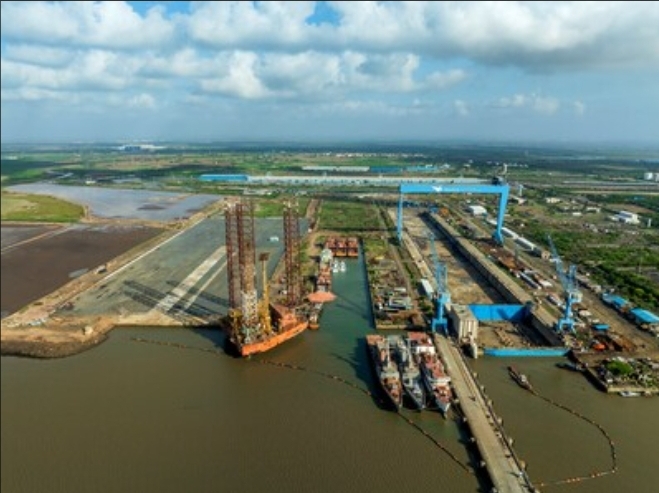
- India’s largest dry dock (662m × 65m)
- Fabrication capacity of 164,000 tonnes per year
For CX leaders, this mirrors a key principle:
Infrastructure is not a back-end detail.
It’s a front-stage CX signal.
2. Design and Classification Choices That Signal Credibility
Instead of local-only validation, SDHI aligned with:
- DNV for classification
- Marinform AS and StoGda for design
This mattered.
It told the customer:
- Global standards are baked in.
- Risk is distributed, not centralized.
- Quality assurance is externalized.
CX takeaway:
Third-party validation reduces perceived effort for the customer.
3. Technology Choices That Respect the Customer’s Future
The vessels feature:
- Dual-fuel LNG-ready hybrid propulsion
- High automation
- Multiple operational modes
- Ice Class 1A readiness
This isn’t feature stuffing.
It’s future empathy.
SDHI designed for regulations, fuel transitions, and operational uncertainty that Stenersen will face years from now.
What CX Leaders Can Learn About Enterprise Trust-Building
Trust Is Built Before the First Delivery
As John Stenersen, Director – Ship Management, noted, the decision followed comprehensive technical and commercial evaluation.
That evaluation is a journey.
Every interaction—documentation, plant visits, engineering conversations—either builds or erodes confidence.
CX teams should map these moments as trust checkpoints, not sales steps.
Trust Requires Internal Alignment First
This deal happened after SDHI’s revitalization under Swan Corp Limited.
That matters.
Customers sense internal chaos instantly.
Revitalization without operational alignment fails because:
- Promises diverge from delivery.
- Teams operate in silos.
- Experience becomes inconsistent.
CX truth:
You cannot outsource credibility.
The CX Framework Hidden Inside This Deal
The “Industrial CX Readiness” Model
| Layer | What SDHI Demonstrated | CX Parallel |
|---|---|---|
| Capability | Large dry dock, fabrication scale | Platform reliability |
| Governance | DNV classification | Compliance confidence |
| Technology | LNG-ready, automation | Future-proof design |
| Delivery | Phased timelines | Predictable execution |
| Communication | Transparent evaluation | Trust-building narratives |
CX leaders can adapt this framework for:
- SaaS enterprise deals
- B2B manufacturing
- Infrastructure services
- Regulated industries
What Role Did Policy Play in the Customer Experience?
Short answer:
Policy reduced friction.
Vivek Merchant, Director, SDHI, highlighted India’s Shipbuilding Financial Assistance scheme as an enabler.
From a CX lens, policy acts like:
- Invisible experience infrastructure
- Risk offset for the buyer
- Confidence multiplier for long-term commitments
CX leaders should ask:
Which internal policies silently sabotage customer confidence?
Common CX Pitfalls This Deal Avoided
Many organizations lose deals like this. Here’s why:
 Overpromising without infrastructure proof
- Treating evaluation as a procurement hurdle
- Ignoring future regulatory shifts
- Fragmented ownership across teams
- Weak post-contract governance planning
SDHI avoided these by thinking like a long-term operator, not a transactional vendor.
Why This Matters Beyond Shipbuilding
This deal signals something larger.
India is no longer competing on cost alone.
It’s competing on experience maturity.
For CXQuest readers, this reinforces a critical shift:
Key Insights for CX and EX Leaders
- Experience credibility beats brand awareness in complex deals.
- Visible capability reduces buyer anxiety.
- Future-ready design is a CX strategy.
- Third-party validation accelerates trust.
- Internal revitalization must precede external promises.
How CX Teams Can Apply This Immediately
The “Global Confidence Checklist”
Before your next enterprise pitch, ask:
- Can customers audit our capability easily?
- Do we show readiness for future constraints?
- Is delivery predictable, not optimistic?
- Are standards externally validated?
- Is our internal alignment obvious?
If not, CX gaps exist.
Frequently Asked Questions (FAQ)
How does shipbuilding relate to customer experience strategy?
Shipbuilding involves long timelines, high risk, and multiple stakeholders—similar to enterprise CX transformations.
Why is this deal important for Indian industry?
It marks the first large chemical tanker order awarded to an Indian yard, signaling global confidence.
What CX metric matters most in deals like this?
Perceived delivery confidence, not satisfaction scores.
How do CX teams reduce experience risk for global clients?
By making operations transparent, validated, and future-ready.
What role does employee experience play here?
Aligned teams deliver consistent signals, which customers interpret as reliability.
Actionable Takeaways for CX Professionals
- Map trust checkpoints, not just touchpoints, in long journeys.
- Expose infrastructure and process maturity early in evaluations.
- Use third-party validation to reduce buyer effort.
- Design for your customer’s future, not just current needs.
- Align internal teams before external storytelling.
- Treat policy and governance as CX enablers.
- Measure confidence signals, not just satisfaction.
Final Thought
SDHI didn’t just win a contract.
It earned global confidence.
For CX leaders navigating AI gaps, silos, and fragmented journeys, that’s the real lesson:
Experience isn’t what you say.
It’s what global customers are willing to risk their future on.
The post SDHI and $227M Chemical Tanker Deal: CX Lessons in Global Trust appeared first on CX Quest.


You May Also Like

Pi network 2FA enforced for wallet users during first
Samsung Electronics Targets Record Q1 Profit as Memory Chip Supercycle Hits Full Stride