

Waabi Robotaxis Secure $1B Breakthrough with Uber, Paving the Way for a Revolutionary Dual-Market Strategy
BitcoinWorld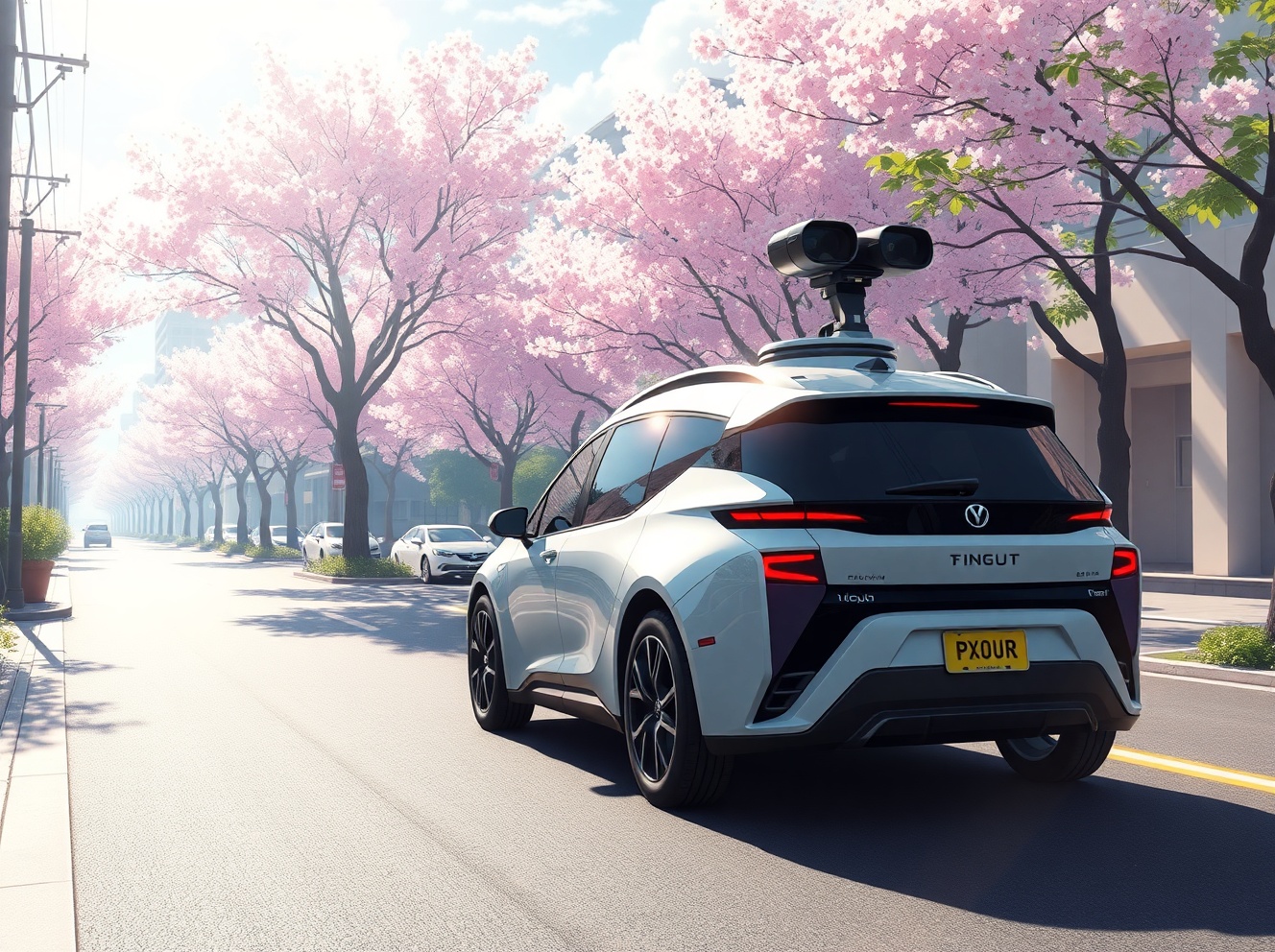
Waabi Robotaxis Secure $1B Breakthrough with Uber, Paving the Way for a Revolutionary Dual-Market Strategy
In a landmark move for the autonomous vehicle industry, Toronto-based startup Waabi has announced a staggering $1 billion capital raise and a strategic partnership with Uber to deploy its self-driving technology in robotaxis. This pivotal development, confirmed on October 13, 2025, marks Waabi’s ambitious expansion beyond its core autonomous trucking business, signaling a bold bet on a single, generalizable AI system to conquer multiple transportation verticals simultaneously.
Waabi Robotaxis: The $1 Billion Bet on a Unified AI Brain
The monumental funding package consists of two primary components. Firstly, a Series C equity round exceeding $750 million was co-led by Khosla Ventures and G2 Venture Partners. Secondly, Uber committed approximately $250 million in milestone-based capital. This investment directly supports the deployment of 25,000 or more Waabi Driver-powered robotaxis exclusively on Uber’s ride-hailing platform. Consequently, this partnership represents one of the largest dedicated investments in autonomous ride-hailing technology since the sector’s inception.
Waabi’s founder and CEO, renowned AI researcher Raquel Urtasun, emphasizes that this move is not a pivot but a planned evolution. “Our incredible core technology really enables, for the first time, a single solution that can do multiple verticals at scale,” Urtasun stated. This approach starkly contrasts with earlier industry efforts, such as Waymo’s separate and ultimately discontinued trucking program. Waabi’s strategy hinges on a capital-efficient model that avoids the massive physical fleets and data center dependencies of first-generation AV companies.
The Core Technology: Waabi World and Capital-Efficient AI
Central to Waabi’s disruptive claim is its proprietary closed-loop simulation platform, Waabi World. This system creates high-fidelity digital twins of real-world environments for training and validation. It performs real-time sensor simulation and manufactures complex, edge-case scenarios to rigorously stress-test the Waabi Driver AI. Significantly, this simulation-first methodology allows the AI to learn from mistakes without real-world risk, enabling rapid iteration and generalization from fewer real-world data examples.
Key advantages of Waabi’s approach include:
- Reduced Physical Fleet Dependency: Less reliance on thousands of data-collection vehicles.
- Lower Energy and Compute Costs: Avoids the need for “gazillion latest chips” and massive data centers.
- Faster Development Cycles: Simulation enables testing of millions of driving miles per day.
- Enhanced Safety Validation: Dangerous scenarios can be tested safely in simulation.
Urtasun’s Full-Circle Moment and Uber’s Evolving AV Strategy
The partnership carries profound personal significance for Raquel Urtasun, who previously served as Chief Scientist at Uber’s Advanced Technologies Group (ATG). Uber sold ATG to Aurora Innovation in 2020. This new deal, therefore, represents a strategic reunion. Furthermore, it builds upon Waabi’s existing collaboration with Uber Freight, creating a comprehensive relationship across Uber’s mobility and logistics segments.
Uber’s strategy involves partnering with multiple AV technology providers globally, including Waymo, Nuro, and Wayve, rather than developing its own monolithic system. The launch of Uber AV Labs, a new division that will use Uber’s vehicles to collect data for partners, underscores this asset-light, partnership-driven model. Waabi’s integration into this ecosystem provides Uber with a potentially scalable and capital-efficient path to autonomy.
Market Context and Competitive Landscape
Waabi enters a robotaxi market where scaling has proven exceptionally difficult and costly. The company’s total funding now stands at roughly $1.28 billion, which remains notably lean compared to competitors. For instance, Aurora Innovation has raised $3.46 billion, and Kodiak Robotics has secured $448 million. Waabi’s capital efficiency is a central part of its investment thesis.
| Company | Total Funding (Approx.) | Primary Focus |
|---|---|---|
| Waabi | $1.28B | Trucking & Robotaxis (Dual) |
| Aurora Innovation | $3.46B | Trucking |
| Kodiak Robotics | $448M | Trucking |
| Waymo | ~$5.5B* | Robotaxis |
*Estimated from various funding rounds. Table illustrates relative capital positions.
Simultaneously, Waabi continues to advance its autonomous trucking business. The company has commercial pilots operating in Texas with a safety driver and is working with Volvo on purpose-built autonomous trucks. Although a planned fully driverless highway launch was delayed from late 2024, Urtasun confirms it is slated for the coming quarters, pending final vehicle validation.
The Road Ahead: Deployment Timelines and Vertical Integration
The companies have not provided a specific timeline for deploying all 25,000 robotaxis, acknowledging the complexity of large-scale technological and operational integration. Urtasun indicated that Waabi will pursue a vertically integrated manufacturing strategy similar to its trucking program. This involves partnering with an original equipment manufacturer (OEM) to build sensor suites and the Waabi Driver directly into the vehicle from the factory floor, ensuring safety and scalability.
“We believe in vertically integrating with a fully redundant platform from the OEM,” Urtasun explained. “That is how you really build safe and truly scalable technology.” This philosophy extends Waabi’s capital-efficient model into manufacturing, aiming for a more reliable and cost-effective product. The investor syndicate for the Series C round, which includes NVentures (Nvidia’s venture arm), Volvo Group Venture Capital, and Porsche, provides strong industrial and technological backing for this integrated approach.
Conclusion
Waabi’s $1 billion raise and Uber robotaxi partnership represent a seismic shift in the autonomous vehicle landscape. The company is betting its unique, simulation-driven AI architecture can achieve what others have not: successfully scaling a single technology stack across both freight and passenger mobility. While the path to deploying 25,000 Waabi robotaxis will be arduous, this capital infusion and strategic alliance provide formidable resources. Ultimately, this move challenges the industry’s conventional wisdom, proposing that intelligence and efficiency, not just massive capital expenditure, may be the keys to unlocking a self-driving future. The success or failure of this dual-market strategy will undoubtedly shape the next decade of autonomous transportation.
FAQs
Q1: How much money did Waabi raise, and who invested?
Waabi raised a total of $1 billion. This includes a Series C equity round of over $750 million co-led by Khosla Ventures and G2 Venture Partners, plus roughly $250 million in milestone-based capital from Uber. Other investors include NVentures, Volvo Group Venture Capital, and Porsche.
Q2: What is the Waabi Driver, and how is it different?
The Waabi Driver is the company’s core autonomous AI system. It is primarily trained and validated in Waabi World, a high-fidelity closed-loop simulator. This approach allows it to learn and generalize from fewer real-world miles, aiming for greater capital efficiency than traditional AV systems reliant on massive fleets.
Q3: What does the Uber partnership involve?
Uber will provide milestone-based capital to support the exclusive deployment of 25,000 or more Waabi Driver-powered robotaxis on its ride-hailing platform. This marks Waabi’s expansion from autonomous trucking into the robotaxi market.
Q4: Who is Raquel Urtasun?
Raquel Urtasun is the Founder and CEO of Waabi and a leading AI researcher. She previously served as Chief Scientist at Uber’s self-driving division, ATG, before founding Waabi in 2021. Her expertise is central to the company’s AI-focused strategy.
Q5: Is Waabi still working on autonomous trucks?
Yes. Autonomous trucking remains a core business. Waabi has commercial pilots in Texas and is developing purpose-built autonomous trucks with Volvo. A fully driverless truck launch on public highways is planned for the coming quarters.
Q6: What is Uber AV Labs?
Uber AV Labs is a new division Uber is launching. It will utilize Uber’s network of vehicles to collect real-world data, which will then be provided to its autonomous vehicle technology partners, like Waabi, to aid in development and validation.
This post Waabi Robotaxis Secure $1B Breakthrough with Uber, Paving the Way for a Revolutionary Dual-Market Strategy first appeared on BitcoinWorld.


You May Also Like

Why Is the Crypto Market Bleeding Today?

Why Ethereum Took a Bigger Hit Than Bitcoin After Trump’s Iran “Stone Ages” Speech




