A cybersecurity veteran turned quantum infrastructure CEO warns that the cryptocurrency industry is dangerously unprepared for the imminent threat of quantum computing to blockchain security. David Carvalho, CEO of post-quantum infrastructure firm Naoris Protocol and a former ethical hacker since age 13, claims that quantum computers could silently dismantle Bitcoin’s cryptographic foundations within years, not decades. His warning comes as governments and tech giants already implement “harvest now, decrypt later” strategies, collecting encrypted blockchain data today for future decryption by quantum computers. Today, approximately 30% of Bitcoin’s circulating supply, roughly 6-7 million BTC , sits vulnerable in older address formats that expose public keys directly to potential quantum attacks. Understanding the Quantum Threat to Bitcoin’s Core Security Unlike traditional computers, which process information in binary bits of 0s and 1s, quantum computers utilize quantum bits, or “qubits,” that can exist in multiple states simultaneously through a property called superposition. This quantum advantage allows these machines to perform calculations exponentially faster than classical computers for specific mathematical problems, particularly those involving large number factorization. Bitcoin’s security relies on elliptic curve cryptography (ECC), specifically the Elliptic Curve Digital Signature Algorithm (ECDSA), which creates a mathematical relationship between public and private keys. Elliptic Curve Digital Signature Algorithm used by Bitcoin (Source: Learn Me A Bitcoin ) Current computers would require billions of years to reverse-engineer a private key from its corresponding public key due to the computational complexity of solving the discrete logarithm problem underlying ECC. However, mathematician Peter Shor demonstrated in 1999 that quantum computers could solve these factorization problems exponentially faster using Shor’s algorithm . This breakthrough would render obsolete the one-way mathematical function that protects Bitcoin wallets, enabling quantum computers to derive private keys from exposed public keys. Carvalho believes this countdown has already begun because adversaries are systematically collecting encrypted blockchain data under the “harvest now, decrypt later” model. “The adversaries collecting encrypted blockchain data right now aren’t waiting to attack today,” Carvalho explained , “They’re building data sets for tomorrow.” ⁉️ Up to 30% of all Bitcoin in circulation could be at risk of theft when Q-Day arrives in three years, according to Naoris CEO David Carvalho. #BTC #QuantumComputing #Crypto https://t.co/nuaDec03hz — Cryptonews.com (@cryptonews) July 21, 2025 Bitcoin addresses fall into different vulnerability categories, with Pay-to-Public-Key (P2PK) formats directly exposing public keys and making them immediate targets for quantum attacks. Reused Pay-to-Pubkey-Hash (P2PKH) addresses also become vulnerable once their owners move funds, as the transaction reveals the previously hidden public key. Due to the accelerating development in quantum computing, federal agencies, such as NIST, have warned since 2022 about the urgent need to adopt quantum-resistant algorithms. Bitcoin users holding funds in older address formats face the highest immediate risk, while node operators and mining infrastructure could become targets for broader network compromise attempts. Crypto’s Collision Course With Advanced Computing The quantum threat to Bitcoin reflects a broader technological inflection point where traditional cryptographic assumptions may no longer hold across digital infrastructure. Major technology companies, including IBM, Google, and Microsoft, are advancing quantum processors with ambitious timelines, with some targeting millions of qubits within this decade. The joint weapon of quantum computing with artificial intelligence creates, as Carvalho describes, an even more perilous scenario, where AI systems could automatically scan blockchain networks for vulnerabilities while quantum processors compromise cryptographic protections. Financial institutions are beginning to acknowledge these risks, with companies like BlackRock noting quantum threats in Bitcoin ETF filings and Tether CEO Paolo Ardoino warning about the impact of quantum computing on inactive wallets . 🚀 @Tether_to CEO @paoloardoino has warned that quantum computing could eventually pose a threat to inactive Bitcoin wallets. #Bitcoin #Quantum https://t.co/u8DCYrTjYw — Cryptonews.com (@cryptonews) February 9, 2025 The threat timeline varies among experts, with estimates ranging from 2027 to the mid-2030s for quantum computers capable of breaking Bitcoin’s cryptographic security. “When the tech catches up, they’ll unlock a decade of secrets in minutes,” Carvalho warned, emphasizing that quantum attacks won’t announce themselves with dramatic computational displays. The key question remains whether legacy cryptocurrencies can adapt fast enough, or if quantum-resistant blockchains will take the lead in the race to secure digital value.A cybersecurity veteran turned quantum infrastructure CEO warns that the cryptocurrency industry is dangerously unprepared for the imminent threat of quantum computing to blockchain security. David Carvalho, CEO of post-quantum infrastructure firm Naoris Protocol and a former ethical hacker since age 13, claims that quantum computers could silently dismantle Bitcoin’s cryptographic foundations within years, not decades. His warning comes as governments and tech giants already implement “harvest now, decrypt later” strategies, collecting encrypted blockchain data today for future decryption by quantum computers. Today, approximately 30% of Bitcoin’s circulating supply, roughly 6-7 million BTC , sits vulnerable in older address formats that expose public keys directly to potential quantum attacks. Understanding the Quantum Threat to Bitcoin’s Core Security Unlike traditional computers, which process information in binary bits of 0s and 1s, quantum computers utilize quantum bits, or “qubits,” that can exist in multiple states simultaneously through a property called superposition. This quantum advantage allows these machines to perform calculations exponentially faster than classical computers for specific mathematical problems, particularly those involving large number factorization. Bitcoin’s security relies on elliptic curve cryptography (ECC), specifically the Elliptic Curve Digital Signature Algorithm (ECDSA), which creates a mathematical relationship between public and private keys. Elliptic Curve Digital Signature Algorithm used by Bitcoin (Source: Learn Me A Bitcoin ) Current computers would require billions of years to reverse-engineer a private key from its corresponding public key due to the computational complexity of solving the discrete logarithm problem underlying ECC. However, mathematician Peter Shor demonstrated in 1999 that quantum computers could solve these factorization problems exponentially faster using Shor’s algorithm . This breakthrough would render obsolete the one-way mathematical function that protects Bitcoin wallets, enabling quantum computers to derive private keys from exposed public keys. Carvalho believes this countdown has already begun because adversaries are systematically collecting encrypted blockchain data under the “harvest now, decrypt later” model. “The adversaries collecting encrypted blockchain data right now aren’t waiting to attack today,” Carvalho explained , “They’re building data sets for tomorrow.” ⁉️ Up to 30% of all Bitcoin in circulation could be at risk of theft when Q-Day arrives in three years, according to Naoris CEO David Carvalho. #BTC #QuantumComputing #Crypto https://t.co/nuaDec03hz — Cryptonews.com (@cryptonews) July 21, 2025 Bitcoin addresses fall into different vulnerability categories, with Pay-to-Public-Key (P2PK) formats directly exposing public keys and making them immediate targets for quantum attacks. Reused Pay-to-Pubkey-Hash (P2PKH) addresses also become vulnerable once their owners move funds, as the transaction reveals the previously hidden public key. Due to the accelerating development in quantum computing, federal agencies, such as NIST, have warned since 2022 about the urgent need to adopt quantum-resistant algorithms. Bitcoin users holding funds in older address formats face the highest immediate risk, while node operators and mining infrastructure could become targets for broader network compromise attempts. Crypto’s Collision Course With Advanced Computing The quantum threat to Bitcoin reflects a broader technological inflection point where traditional cryptographic assumptions may no longer hold across digital infrastructure. Major technology companies, including IBM, Google, and Microsoft, are advancing quantum processors with ambitious timelines, with some targeting millions of qubits within this decade. The joint weapon of quantum computing with artificial intelligence creates, as Carvalho describes, an even more perilous scenario, where AI systems could automatically scan blockchain networks for vulnerabilities while quantum processors compromise cryptographic protections. Financial institutions are beginning to acknowledge these risks, with companies like BlackRock noting quantum threats in Bitcoin ETF filings and Tether CEO Paolo Ardoino warning about the impact of quantum computing on inactive wallets . 🚀 @Tether_to CEO @paoloardoino has warned that quantum computing could eventually pose a threat to inactive Bitcoin wallets. #Bitcoin #Quantum https://t.co/u8DCYrTjYw — Cryptonews.com (@cryptonews) February 9, 2025 The threat timeline varies among experts, with estimates ranging from 2027 to the mid-2030s for quantum computers capable of breaking Bitcoin’s cryptographic security. “When the tech catches up, they’ll unlock a decade of secrets in minutes,” Carvalho warned, emphasizing that quantum attacks won’t announce themselves with dramatic computational displays. The key question remains whether legacy cryptocurrencies can adapt fast enough, or if quantum-resistant blockchains will take the lead in the race to secure digital value.

Bitcoin’s Quantum Countdown Has Already Begun, Warns Veteran Hacker

4 min read

A cybersecurity veteran turned quantum infrastructure CEO warns that the cryptocurrency industry is dangerously unprepared for the imminent threat of quantum computing to blockchain security.

David Carvalho, CEO of post-quantum infrastructure firm Naoris Protocol and a former ethical hacker since age 13, claims that quantum computers could silently dismantle Bitcoin’s cryptographic foundations within years, not decades.

His warning comes as governments and tech giants already implement “harvest now, decrypt later” strategies, collecting encrypted blockchain data today for future decryption by quantum computers.

Today, approximately 30% of Bitcoin’s circulating supply, roughly 6-7 million BTC, sits vulnerable in older address formats that expose public keys directly to potential quantum attacks.

Understanding the Quantum Threat to Bitcoin’s Core Security

Unlike traditional computers, which process information in binary bits of 0s and 1s, quantum computers utilize quantum bits, or “qubits,” that can exist in multiple states simultaneously through a property called superposition.

This quantum advantage allows these machines to perform calculations exponentially faster than classical computers for specific mathematical problems, particularly those involving large number factorization.

Bitcoin’s security relies on elliptic curve cryptography (ECC), specifically the Elliptic Curve Digital Signature Algorithm (ECDSA), which creates a mathematical relationship between public and private keys.
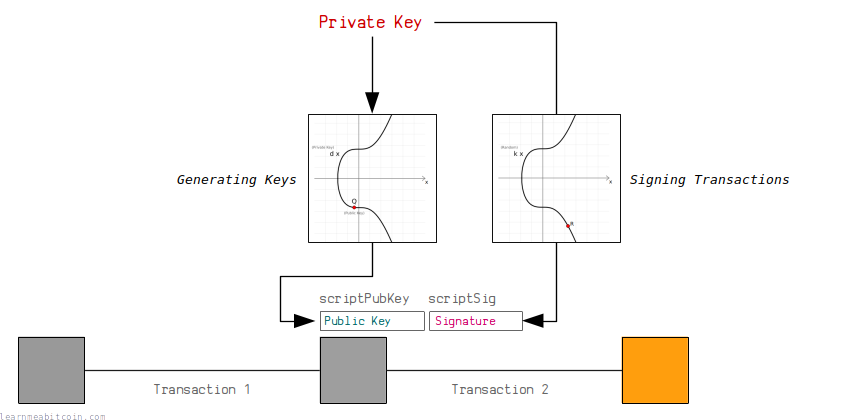
Bitcoin's Quantum Countdown Has Already Begun, Warns Veteran HackerElliptic Curve Digital Signature Algorithm used by Bitcoin (Source: Learn Me A Bitcoin)

Current computers would require billions of years to reverse-engineer a private key from its corresponding public key due to the computational complexity of solving the discrete logarithm problem underlying ECC.

However, mathematician Peter Shor demonstrated in 1999 that quantum computers could solve these factorization problems exponentially faster using Shor’s algorithm.

This breakthrough would render obsolete the one-way mathematical function that protects Bitcoin wallets, enabling quantum computers to derive private keys from exposed public keys.

Carvalho believes this countdown has already begun because adversaries are systematically collecting encrypted blockchain data under the “harvest now, decrypt later” model.

“The adversaries collecting encrypted blockchain data right now aren’t waiting to attack today,” Carvalho explained, “They’re building data sets for tomorrow.”

Bitcoin addresses fall into different vulnerability categories, with Pay-to-Public-Key (P2PK) formats directly exposing public keys and making them immediate targets for quantum attacks.

Reused Pay-to-Pubkey-Hash (P2PKH) addresses also become vulnerable once their owners move funds, as the transaction reveals the previously hidden public key.

Due to the accelerating development in quantum computing, federal agencies, such as NIST, have warned since 2022 about the urgent need to adopt quantum-resistant algorithms.

Bitcoin users holding funds in older address formats face the highest immediate risk, while node operators and mining infrastructure could become targets for broader network compromise attempts.

Crypto’s Collision Course With Advanced Computing

The quantum threat to Bitcoin reflects a broader technological inflection point where traditional cryptographic assumptions may no longer hold across digital infrastructure.

Major technology companies, including IBM, Google, and Microsoft, are advancing quantum processors with ambitious timelines, with some targeting millions of qubits within this decade.

The joint weapon of quantum computing with artificial intelligence creates, as Carvalho describes, an even more perilous scenario, where AI systems could automatically scan blockchain networks for vulnerabilities while quantum processors compromise cryptographic protections.

Financial institutions are beginning to acknowledge these risks, with companies like BlackRock noting quantum threats in Bitcoin ETF filings and Tether CEO Paolo Ardoino warning about the impact of quantum computing on inactive wallets.

The threat timeline varies among experts, with estimates ranging from 2027 to the mid-2030s for quantum computers capable of breaking Bitcoin’s cryptographic security.

“When the tech catches up, they’ll unlock a decade of secrets in minutes,” Carvalho warned, emphasizing that quantum attacks won’t announce themselves with dramatic computational displays.

The key question remains whether legacy cryptocurrencies can adapt fast enough, or if quantum-resistant blockchains will take the lead in the race to secure digital value.


Market Opportunity
Quack AI Logo
Quack AI Price(Q)
$0.017933
$0.017933$0.017933
-4.78%
USD
Quack AI (Q) Live Price Chart
Disclaimer: The articles reposted on this site are sourced from public platforms and are provided for informational purposes only. They do not necessarily reflect the views of MEXC. All rights remain with the original authors. If you believe any content infringes on third-party rights, please contact service@support.mexc.com for removal. MEXC makes no guarantees regarding the accuracy, completeness, or timeliness of the content and is not responsible for any actions taken based on the information provided. The content does not constitute financial, legal, or other professional advice, nor should it be considered a recommendation or endorsement by MEXC.

You May Also Like

Taiko and Chainlink to Unleash Reliable Onchain Data for DeFi Ecosystem

Taiko and Chainlink to Unleash Reliable Onchain Data for DeFi Ecosystem

Taiko and Chainlink Data Streams to deliver secure, high-speed onchain data by empowering next-generation DeFi protocols and institutional-grade adoption.
Share
Blockchainreporter2025/09/18 06:10
Why The Green Bay Packers Must Take The Cleveland Browns Seriously — As Hard As That Might Be

Why The Green Bay Packers Must Take The Cleveland Browns Seriously — As Hard As That Might Be

The post Why The Green Bay Packers Must Take The Cleveland Browns Seriously — As Hard As That Might Be appeared on BitcoinEthereumNews.com. Jordan Love and the Green Bay Packers are off to a 2-0 start. Getty Images The Green Bay Packers are, once again, one of the NFL’s better teams. The Cleveland Browns are, once again, one of the league’s doormats. It’s why unbeaten Green Bay (2-0) is a 8-point favorite at winless Cleveland (0-2) Sunday according to betmgm.com. The money line is also Green Bay -500. Most expect this to be a Packers’ rout, and it very well could be. But Green Bay knows taking anyone in this league for granted can prove costly. “I think if you look at their roster, the paper, who they have on that team, what they can do, they got a lot of talent and things can turn around quickly for them,” Packers safety Xavier McKinney said. “We just got to kind of keep that in mind and know we not just walking into something and they just going to lay down. That’s not what they going to do.” The Browns certainly haven’t laid down on defense. Far from. Cleveland is allowing an NFL-best 191.5 yards per game. The Browns gave up 141 yards to Cincinnati in Week 1, including just seven in the second half, but still lost, 17-16. Cleveland has given up an NFL-best 45.5 rushing yards per game and just 2.1 rushing yards per attempt. “The biggest thing is our defensive line is much, much improved over last year and I think we’ve got back to our personality,” defensive coordinator Jim Schwartz said recently. “When we play our best, our D-line leads us there as our engine.” The Browns rank third in the league in passing defense, allowing just 146.0 yards per game. Cleveland has also gone 30 straight games without allowing a 300-yard passer, the longest active streak in the NFL.…
Share
BitcoinEthereumNews2025/09/18 00:41
One Of Frank Sinatra’s Most Famous Albums Is Back In The Spotlight

One Of Frank Sinatra’s Most Famous Albums Is Back In The Spotlight

The post One Of Frank Sinatra’s Most Famous Albums Is Back In The Spotlight appeared on BitcoinEthereumNews.com. Frank Sinatra’s The World We Knew returns to the Jazz Albums and Traditional Jazz Albums charts, showing continued demand for his timeless music. Frank Sinatra performs on his TV special Frank Sinatra: A Man and his Music Bettmann Archive These days on the Billboard charts, Frank Sinatra’s music can always be found on the jazz-specific rankings. While the art he created when he was still working was pop at the time, and later classified as traditional pop, there is no such list for the latter format in America, and so his throwback projects and cuts appear on jazz lists instead. It’s on those charts where Sinatra rebounds this week, and one of his popular projects returns not to one, but two tallies at the same time, helping him increase the total amount of real estate he owns at the moment. Frank Sinatra’s The World We Knew Returns Sinatra’s The World We Knew is a top performer again, if only on the jazz lists. That set rebounds to No. 15 on the Traditional Jazz Albums chart and comes in at No. 20 on the all-encompassing Jazz Albums ranking after not appearing on either roster just last frame. The World We Knew’s All-Time Highs The World We Knew returns close to its all-time peak on both of those rosters. Sinatra’s classic has peaked at No. 11 on the Traditional Jazz Albums chart, just missing out on becoming another top 10 for the crooner. The set climbed all the way to No. 15 on the Jazz Albums tally and has now spent just under two months on the rosters. Frank Sinatra’s Album With Classic Hits Sinatra released The World We Knew in the summer of 1967. The title track, which on the album is actually known as “The World We Knew (Over and…
Share
BitcoinEthereumNews2025/09/18 00:02