BitcoinWorld Bitcoin Price Plummets: BTC Falls Below $82,000 in Sudden Market Shift Global cryptocurrency markets witnessed a significant correction on March 21BitcoinWorld Bitcoin Price Plummets: BTC Falls Below $82,000 in Sudden Market Shift Global cryptocurrency markets witnessed a significant correction on March 21

Bitcoin Price Plummets: BTC Falls Below $82,000 in Sudden Market Shift

Analysis of Bitcoin price falling below $82,000 and its market implications.

BitcoinWorld

Bitcoin Price Plummets: BTC Falls Below $82,000 in Sudden Market Shift

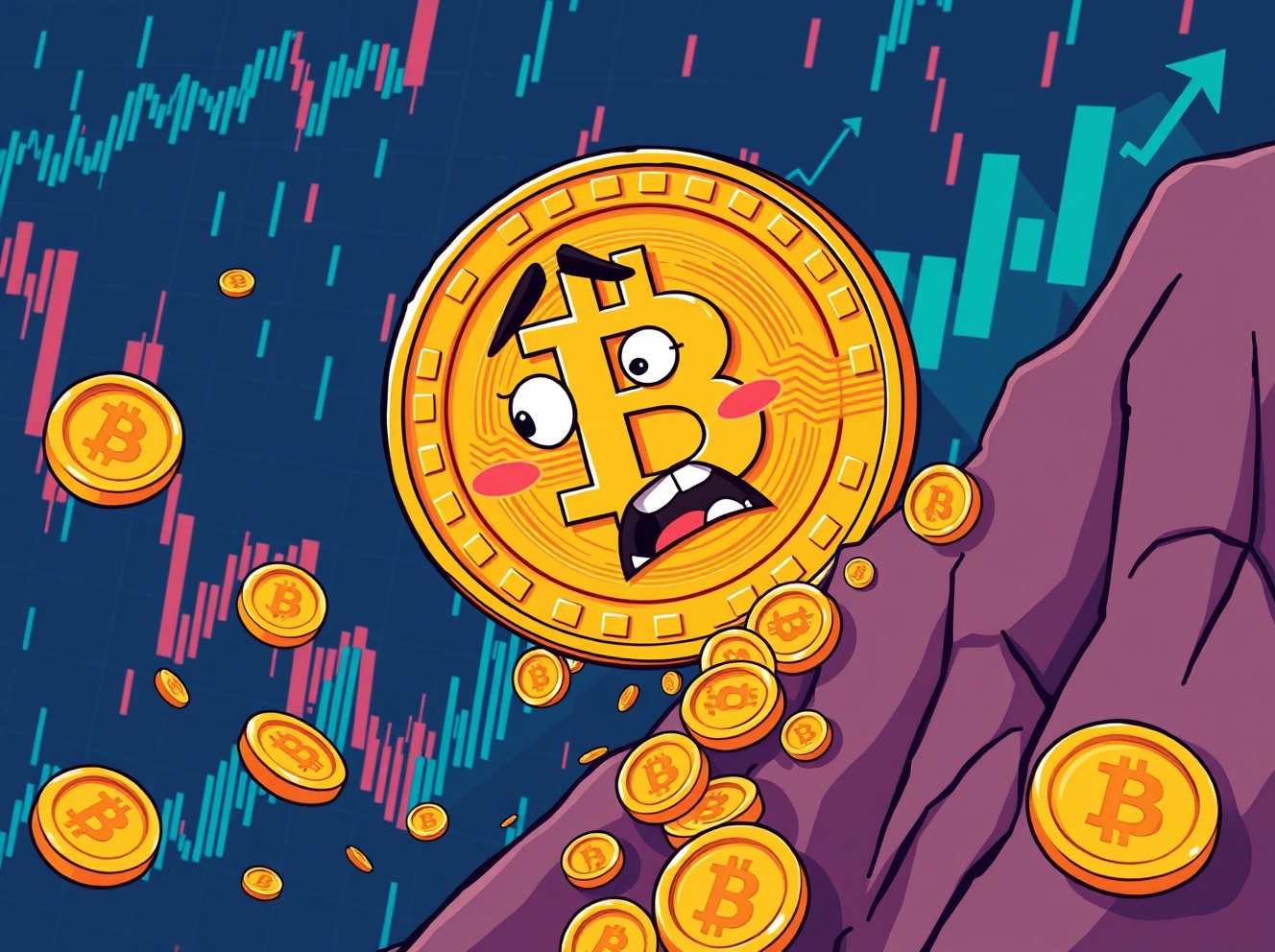
Global cryptocurrency markets witnessed a significant correction on March 21, 2025, as the flagship digital asset, Bitcoin (BTC), fell below the critical $82,000 threshold. According to real-time data from Bitcoin World market monitoring, BTC is currently trading at $81,926.19 on the Binance USDT perpetual futures market. This movement represents a notable pullback from recent highs and has sparked analysis among traders and institutional observers worldwide. The Bitcoin price action reflects broader market dynamics that merit detailed examination.

Analyzing the Bitcoin Price Drop Below $82,000

The descent of BTC below $82,000 marks a pivotal moment in the current market cycle. Consequently, analysts are scrutinizing order book data and exchange flows for clues. This price level previously acted as both support and resistance throughout Q1 2025. For instance, the move follows a period of consolidation after Bitcoin achieved a new all-time high above $85,000 earlier this month. Market data reveals several contributing factors to this decline.

  • Increased Exchange Inflows: On-chain analytics show a spike in BTC transfers to centralized exchanges preceding the drop, often signaling selling pressure.
  • Leverage Liquidation: Derivatives tracking platforms reported cascading liquidations of over-leveraged long positions as price dipped.
  • Macroeconomic Context: The dip coincided with a strengthening US Dollar Index (DXY), a traditional headwind for risk assets like cryptocurrency.
Recent Bitcoin Price Performance (Sample Week)
DateHigh (USD)Low (USD)Key Event
March 18$84,750$83,200Test of All-Time High Resistance
March 19$83,900$82,800Sideways Consolidation
March 20$83,100$82,300Increased Volatility
March 21$82,500$81,800Break Below $82,000 Support

Historical Context of Cryptocurrency Market Volatility

Bitcoin’s current price volatility is not an isolated event. Historically, the asset has experienced similar or more severe corrections during bull markets. For example, the 2021 cycle saw multiple drawdowns exceeding 20% on the path to new highs. Therefore, the present 3-5% pullback from recent peaks remains within typical historical parameters. Market veterans often view these dips as healthy consolidations that shake out weak hands. Furthermore, they rebuild energy for potential future advances.

Expert Perspectives on Market Structure

Seasoned market analysts emphasize the importance of on-chain metrics. Glassnode data indicates that long-term holder supply remains relatively static, suggesting conviction among core investors. Meanwhile, short-term holder realized price, often a key support level, sits significantly below current prices. This structure implies a strong foundational support zone exists lower. Consequently, the move below $82,000 may test immediate sentiment but not necessarily alter the longer-term thesis for many institutions.

Potential Impacts and Trader Sentiment Shifts

The immediate impact of BTC falling is visible across several market dimensions. Firstly, the overall cryptocurrency market capitalization dipped in tandem, affecting altcoins disproportionately. Secondly, funding rates in perpetual swap markets have normalized from previously elevated levels, reducing systemic leverage risk. Traders are now closely watching the $80,000 psychological level as the next major support. A sustained break below could trigger a deeper retracement toward the 50-day moving average.

Market sentiment, as measured by the Crypto Fear & Greed Index, has cooled from “Extreme Greed” to “Greed.” This shift often precedes periods of consolidation or accumulation. Retail interest, measured by search volume and social media mentions, shows a slight decline but remains elevated compared to bear market levels. Institutional flows, as tracked by exchange-traded product (ETP) data, have shown mixed signals, with some products seeing minor outflows while others hold steady.

Technical and Fundamental Drivers Behind the Move

From a technical standpoint, the Bitcoin price broke below a rising wedge pattern on lower timeframes. This pattern often precedes a corrective phase. The Relative Strength Index (RSI) also retreated from overbought territory above 70, allowing the market to reset. Fundamentally, no single negative news catalyst directly prompted the drop. Instead, the movement appears driven by a confluence of technical factors and profit-taking after a strong rally. Network fundamentals like hash rate and active addresses remain robust, providing underlying strength.

The Role of Macroeconomic Factors

Broader financial markets provided a nuanced backdrop. Bond yields edged higher, and equity markets showed mild weakness. Cryptocurrency markets, increasingly correlated with traditional risk assets during periods of macro uncertainty, often react to these shifts. Additionally, comments from central bank officials regarding inflation and rate policy can influence capital allocation decisions across all speculative assets, including digital currencies.

Conclusion

The Bitcoin price falling below $82,000 serves as a reminder of the inherent volatility within the digital asset class. This event underscores the importance of risk management and a long-term perspective for market participants. While short-term price action generates headlines, the underlying technology and adoption trends continue to evolve. Monitoring key support levels, on-chain data, and macroeconomic indicators will be crucial for navigating the next phase of the market. The current BTC correction represents a standard volatility event within a maturing yet still dynamic financial ecosystem.

FAQs

Q1: Why did Bitcoin fall below $82,000?
The drop appears driven by a combination of technical profit-taking after a strong rally, liquidations of over-leveraged long positions in derivatives markets, and a slight strengthening of the US dollar, which often pressures risk assets.

Q2: Is this a normal occurrence for Bitcoin?
Yes, historically, Bitcoin has frequently experienced corrections of 5-30% during bull market cycles. These pullbacks are considered normal market behavior and often serve to consolidate gains before potential further advances.

Q3: What is the key support level to watch now?
Traders are closely monitoring the $80,000 psychological level and the 50-day simple moving average, which often acts as dynamic support in uptrends. A sustained break below these could indicate a deeper correction.

Q4: How does this affect the broader cryptocurrency market?
Bitcoin’s price movements typically influence the entire crypto market. A sustained BTC drop often leads to larger percentage declines in altcoins, a phenomenon known as “beta play,” as capital flows to perceived safety or exits the sector.

Q5: Should investors be concerned about this price drop?
Short-term volatility is a known characteristic of cryptocurrency markets. Long-term investors typically focus on fundamental adoption metrics, such as network activity, institutional involvement, and regulatory developments, rather than daily price fluctuations. Risk tolerance and investment horizon are key personal considerations.

This post Bitcoin Price Plummets: BTC Falls Below $82,000 in Sudden Market Shift first appeared on BitcoinWorld.


Disclaimer: The articles reposted on this site are sourced from public platforms and are provided for informational purposes only. They do not necessarily reflect the views of MEXC. All rights remain with the original authors. If you believe any content infringes on third-party rights, please contact service@support.mexc.com for removal. MEXC makes no guarantees regarding the accuracy, completeness, or timeliness of the content and is not responsible for any actions taken based on the information provided. The content does not constitute financial, legal, or other professional advice, nor should it be considered a recommendation or endorsement by MEXC.

You May Also Like

Republic Europe Offers Indirect Kraken Stake via SPV

Republic Europe Offers Indirect Kraken Stake via SPV

Republic Europe launches SPV for European retail access to Kraken equity pre-IPO.
Share
bitcoininfonews2026/01/30 13:32
cpwrt Limited Positions Customer Support as a Strategic Growth Function

cpwrt Limited Positions Customer Support as a Strategic Growth Function

For many growing businesses, customer support is often viewed as a cost center rather than a strategic function. cpwrt limited challenges this perception by providing
Share
Techbullion2026/01/30 13:07
Unlocking Massive Value: Curve Finance Revenue Sharing Proposal for CRV Holders

Unlocking Massive Value: Curve Finance Revenue Sharing Proposal for CRV Holders

BitcoinWorld Unlocking Massive Value: Curve Finance Revenue Sharing Proposal for CRV Holders The dynamic world of decentralized finance (DeFi) is constantly evolving, bringing forth new opportunities and innovations. A significant development is currently unfolding at Curve Finance, a leading decentralized exchange (DEX). Its founder, Michael Egorov, has put forth an exciting proposal designed to offer a more direct path for token holders to earn revenue. This initiative, centered around a new Curve Finance revenue sharing model, aims to bolster the value for those actively participating in the protocol’s governance. What is the “Yield Basis” Proposal and How Does it Work? At the core of this forward-thinking initiative is a new protocol dubbed Yield Basis. Michael Egorov introduced this concept on the CurveDAO governance forum, outlining a mechanism to distribute sustainable profits directly to CRV holders. Specifically, it targets those who stake their CRV tokens to gain veCRV, which are essential for governance participation within the Curve ecosystem. Let’s break down the initial steps of this innovative proposal: crvUSD Issuance: Before the Yield Basis protocol goes live, $60 million in crvUSD will be issued. Strategic Fund Allocation: The funds generated from the sale of these crvUSD tokens will be strategically deployed into three distinct Bitcoin-based liquidity pools: WBTC, cbBTC, and tBTC. Pool Capping: To ensure balanced risk and diversified exposure, each of these pools will be capped at $10 million. This carefully designed structure aims to establish a robust and consistent income stream, forming the bedrock of a sustainable Curve Finance revenue sharing mechanism. Why is This Curve Finance Revenue Sharing Significant for CRV Holders? This proposal marks a pivotal moment for CRV holders, particularly those dedicated to the long-term health and governance of Curve Finance. Historically, generating revenue for token holders in the DeFi space can often be complex. The Yield Basis proposal simplifies this by offering a more direct and transparent pathway to earnings. By staking CRV for veCRV, holders are not merely engaging in governance; they are now directly positioned to benefit from the protocol’s overall success. The significance of this development is multifaceted: Direct Profit Distribution: veCRV holders are set to receive a substantial share of the profits generated by the Yield Basis protocol. Incentivized Governance: This direct financial incentive encourages more users to stake their CRV, which in turn strengthens the protocol’s decentralized governance structure. Enhanced Value Proposition: The promise of sustainable revenue sharing could significantly boost the inherent value of holding and staking CRV tokens. Ultimately, this move underscores Curve Finance’s dedication to rewarding its committed community and ensuring the long-term vitality of its ecosystem through effective Curve Finance revenue sharing. Understanding the Mechanics: Profit Distribution and Ecosystem Support The distribution model for Yield Basis has been thoughtfully crafted to strike a balance between rewarding veCRV holders and supporting the wider Curve ecosystem. Under the terms of the proposal, a substantial portion of the value generated by Yield Basis will flow back to those who contribute to the protocol’s governance. Returns for veCRV Holders: A significant share, specifically between 35% and 65% of the value generated by Yield Basis, will be distributed to veCRV holders. This flexible range allows for dynamic adjustments based on market conditions and the protocol’s performance. Ecosystem Reserve: Crucially, 25% of the Yield Basis tokens will be reserved exclusively for the Curve ecosystem. This allocation can be utilized for various strategic purposes, such as funding ongoing development, issuing grants, or further incentivizing liquidity providers. This ensures the continuous growth and innovation of the platform. The proposal is currently undergoing a democratic vote on the CurveDAO governance forum, giving the community a direct voice in shaping the future of Curve Finance revenue sharing. The voting period is scheduled to conclude on September 24th. What’s Next for Curve Finance and CRV Holders? The proposed Yield Basis protocol represents a pioneering approach to sustainable revenue generation and community incentivization within the DeFi landscape. If approved by the community, this Curve Finance revenue sharing model has the potential to establish a new benchmark for how decentralized exchanges reward their most dedicated participants. It aims to foster a more robust and engaged community by directly linking governance participation with tangible financial benefits. This strategic move by Michael Egorov and the Curve Finance team highlights a strong commitment to innovation and strengthening the decentralized nature of the protocol. For CRV holders, a thorough understanding of this proposal is crucial for making informed decisions regarding their staking strategies and overall engagement with one of DeFi’s foundational platforms. FAQs about Curve Finance Revenue Sharing Q1: What is the main goal of the Yield Basis proposal? A1: The primary goal is to establish a more direct and sustainable way for CRV token holders who stake their tokens (receiving veCRV) to earn revenue from the Curve Finance protocol. Q2: How will funds be generated for the Yield Basis protocol? A2: Initially, $60 million in crvUSD will be issued and sold. The funds from this sale will then be allocated to three Bitcoin-based pools (WBTC, cbBTC, and tBTC), with each pool capped at $10 million, to generate profits. Q3: Who benefits from the Yield Basis revenue sharing? A3: The proposal states that between 35% and 65% of the value generated by Yield Basis will be returned to veCRV holders, who are CRV stakers participating in governance. Q4: What is the purpose of the 25% reserve for the Curve ecosystem? A4: This 25% reserve of Yield Basis tokens is intended to support the broader Curve ecosystem, potentially funding development, grants, or other initiatives that contribute to the platform’s growth and sustainability. Q5: When is the vote on the Yield Basis proposal? A5: A vote on the proposal is currently underway on the CurveDAO governance forum and is scheduled to run until September 24th. If you found this article insightful and valuable, please consider sharing it with your friends, colleagues, and followers on social media! Your support helps us continue to deliver important DeFi insights and analysis to a wider audience. To learn more about the latest DeFi market trends, explore our article on key developments shaping decentralized finance institutional adoption. This post Unlocking Massive Value: Curve Finance Revenue Sharing Proposal for CRV Holders first appeared on BitcoinWorld.
Share
Coinstats2025/09/18 00:35