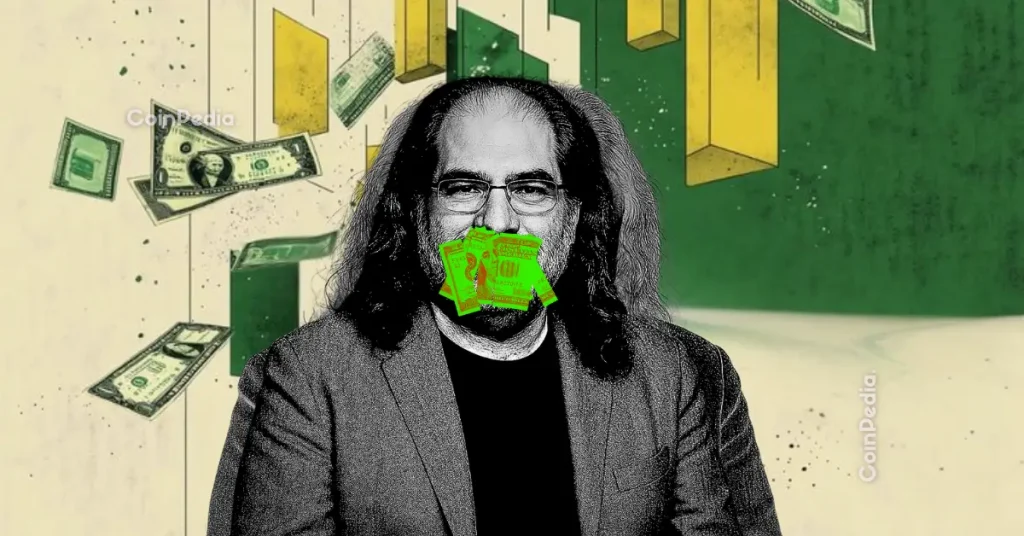
Justin Sun Faces Renewed SEC Pressure Over Market Manipulation Claims
Justin Sun remains at the center of renewed scrutiny in the United States, as long-running allegations of market manipulation and securities violations resurface at the regulatory level.
Although a major civil case brought by the U.S. Securities and Exchange Commission was paused last year, recent political developments have pushed the issue back into focus, raising fresh questions about enforcement consistency and regulatory independence.
The situation is notable not because of new charges, but because of the timing and context. A stayed case, unresolved allegations, and parallel investigations together create an environment where legal risk has not disappeared, despite the absence of active courtroom proceedings at the moment.
SEC Lawsuit Status and Political Pressure
The core legal action dates back to 2023, when the U.S. Securities and Exchange Commission filed a civil lawsuit accusing Sun of manipulating markets tied to the Tron ecosystem. That case was formally paused in February 2025, shortly after the U.S. presidential inauguration, following a joint request from the SEC and Sun’s legal team. A federal judge approved the stay, effectively halting proceedings without dismissing the underlying claims.
In January 2026, the case re-entered the political arena. Democratic lawmakers, including Representatives Maxine Waters, Brad Sherman, and Sean Casten, publicly urged the SEC to lift the stay and resume prosecution. Their letters cited concerns that the pause may be linked to Sun’s reported $75 million involvement in World Liberty Financial, a project associated with President Trump. While no formal finding has been made, lawmakers framed the situation as a potential “pay-to-play” issue that could undermine regulatory credibility.
Allegations of Market Manipulation and Promotion Practices
At the center of the SEC’s complaint are claims of extensive wash trading activity involving TRX and BTT. Regulators allege that Sun instructed employees to execute more than 600,000 coordinated trades between accounts under his control, creating the appearance of organic market activity. According to the lawsuit, this behavior artificially inflated reported trading volumes across multiple venues.
The SEC also accused Sun of orchestrating undisclosed celebrity promotions. High-profile figures such as Lindsay Lohan, Jake Paul, and Soulja Boy were allegedly paid to promote TRX and BTT without proper disclosure of compensation. Most of those individuals later reached settlements with regulators, while the allegations against Sun remain unresolved.
In addition, the complaint claims Sun generated roughly $31 million in proceeds by selling TRX into the secondary market while these promotional and trading activities were ongoing, a point regulators argue strengthens the case for securities violations.
Parallel DOJ Investigation and New Claims
Separate from the SEC’s civil case, reports indicate that the Department of Justice has maintained an active investigation into Sun since at least 2021. While details remain limited, the existence of a parallel probe suggests that legal exposure may extend beyond regulatory enforcement into potential criminal considerations.
Further complicating the picture, new private claims surfaced in late 2025 from an alleged former associate. These claims accuse Sun of using employee accounts on Binance to further influence TRX market activity before selling tokens. Sun has publicly rejected these accusations, characterizing them as unfounded and dismissing them as market-driven speculation.
Takeaway
The pause in the SEC’s lawsuit does not mark a resolution, but rather a temporary halt within a broader, ongoing legal narrative. Political pressure to reopen the case, combined with an active DOJ investigation and unresolved allegations, keeps regulatory risk firmly in play. For now, the situation underscores how enforcement outcomes may depend as much on institutional follow-through as on the original claims themselves, with clarity likely arriving only once formal proceedings resume or conclude.
The post Justin Sun Faces Renewed SEC Pressure Over Market Manipulation Claims appeared first on ETHNews.


You May Also Like
Samsung Electronics Targets Record Q1 Profit as Memory Chip Supercycle Hits Full Stride

One Of Frank Sinatra’s Most Famous Albums Is Back In The Spotlight