

US Stocks Open Lower: A Sobering Start as Major Indices Signal Caution

BitcoinWorld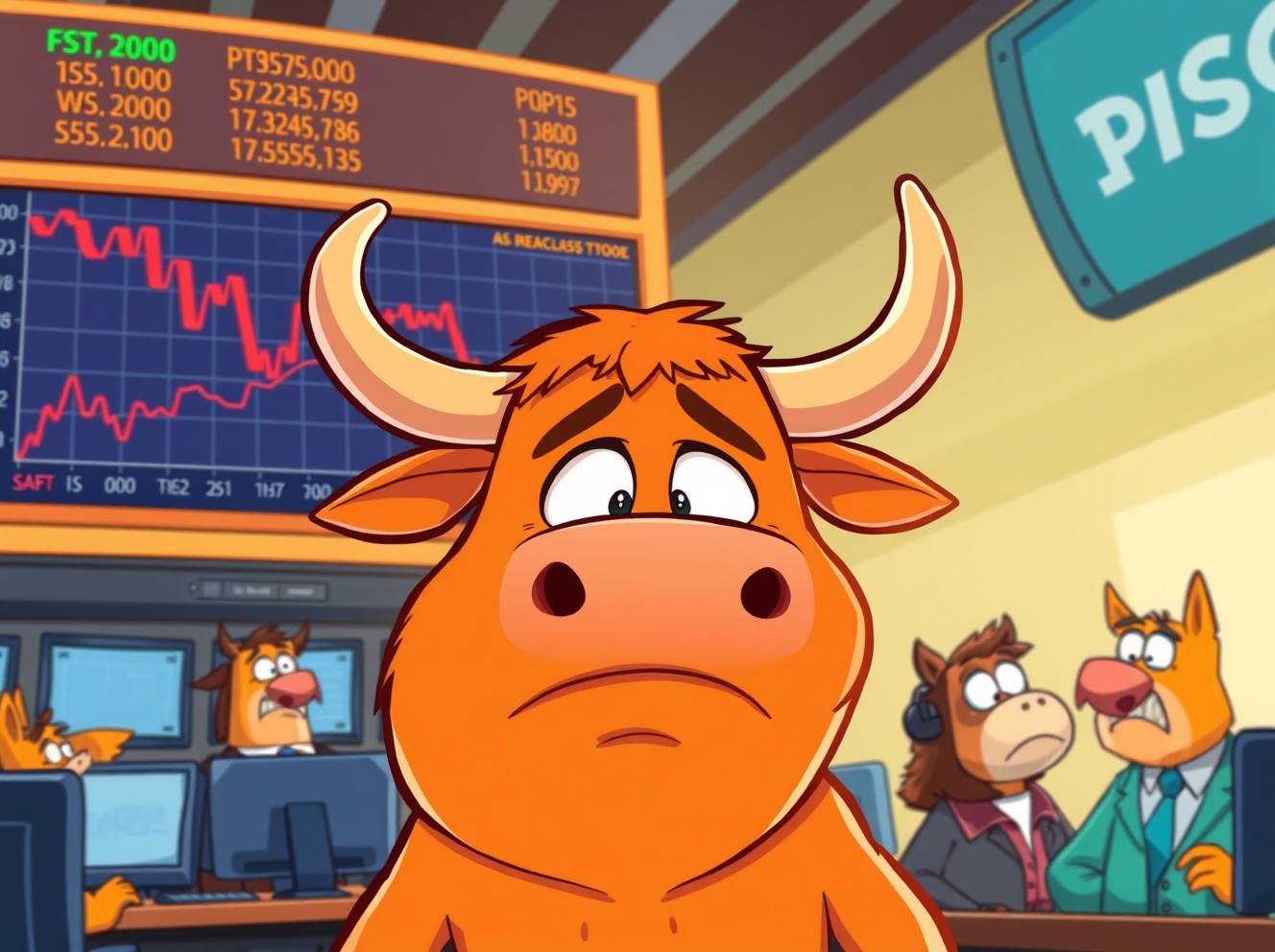
US Stocks Open Lower: A Sobering Start as Major Indices Signal Caution
NEW YORK, October 26, 2025 – The three major US stock indices opened decisively lower today, marking a cautious start to the trading session and prompting immediate analysis from market participants. The S&P 500 index fell 0.32%, the technology-heavy Nasdaq Composite declined 0.39%, and the Dow Jones Industrial Average dropped a more modest 0.10%. This collective downward movement reflects a complex interplay of macroeconomic signals, corporate earnings reports, and shifting investor sentiment as the fourth quarter unfolds. Consequently, traders and long-term investors alike are scrutinizing the underlying causes and potential implications for portfolio strategy.
US Stocks Open Lower: Dissecting the Morning Decline
The opening bell on Wall Street today delivered a clear, if measured, signal of investor apprehension. Market breadth, a key indicator of participation in a move, showed more declining issues than advancing ones across major exchanges. Furthermore, trading volume in the first hour appeared robust, suggesting conviction behind the selling pressure rather than mere profit-taking. The divergence in performance between indices offers the first clue for analysis. Specifically, the Nasdaq’s steeper decline often points to sensitivity in the technology sector, which reacts sharply to interest rate expectations and growth forecasts. Meanwhile, the Dow’s relative resilience, buoyed by its constituent industrial and consumer staples companies, indicated a flight to perceived safety and value.
This market behavior did not occur in a vacuum. It follows a week of mixed economic data releases and heightened anticipation for upcoming Federal Reserve communications. Recent comments from central bank officials have reinforced a data-dependent stance, leaving markets parsing every inflation and employment figure for clues. Additionally, the bond market exhibited notable activity in the pre-market hours, with Treasury yields edging higher, which traditionally pressures equity valuations by increasing the discount rate on future earnings. This financial context is crucial for understanding the day’s price action.
Historical Context and Sector Performance
Examining historical data provides essential perspective. Morning declines of this magnitude are not uncommon and often reverse by the session’s close. However, their persistence can signal deeper trends. A preliminary sector breakdown reveals underperformance in consumer discretionary and information technology stocks. Conversely, utilities and healthcare sectors demonstrated minor gains or held steady, showcasing classic defensive positioning. This rotation aligns with a market environment where investors seek stability amid uncertainty about economic growth trajectories and corporate profit margins.
Economic Drivers Behind the Stock Market Movement
Several tangible economic factors contributed to the lower open for US stocks. First, the latest Jobless Claims report, released before the market opened, came in slightly higher than consensus estimates. While not catastrophic, this data point fueled concerns about a potential softening in the labor market, a cornerstone of consumer spending and economic resilience. Second, commodity prices, particularly oil, experienced volatility due to geopolitical developments, raising input cost anxieties for many industries. Third, the US Dollar Index strengthened overnight, which can negatively impact the overseas earnings of multinational corporations listed on US indices.
Corporate earnings season remains a dominant narrative. Several major companies reported results after yesterday’s close or issued guidance this morning. Disappointing forecasts from key players in the semiconductor and software sectors weighed heavily on the Nasdaq. Analysts note that while top-line revenue often met expectations, bottom-line profits and future outlooks faced pressure from operational costs and cautious consumer behavior. This earnings-driven reality check is a primary catalyst for the day’s revaluation of equity prices.
| Index | Change (%) | Key Influencing Sectors |
|---|---|---|
| S&P 500 | -0.32% | Tech, Consumer Discretionary |
| Nasdaq Composite | -0.39% | Semiconductors, Software |
| Dow Jones Industrial Average | -0.10% | Healthcare, Industrials |
Expert Analysis and Market Sentiment
Financial experts emphasize the importance of distinguishing between short-term volatility and long-term trend changes. “A lower open is a data point, not a destiny,” noted a Chief Market Strategist at a leading investment bank. “The key metrics to watch are credit spreads, market liquidity, and the VIX volatility index. Currently, these suggest concern but not panic.” Surveys of market sentiment, such as the AAII Investor Sentiment Survey, have recently shown a pullback from extreme bullishness to a more neutral stance, which often precedes a period of consolidation or mild correction in stock prices.
Global Financial Markets and Interconnected Risks
The movement in US stocks today echoes trends in international markets. Asian and European equity indices traded mostly lower in their preceding sessions, influenced by their own regional economic challenges. Notably, European markets grappled with manufacturing data indicating contraction, while Asian markets reacted to currency fluctuations. This global synchronization highlights the interconnected nature of modern finance, where capital flows and risk appetite transcend borders. The performance of US Treasury bonds and the currency exchange market served as transmission mechanisms for these global pressures onto Wall Street at the open.
Investors also monitor algorithmic and quantitative trading strategies, which can amplify initial moves. These systems often react to technical indicators like moving averages and momentum signals. The morning’s decline triggered certain automated sell programs, adding momentum to the downward move. Understanding this mechanical aspect of modern markets is essential for a complete picture. It separates fundamental selling based on news from technical selling based on price levels and volatility triggers.
Implications for Investors and Portfolio Strategy
For the individual investor, a lower open for US stocks presents both a challenge and an opportunity. The immediate implication is a mark-to-market decline in portfolio value. However, seasoned investors view such periods through a strategic lens. It prompts a review of asset allocation, risk tolerance, and investment horizons. Key considerations include:
- Rebalancing: A decline may have shifted a portfolio’s stock/bond balance, requiring adjustment.
- Dollar-Cost Averaging: For long-term investors, periodic investments continue unabated, potentially buying at lower prices.
- Sector Rotation: Identifying which sectors are leading the decline or showing strength can inform future allocations.
- Risk Management: It reinforces the need for stop-loss orders and position sizing discipline.
Financial advisors consistently recommend against making drastic decisions based on a single session’s open. Instead, they advocate for a focus on fundamental analysis of individual holdings and adherence to a pre-defined financial plan. Historical market data clearly shows that time in the market generally outweighs timing the market, even when navigating periods where US stocks open lower.
Conclusion
The lower opening for US stocks today, marked by declines in the S&P 500, Nasdaq, and Dow Jones, serves as a reminder of the dynamic and ever-changing nature of equity markets. This movement stems from a confluence of economic data, corporate earnings, global market sentiment, and technical trading factors. While the immediate tone is cautious, the broader market structure remains intact, supported by corporate profitability and economic fundamentals. Investors should process this information within their long-term strategy, using volatility as a tool for portfolio review rather than a trigger for reaction. The performance of US stocks will continue to be the primary barometer of economic confidence and capital allocation for the foreseeable future.
FAQs
Q1: What does it mean when US stocks open lower?
When US stocks open lower, it means the major market indices like the S&P 500, Nasdaq, and Dow Jones begin the trading day at a price below the previous day’s closing price. This typically reflects negative sentiment or reactions to news released before the market opens, such as economic reports, overseas market activity, or corporate earnings releases.
Q2: How much did the S&P 500 drop at today’s open?
At today’s open, the S&P 500 index declined by 0.32%. This percentage represents the change in the index’s value from yesterday’s official closing price to this morning’s opening price, indicating a broad-based but moderate sell-off across the 500 large-cap companies it represents.
Q3: Why is the Nasdaq often more volatile than the Dow Jones?
The Nasdaq Composite is more volatile because it is heavily weighted toward technology, biotechnology, and other growth-oriented sectors. These companies are often valued on future earnings potential and are more sensitive to changes in interest rates and economic growth forecasts. The Dow Jones contains more established, industrial, and consumer-focused companies, which can be more stable.
Q4: Should I sell my stocks if the market opens lower?
Financial advisors generally advise against making immediate selling decisions based solely on a lower market open. Short-term volatility is normal. A sound investment strategy is based on long-term goals, asset allocation, and the fundamental strength of your holdings, not daily price fluctuations. Panic selling can lock in losses and miss potential recoveries.
Q5: What economic data most influences whether US stocks open higher or lower?
Key data points include monthly employment reports (like Non-Farm Payrolls), inflation data (CPI, PCE), Federal Reserve interest rate decisions and commentary, corporate earnings reports, and manufacturing/service sector PMI data. Overseas economic news and geopolitical events also significantly influence pre-market sentiment and opening prices.
This post US Stocks Open Lower: A Sobering Start as Major Indices Signal Caution first appeared on BitcoinWorld.


You May Also Like

UK FCA May Exempt Crypto Firms from Key TradFi Rules — What’s at Stake?

AI predicts XRP price for April 30, 2026




