Binance founder and former Chief Changpeng “CZ” Zhao has received a presidential pardon from U.S. President Donald Trump, closing the book on one of the most closelyBinance founder and former Chief Changpeng “CZ” Zhao has received a presidential pardon from U.S. President Donald Trump, closing the book on one of the most closely

\Binance Founder 'CZ' Gets Full Presidential Pardon - "Biden Administration’s war on crypto is over"...

4 min read

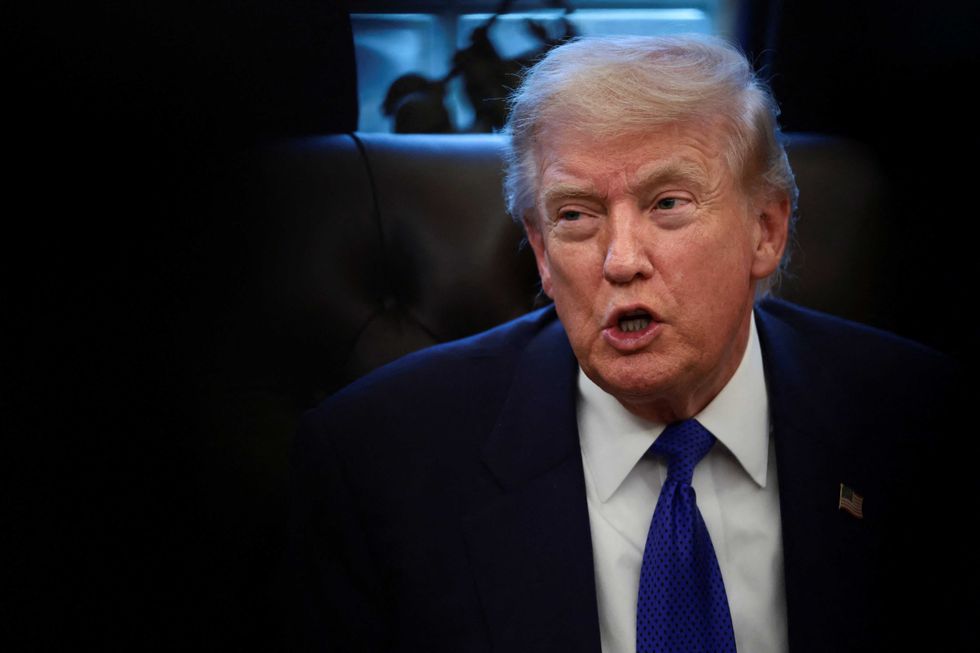
Binance founder and former Chief Changpeng “CZ” Zhao has received a presidential pardon from U.S. President Donald Trump, closing the book on one of the most closely watched cases in digital-asset enforcement.

Zhao was sentenced in April 2024 to four months in prison after pleading guilty to a single count tied to U.S. anti-money-laundering compliance. He completed that sentence in September 2024. As part of the broader resolution with U.S. authorities, Binance agreed to pay $4.3 billion and implement enhanced controls after investigators said the exchange enabled some users to evade sanctions.

In announcing the pardon, White House Press Secretary Karoline Leavitt framed Zhao’s prosecution—initiated under the previous administration—as emblematic of a wider “war on cryptocurrency,” arguing there were “no allegations of fraud or identifiable victims,” and that an earlier push for a multi-year sentence had harmed U.S. credibility. “The Biden Administration’s war on crypto is over,” she said.

What Makes This Case Unusual...

Supporters note Zhao is, by their accounting, the first known first-time offender to receive a custodial sentence for this particular non-fraud charge. The sentencing judge found no evidence Zhao knowingly facilitated illicit transactions and said it was reasonable for him to believe illicit funds were not present on the platform. The pardon doesn’t rewrite that record, but it does erase remaining federal consequences for Zhao personally.

Policy Context: A Clearer Pro-Crypto Pivot...

The move aligns with the Trump administration’s more accommodating posture toward digital assets. Since taking office in January, the President has:

Pledged to make the U.S. the world’s “crypto capital.”

Floated the concept of a national cryptocurrency reserve.

Backed efforts to make it easier for Americans to allocate retirement savings to digital assets.

Released his own token ahead of inauguration, placing crypto squarely in the political mainstream—supporters call it pragmatic adoption; critics see it as performative.

The Road Ahead...

Zhao stepped down as Binance CEO in November 2023, calling the decision “not easy to let go emotionally” but “the right thing to do.” Binance—registered in the Cayman Islands—remains the largest venue globally for trading crypto and other digital assets by volume. The company has reportedly pursued clemency for nearly a year, while fielding ongoing regulatory obligations under its settlement.

Separate reports have described conversations between representatives of the Trump family—whose World Liberty Financial is active in crypto—and Binance. Those talks, as characterized publicly, centered on the sector’s direction and policy environment rather than any announced transaction.

Why Markets Care...

Regulatory temperature check: A presidential pardon doesn’t alter the compliance requirements facing exchanges, but it does signal a friendlier top-down stance—potentially easing perceived headline risk for U.S. institutions on the sidelines.

Talent gravity: With the cloud over CZ lifted, founders and executives may view the U.S. as incrementally less adversarial, provided firms invest in controls and cooperate early.

Policy runway: Initiatives like a crypto reserve or retirement-account access still require legislative and agency follow-through. Today’s signal is political; the operational changes will come down to rulemaking and inter-agency coordination.

The Other Side of the Ledger...

Critics of the pardon will argue that compliance lapses at major platforms have real national-security implications and that accountability at the top deters future abuse. Expect renewed debate on whether executive clemency undermines deterrence—or simply corrects an outlier outcome for a non-fraud case.

Bottom Line...

Zhao’s pardon is a symbolic endcap to a multi-year saga and a strong indicator of where the current administration wants crypto policy to go: normalization instead of stigmatization, with an emphasis on building within the rules rather than litigating against the industry. The regulatory playbook hasn’t vanished; the posture has.
-------------------------
Author: Jules Laurent
Euro Newsroom Breaking Crypto News 

Disclaimer: The articles reposted on this site are sourced from public platforms and are provided for informational purposes only. They do not necessarily reflect the views of MEXC. All rights remain with the original authors. If you believe any content infringes on third-party rights, please contact service@support.mexc.com for removal. MEXC makes no guarantees regarding the accuracy, completeness, or timeliness of the content and is not responsible for any actions taken based on the information provided. The content does not constitute financial, legal, or other professional advice, nor should it be considered a recommendation or endorsement by MEXC.

You May Also Like

FCA komt in 2026 met aangepaste cryptoregels voor Britse markt

FCA komt in 2026 met aangepaste cryptoregels voor Britse markt

De Britse financiële waakhond, de FCA, komt in 2026 met nieuwe regels speciaal voor crypto bedrijven. Wat direct opvalt: de toezichthouder laat enkele klassieke financiële verplichtingen los om beter aan te sluiten op de snelle en grillige wereld van digitale activa. Tegelijkertijd wordt er extra nadruk gelegd op digitale beveiliging,... Het bericht FCA komt in 2026 met aangepaste cryptoregels voor Britse markt verscheen het eerst op Blockchain Stories.
Share
Coinstats2025/09/18 00:33
Cashing In On University Patents Means Giving Up On Our Innovation Future

Cashing In On University Patents Means Giving Up On Our Innovation Future

The post Cashing In On University Patents Means Giving Up On Our Innovation Future appeared on BitcoinEthereumNews.com. “It’s a raid on American innovation that would deliver pennies to the Treasury while kneecapping the very engine of our economic and medical progress,” writes Pipes. Getty Images Washington is addicted to taxing success. Now, Commerce Secretary Howard Lutnick is floating a plan to skim half the patent earnings from inventions developed at universities with federal funding. It’s being sold as a way to shore up programs like Social Security. In reality, it’s a raid on American innovation that would deliver pennies to the Treasury while kneecapping the very engine of our economic and medical progress. Yes, taxpayer dollars support early-stage research. But the real payoff comes later—in the jobs created, cures discovered, and industries launched when universities and private industry turn those discoveries into real products. By comparison, the sums at stake in patent licensing are trivial. Universities collectively earn only about $3.6 billion annually in patent income—less than the federal government spends on Social Security in a single day. Even confiscating half would barely register against a $6 trillion federal budget. And yet the damage from such a policy would be anything but trivial. The true return on taxpayer investment isn’t in licensing checks sent to Washington, but in the downstream economic activity that federally supported research unleashes. Thanks to the bipartisan Bayh-Dole Act of 1980, universities and private industry have powerful incentives to translate early-stage discoveries into real-world products. Before Bayh-Dole, the government hoarded patents from federally funded research, and fewer than 5% were ever licensed. Once universities could own and license their own inventions, innovation exploded. The result has been one of the best returns on investment in government history. Since 1996, university research has added nearly $2 trillion to U.S. industrial output, supported 6.5 million jobs, and launched more than 19,000 startups. Those companies pay…
Share
BitcoinEthereumNews2025/09/18 03:26
Trump foe devises plan to starve him of what he 'craves' most

Trump foe devises plan to starve him of what he 'craves' most

A longtime adversary of President Donald Trump has a plan for a key group to take away what Trump craves the most — attention. EX-CNN journalist Jim Acosta, who
Share
Rawstory2026/02/04 01:19