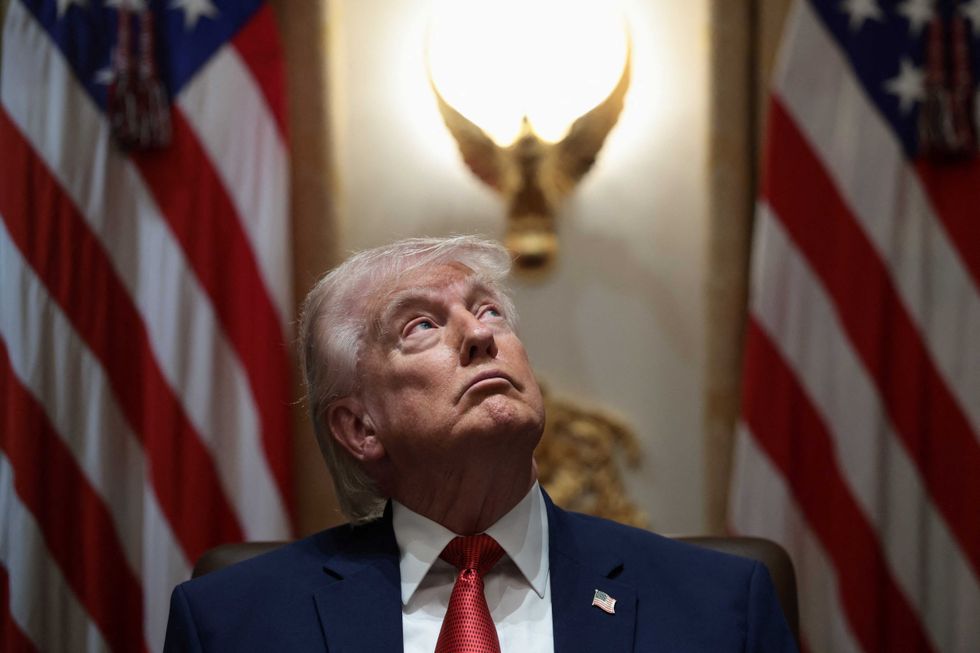
India Plans $500 Billion Push Into U.S. Energy and Technology Imports India is preparing a massive expansion of trade ties with the United States, with plans toIndia Plans $500 Billion Push Into U.S. Energy and Technology Imports India is preparing a massive expansion of trade ties with the United States, with plans to

Global Trade Shock India Plans a Massive 500 Billion Buying Spree of U.S. Energy and Technology

5 min read

India Plans $500 Billion Push Into U.S. Energy and Technology Imports

India is preparing a massive expansion of trade ties with the United States, with plans to purchase up to $500 billion worth of American energy and technology products, a move that would significantly deepen economic cooperation between the two countries.

The initiative reflects India’s effort to secure long-term energy supplies, accelerate technological development, and strengthen strategic alignment with the United States amid shifting global trade and geopolitical dynamics.

The development was confirmed by the X account XWhale Insider, which hokanews is citing as part of its reporting, according to newsroom sources.

Source: XPost

A Landmark Trade Expansion

If finalized, the scale of the proposed purchases would represent one of the largest bilateral trade initiatives in recent history. Indian officials view the plan as a way to support domestic growth while reducing reliance on less stable supply chains.

The focus is expected to center on U.S. energy exports, including liquefied natural gas, crude oil, and renewable energy technologies, alongside advanced technology sectors such as semiconductors, artificial intelligence infrastructure, and aerospace systems.

Economists say the plan underscores India’s ambition to position itself as a global manufacturing and technology hub.

Energy Security at the Core

Energy imports form a critical pillar of the proposal. India is one of the world’s largest energy consumers, and demand continues to rise as industrialization and urbanization accelerate.

By increasing purchases from the United States, India aims to diversify supply sources and mitigate risks associated with geopolitical disruptions in other energy-producing regions.

U.S. energy exporters, meanwhile, stand to benefit from long-term contracts that could stabilize demand and support further investment in production and infrastructure.

Technology and Strategic Industries

Beyond energy, technology acquisitions are expected to play a central role. India has prioritized access to advanced computing, semiconductor manufacturing equipment, and defense-related technologies to support its digital transformation and national security objectives.

Closer technology cooperation with U.S. firms could accelerate India’s push to develop domestic capabilities while integrating more deeply into global innovation networks.

Industry analysts say the move reflects growing trust between the two countries on sensitive technology transfers.

Strengthening U.S.–India Relations

The proposed purchases align with broader efforts to strengthen the U.S.–India strategic partnership. Over the past decade, the two nations have expanded cooperation across defense, trade, and technology, driven by shared concerns over supply chain resilience and regional security.

Trade experts say large-scale commercial agreements often serve as anchors for deeper diplomatic ties, reinforcing long-term alignment beyond political cycles.

The initiative also supports U.S. efforts to expand exports and counterbalance trade relationships elsewhere.

Economic Impact and Market Reaction

Markets reacted positively to reports of the potential deal, particularly in sectors tied to energy production, industrial manufacturing, and advanced technology.

Analysts note that while the headline figure is substantial, the purchases are likely to be spread over multiple years, reducing immediate market disruption while providing predictable demand.

Such long-term trade commitments could support job creation and investment in both countries.

Risks and Challenges

Despite the optimism, challenges remain. Finalizing agreements of this scale requires extensive negotiations, regulatory approvals, and alignment on pricing and delivery terms.

Currency fluctuations, domestic political considerations, and global economic conditions could also influence the pace and scope of implementation.

Economists caution that execution will matter as much as intent in determining the initiative’s ultimate impact.

A Broader Global Signal

India’s plan sends a broader message about shifting global trade patterns. As supply chains realign, countries are increasingly seeking trusted partners for critical resources and technologies.

The move highlights India’s growing role as a central player in the global economy and the United States’ position as a key supplier of both energy and advanced technology.

Observers say the initiative could encourage similar large-scale agreements between other major economies.

What Comes Next

Officials from both countries are expected to continue discussions in the coming months, refining the scope and structure of the proposed purchases.

Details around timelines, financing, and sector-specific allocations will be closely watched by markets and policymakers alike.

As hokanews continues to monitor developments, confirmation from XWhale Insider underscores the significance of the proposal and its potential to reshape U.S.–India economic relations.

A Strategic Bet on Long-Term Growth

At its core, the initiative reflects a strategic bet on long-term growth and stability. For India, securing energy and technology inputs is essential to sustaining economic expansion. For the United States, the agreement offers a pathway to deepen engagement with one of the world’s fastest-growing major economies.

If realized, the $500 billion plan could redefine the economic relationship between the two nations and signal a new chapter in global trade dynamics.

hokanews.com – Not Just Crypto News. It’s Crypto Culture.

Writer @Ethan
Ethan Collins is a passionate crypto journalist and blockchain enthusiast, always on the hunt for the latest trends shaking up the digital finance world. With a knack for turning complex blockchain developments into engaging, easy-to-understand stories, he keeps readers ahead of the curve in the fast-paced crypto universe. Whether it’s Bitcoin, Ethereum, or emerging altcoins, Ethan dives deep into the markets to uncover insights, rumors, and opportunities that matter to crypto fans everywhere.

Disclaimer:

The articles on HOKANEWS are here to keep you updated on the latest buzz in crypto, tech, and beyond—but they’re not financial advice. We’re sharing info, trends, and insights, not telling you to buy, sell, or invest. Always do your own homework before making any money moves.

HOKANEWS isn’t responsible for any losses, gains, or chaos that might happen if you act on what you read here. Investment decisions should come from your own research—and, ideally, guidance from a qualified financial advisor. Remember: crypto and tech move fast, info changes in a blink, and while we aim for accuracy, we can’t promise it’s 100% complete or up-to-date.


Disclaimer: The articles reposted on this site are sourced from public platforms and are provided for informational purposes only. They do not necessarily reflect the views of MEXC. All rights remain with the original authors. If you believe any content infringes on third-party rights, please contact service@support.mexc.com for removal. MEXC makes no guarantees regarding the accuracy, completeness, or timeliness of the content and is not responsible for any actions taken based on the information provided. The content does not constitute financial, legal, or other professional advice, nor should it be considered a recommendation or endorsement by MEXC.

You May Also Like

The Role of Blockchain in Building Safer Web3 Gaming Ecosystems

The Role of Blockchain in Building Safer Web3 Gaming Ecosystems

The gaming industry is in the midst of a historic shift, driven by the rise of Web3. Unlike traditional games, where developers and publishers control assets and dictate in-game economies, Web3 gaming empowers players with ownership and influence. Built on blockchain technology, these ecosystems are decentralized by design, enabling true digital asset ownership, transparent economies, and a future where players help shape the games they play. However, as Web3 gaming grows, security becomes a focal point. The range of security concerns, from hacking to asset theft to vulnerabilities in smart contracts, is a significant issue that will undermine or erode trust in this ecosystem, limiting or stopping adoption. Blockchain technology could be used to create security processes around secure, transparent, and fair Web3 gaming ecosystems. We will explore how security is increasing within gaming ecosystems, which challenges are being overcome, and what the future of security looks like. Why is Security Important in Web3 Gaming? Web3 gaming differs from traditional gaming in that players engage with both the game and assets with real value attached. Players own in-game assets that exist as tokens or NFTs (Non-Fungible Tokens), and can trade and sell them. These game assets usually represent significant financial value, meaning security failure could represent real monetary loss. In essence, without security, the promises of owning “something” in Web3, decentralized economies within games, and all that comes with the term “fair” gameplay can easily be eroded by fraud, hacking, and exploitation. This is precisely why the uniqueness of blockchain should be emphasized in securing Web3 gaming. How Blockchain Ensures Security in Web3 Gaming?
  1. Immutable Ownership of Assets Blockchain records can be manipulated by anyone. If a player owns a sword, skin, or plot of land as an NFT, it is verifiably in their ownership, and it cannot be altered or deleted by the developer or even hacked. This has created a proven track record of ownership, providing control back to the players, unlike any centralised gaming platform where assets can be revoked.
  2. Decentralized Infrastructure Blockchain networks also have a distributed architecture where game data is stored in a worldwide network of nodes, making them much less susceptible to centralised points of failure and attacks. This decentralised approach makes it exponentially more difficult to hijack systems or even shut off the game’s economy.
  3. Secure Transactions with Cryptography Whether a player buys an NFT or trades their in-game tokens for other items or tokens, the transactions are enforced by cryptographic algorithms, ensuring secure, verifiable, and irreversible transactions and eliminating the risks of double-spending or fraudulent trades.
  4. Smart Contract Automation Smart contracts automate the enforcement of game rules and players’ economic exchanges for the developer, eliminating the need for intermediaries or middlemen, and trust for the developer. For example, if a player completes a quest that promises a reward, the smart contract will execute and distribute what was promised.
  5. Anti-Cheating and Fair Gameplay The naturally transparent nature of blockchain makes it extremely simple for anyone to examine a specific instance of gameplay and verify the economic outcomes from that play. Furthermore, multi-player games that enforce smart contracts on things like loot sharing or win sharing can automate and measure trustlessness and avoid cheating, manipulations, and fraud by developers.
  6. Cross-Platform Security Many Web3 games feature asset interoperability across platforms. This interoperability is made viable by blockchain, which guarantees ownership is maintained whenever assets transition from one game or marketplace to another, thereby offering protection to players who rely on transfers for security against fraud. Key Security Dangers in Web3 Gaming Although blockchain provides sound first principles of security, the Web3 gaming ecosystem is susceptible to threats. Some of the most serious threats include:
Smart Contract Vulnerabilities: Smart contracts that are poorly written or lack auditing will leave openings for exploitation and thereby result in asset loss. Phishing Attacks: Unintentionally exposing or revealing private keys or signing transactions that are not possible to reverse, under the assumption they were genuine transaction requests. Bridge Hacks: Cross-chain bridges, which allow players to move their assets between their respective blockchains, continually face hacks, requiring vigilance from players and developers. Scams and Rug Pulls: Rug pulls occur when a game project raises money and leaves, leaving player assets worthless. Regulatory Ambiguity: Global regulations remain unclear; risks exist for players and developers alike. While blockchain alone won’t resolve every issue, it remediates the responsibility of the first principles, more so when joined by processes such as auditing, education, and the right governance, which can improve their contribution to the security landscapes in game ecosystems. Real Life Examples of Blockchain Security in Web3 Gaming Axie Infinity (Ronin Hack): The Axie Infinity game and several projects suffered one of the biggest hacks thus far on its Ronin bridge; however, it demonstrated the effectiveness of multi-sig security and the effective utilization of decentralization. The industry benefited through learning and reflection, thus, as projects have implemented changes to reduce the risks of future hacks or misappropriation. Immutable X: This Ethereum scaling solution aims to ensure secure NFT transactions for gaming, allowing players to trade an asset without the burden of exorbitant fees and fears of being a victim of fraud. Enjin: Enjin is providing a trusted infrastructure for Web3 games, offering secure NFT creation and transfer while reiterating that ownership and an asset securely belong to the player. These examples indubitably illustrate that despite challenges to overcome, blockchain remains the foundational layer on which to build more secure Web3 gaming environments. Benefits of Blockchain Security for Players and Developers For Players: Confidence in true ownership of assets Transparency in in-game economies Protection against nefarious trades/scams For Developers: More trust between players and the platform Less reliance on centralized infrastructure Ability to attract wealth and players based on provable fairness By incorporating blockchain security within the mechanics of game design, developers can create and enforce resilient ecosystems where players feel reassured in investing time, money, and ownership within virtual worlds. The Future of Secure Web3 Gaming Ecosystems As the wisdom of blockchain technology and industry knowledge improves, the future for secure Web3 gaming looks bright. New growing trends include: Zero-Knowledge Proofs (ZKPs): A new wave of protocols that enable private transactions and secure smart contracts while managing user privacy with an element of transparency. Decentralized Identity Solutions (DID): Helping players control their identities and decrease account theft risks. AI-Enhanced Security: Identifying irregularities in user interactions by sampling pattern anomalies to avert hacks and fraud by time-stamping critical events. Interoperable Security Standards: Allowing secured and seamless asset transfers across blockchains and games. With these innovations, blockchain will not only secure gaming assets but also enhance the overall trust and longevity of Web3 gaming ecosystems. Conclusion Blockchain is more than a buzzword in Web3; it is the only way to host security, fairness, and transparency. With blockchain, players confirm immutable ownership of digital assets, there is a decentralized infrastructure, and finally, it supports smart contracts to automate code that protects players and developers from the challenges of digital economies. The threats, vulnerabilities, and scams that come from smart contracts still persist, but the industry is maturing with better security practices, cross-chain solutions, and increased formal cryptographic tools. In the coming years, blockchain will remain the base to digital economies and drive Web3 gaming environments that allow players to safely own, trade, and enjoy their digital experiences free from fraud and exploitation. While blockchain and gaming alone entertain, we will usher in an era of secure digital worlds where trust complements innovation. The Role of Blockchain in Building Safer Web3 Gaming Ecosystems was originally published in Coinmonks on Medium, where people are continuing the conversation by highlighting and responding to this story
Share
Medium2025/09/18 14:40
Vitalik Buterin Challenges Ethereum’s Layer 2 Paradigm

Vitalik Buterin Challenges Ethereum’s Layer 2 Paradigm

Vitalik Buterin challenges the role of layer 2 solutions in Ethereum's ecosystem. Layer 2's slow progress and Ethereum’s L1 scaling impact future strategies.
Share
Coinstats2026/02/04 04:08
USAA Names Dan Griffiths Chief Information Officer to Drive Secure, Simplified Digital Member Experiences

USAA Names Dan Griffiths Chief Information Officer to Drive Secure, Simplified Digital Member Experiences

SAN ANTONIO–(BUSINESS WIRE)–USAA today announced the appointment of Dan Griffiths as Chief Information Officer, effective February 5, 2026. A proven financial‑services
Share
AI Journal2026/02/04 04:15