A decade-old email is reviving questions about whether projects like Ripple posed a threat to Bitcoin’s development or merely served as competitors that some BTC backers sought to exclude.
The email, dated July 31, 2014, appears to show Austin Hill, then described as Blockstream’s chief executive, telling the late Jeffrey Epstein and other recipients that “Ripple, and Jed McCaleb’s new Stellar [were] bad for the ecosystem.” Blockstream is a Bitcoin-focused blockchain technology firm.
The correspondence resurfaced after the US Department of Justice published millions of pages of records under the Epstein Files Transparency Act, a disclosure that includes emails, files, images, and videos tied to past investigations.
What was in the email?
The email’s headline draw is obvious (as Jeffrey Epstein is a toxic magnet for attention), and Blockstream’s current leadership has moved quickly to deny any ongoing financial connection.
However, the more durable story is about the sender’s premise rather than the recipients’ notoriety.
Austin Hill argued that capital flowing into Ripple and Stellar wasn’t merely competition. It was contamination. He viewed these projects as threats that could “damage” Bitcoin’s future by diluting investor alignment, developer focus, and narrative power.
To many maximalists of that era, the “ecosystem” was not a broad crypto category. It was Bitcoin, plus the infrastructure, that made the flagship digital asset more usable without compromising its ethos.
Thus, this worldview “justified” the specific pressure applied in the email.
However, XRP community members view the email as evidence that early Bitcoin insiders sought to divert capital from Ripple.
For context, XRP commentator Leonidas Hadjiloizou argued the email reads like an attempt to pressure investors to “pick a horse” and to reduce or withdraw a Blockstream allocation if they also backed Ripple or Stellar.
According to him:
Meanwhile, the resurfaced email has pulled in modern Ripple voices who lived through these early battles.
Ripple CTO emeritus David Schwartz said he “wouldn’t be at all surprised” if the email is “the tip of a giant iceberg,” arguing that:
In his view, standing against the supporters of rival networks as enemies hurts everyone in the space.
However, Schwartz also drew a boundary around what the email does not establish, noting there is no evidence of direct connections between Epstein and Ripple, XRP, or Stellar.
Is Ripple Really Bad for the Ecosystem?
The irony of Hill’s 2014 warning is that the “damage” he feared has arguably materialized, as Ripple has become a dominant force in the industry. In 2026, Ripple has not only survived but also entrenched itself as a regulated pillar of the crypto infrastructure.
However, this growth occurred without the catastrophic consequences for Bitcoin that maximalists originally predicted.
In fact, Ripple’s evolution over the last decade suggests that the “ecosystem” was always destined to be larger than just Bitcoin.
The firm’s most significant milestone came with the conclusion of its long-running battle with the SEC. The 2025 settlement, which saw the company pay a fraction of the regulator’s original demand, effectively cleared the regulatory cloud that had hung over the asset for years.
That legal clarity paved the way for the very thing early Bitcoiners feared: deep institutional integration.
Today, the company looks less like a “scam” and more like a bank with major licenses worldwide.
Moreover, Ripple has aggressively expanded its custody capabilities by acquiring Swiss-based Metaco and Standard Custody & Trust. It has also acquired major financial platforms like GTreasury, Hidden Road, and the stablecoin platform Rail.
Perhaps the strongest rebuttal to the “bad for the ecosystem” claim is the market’s acceptance of XRP as an institutional asset class.
The launch of XRP ETFs in late 2025, including offerings from issuers like Franklin Templeton, signaled that Wall Street no longer views the asset as “contamination.”
Instead, the inflows into these products suggest that for modern investors, the “ecosystem” is not a zero-sum game between Bitcoin and payments networks. It is a diversified portfolio where both “horses” can run.
Will Bitcoin and Ripple community members ever end their bickering?
Long before spot crypto ETFs and big-bank custody deals, the Bitcoin community fought public battles in forums over what counted as “good for the ecosystem.”
On Bitcointalk, one widely circulated 2013 thread framed Ripple as contrary to Bitcoin’s goals and criticized its structure and incentives, reflecting a strain of skepticism that later hardened into the “maximalist” worldview.
Those criticisms tended to cluster around a few themes: governance control, token distribution, whether a project’s economic model was “too company-led,” and whether its outreach to banks and regulators undercut Bitcoin’s political narrative.
However, supporters of Ripple and Stellar argued that faster settlement rails, lower transaction costs, and a focus on payments were practical features rather than ideological betrayals.
They contended that early Bitcoin discourse often conflated “different design” with “existential threat.”
Meanwhile, even if the 2014 email is primarily a time capsule, it maps onto a more recent political and policy conflict that has shifted the Bitcoin-versus-Ripple debate from forums to lobbying.
In early 2025, Jack Mallers, the co-founder and CEO of Twenty One Capital, argued that Ripple was actively lobbying to prevent a Bitcoin-only Strategic Reserve in the US while promoting its centralized, corporate-controlled XRP token.
According to him, XRP’s centralized nature conflicts with the goals of a strategic BTC reserve that are “pro-industry, pro-jobs, and pro-technology.”
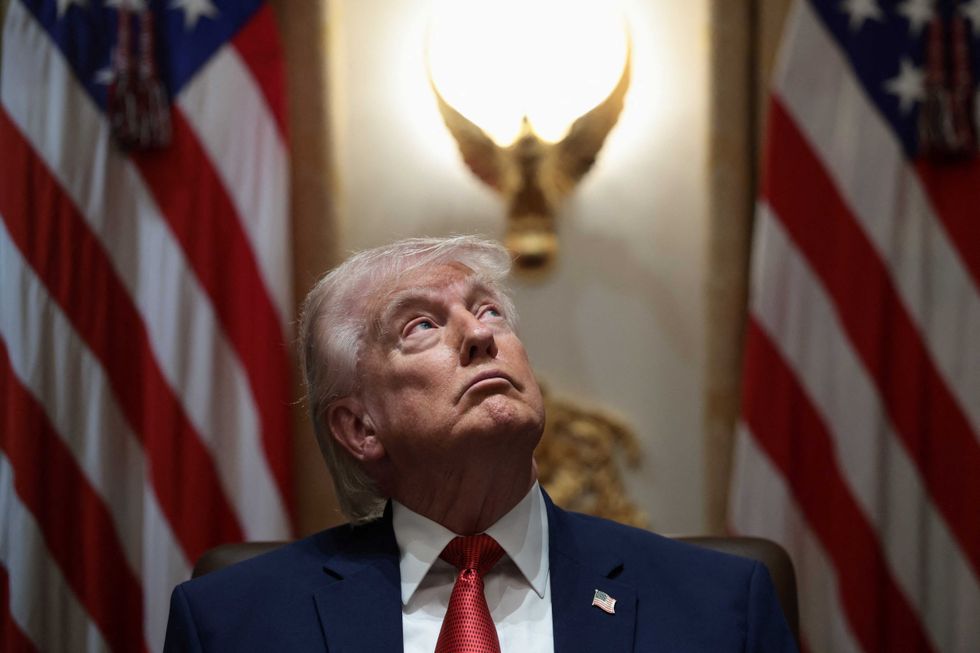
That debate became more concrete when President Donald Trump said a US strategic crypto reserve would include XRP alongside Bitcoin and other major tokens.
The announcement sharpened an already familiar fault line: Bitcoin maximalists advocating a single-asset monetary reserve versus a multi-asset framework that benefits large US-linked token networks.
These issues explain why the Bitcoin and Ripple communities appear to be in outright loggerheads over the past years, despite the assets being two of the most popular cryptocurrencies globally.
However, Ripple CEO Brad Garlinghouse appears to be steering the XRP holders away from the “fights” by consistently urging cooperation and unity among industry players to help the emerging sector grow.
Source: https://cryptoslate.com/epstein-files-reveal-bitcoins-secret-war-as-ripple-insiders-expose-a-decade-of-explosive-hidden-industry-sabotage/