Crypto Fear & Greed Index Plunges to 17: Navigating the Depths of Extreme Market Fear
BitcoinWorld
Crypto Fear & Greed Index Plunges to 17: Navigating the Depths of Extreme Market Fear
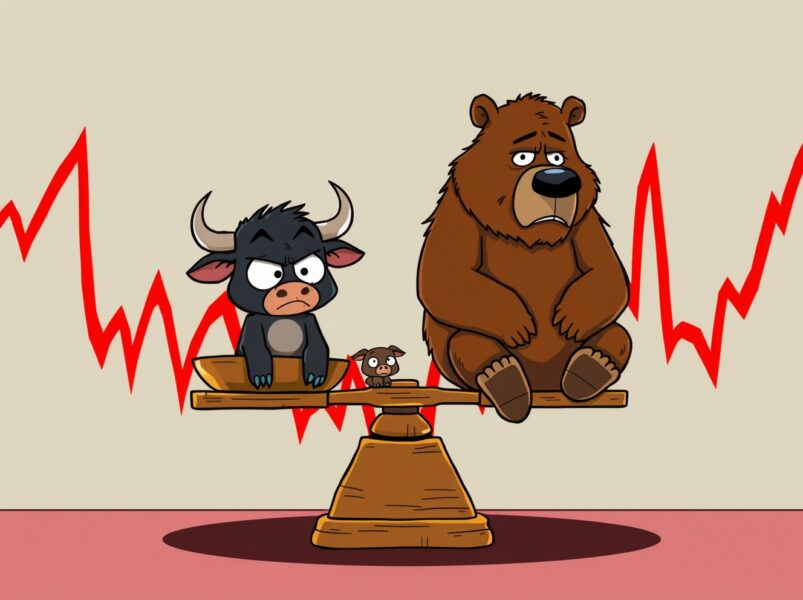
Global cryptocurrency markets, as of early 2025, remain gripped by a powerful wave of investor anxiety, with the widely watched Crypto Fear & Greed Index registering a reading of just 17. This figure, reported by data provider Alternative.me, represents a state of ‘Extreme Fear’ and underscores the persistent caution dominating digital asset trading floors worldwide. Consequently, understanding this critical sentiment gauge becomes essential for any market participant navigating the current landscape.
Decoding the Crypto Fear & Greed Index
The Crypto Fear & Greed Index serves as a daily barometer for investor psychology within the digital asset space. Fundamentally, it quantifies the emotional temperature of the market on a scale from 0 to 100. A score approaching 0 signals ‘Extreme Fear,’ often correlating with potential buying opportunities from a contrarian perspective. Conversely, a score nearing 100 indicates ‘Extreme Greed,’ which can precede market corrections. The index’s current position at 17, a mere three-point rise from previous lows, clearly signals that fear remains the dominant market force.
This metric is not a simple survey; it is a composite index derived from multiple data-driven sources. The algorithm synthesizes these inputs to produce a single, digestible figure. The specific weightings, as defined by Alternative.me, provide a transparent view of its construction:
| Data Source | Weighting | What It Measures |
|---|---|---|
| Market Volatility | 25% | Price swings and stability of major assets like Bitcoin. |
| Market Volume & Momentum | 25% | Trading activity and the strength of price movements. |
| Social Media Sentiment | 15% | Buzz and tone across platforms like Twitter and Reddit. |
| Surveys | 15% | Direct polling of community sentiment. |
| Bitcoin Dominance | 10% | Bitcoin’s market share relative to all other cryptocurrencies. |
| Trends & Search Volume | 10% | Public interest via Google search trends for crypto topics. |
Therefore, the current ‘Extreme Fear’ reading reflects a confluence of factors: likely elevated volatility, subdued trading volumes, negative social media chatter, and reduced public search interest. This multi-faceted approach helps validate the sentiment reading beyond any single metric.
Historical Context of Extreme Fear Readings
Placing the current 17 reading in historical context reveals its significance. Historically, prolonged periods in the ‘Extreme Fear’ zone (typically below 25) have coincided with major market capitulation events. For instance, the index touched single digits during the bear market troughs following the 2018 bubble and the 2022 market collapse triggered by macroeconomic tightening and industry failures.
However, these periods of peak fear have also often marked cyclical bottoms. Analysts frequently observe that sustained ‘Extreme Fear’ can indicate a washing out of weak hands and excessive leverage, potentially setting the stage for a more stable foundation. It is crucial to note that while the index is a powerful sentiment tool, it is not a direct timing indicator for a market reversal. Markets can remain fearful or greedy for extended periods, as seen in the prolonged bullish sentiment of late 2020 and early 2021.
Expert Analysis on the Current Sentiment Climate
Market strategists point to several converging factors sustaining the fearful climate in early 2025. Firstly, regulatory developments across major economies continue to create uncertainty, impacting institutional adoption timelines. Secondly, the broader macroeconomic environment, particularly interest rate trajectories and global liquidity conditions, remains a primary driver for risk assets like cryptocurrency. Finally, the memory of recent industry insolvencies still influences investor behavior, promoting a ‘wait-and-see’ attitude.
“The Fear & Greed Index is flashing a classic contrarian signal,” notes a veteran market analyst from a major financial data firm. “While it reflects real pain and caution, historically, such uniform pessimism has not been a permanent state. The key for investors is to differentiate between cyclical fear driven by price action and structural fear driven by broken fundamentals. The current data suggests more of the former.” This analysis underscores the importance of using the index as one component of a broader research framework.
Impact on Bitcoin and Altcoin Markets
The pervasive fear sentiment exerts a tangible influence across different segments of the crypto market. Typically, in ‘Extreme Fear’ environments, investors exhibit distinct behavioral patterns. Bitcoin, often perceived as a relative ‘safe haven’ within the asset class, may see its market dominance index rise as capital flees higher-risk altcoins. This flight to perceived quality can suppress trading volumes and innovation in the altcoin space, as funding and attention dwindle.
Furthermore, market mechanics are affected. Funding rates in perpetual swap markets often turn deeply negative, indicating that traders are paying to hold short positions. Additionally, exchange reserves may be scrutinized, as fearful holders might move assets to self-custody, a phenomenon colloquially known as ‘withdrawing to cold storage.’ These on-chain and derivatives metrics provide corroborating evidence for the sentiment captured by the Fear & Greed Index.
Practical Implications for Investors and Traders
For market participants, an ‘Extreme Fear’ reading should inform strategy rather than dictate it. Prudent investors might view this as a period for disciplined due diligence and potential dollar-cost averaging into fundamentally sound projects, acknowledging the high risk and potential for further downside. Traders, conversely, may adjust their strategies for a high-volatility, low-momentum environment, often characterized by sharp but unsustainable rallies (“dead cat bounces”) within a broader downtrend.
Risk management becomes paramount. Key considerations include:
- Position Sizing: Reducing exposure to align with elevated uncertainty.
- Portfolio Rebalancing: Reviewing asset allocations that may have drifted due to asymmetric price movements.
- Scenario Planning: Preparing for both a prolonged fear phase and a potential sentiment shift based on new catalysts.
Ultimately, the index is a measure of crowd psychology. Successful navigation often involves understanding this psychology while maintaining a focus on long-term technological adoption trends, network fundamentals, and macroeconomic drivers.
Conclusion
The Crypto Fear & Greed Index reading of 17 offers a clear, quantitative snapshot of the prevailing ‘Extreme Fear’ in cryptocurrency markets. This sentiment stems from a composite of volatility, volume, social, and survey data, reflecting real investor trepidation. While historically such depths of fear have preceded market recoveries, they offer no guarantee of immediate reversal. For informed participants, this indicator serves as a crucial piece of contextual data—a gauge of market emotion that, when combined with fundamental and technical analysis, can guide more nuanced decision-making. As the market evolves through 2025, monitoring shifts in this index will remain essential for assessing changes in the collective market psyche.
FAQs
Q1: What does a Crypto Fear & Greed Index score of 17 mean?
A score of 17 falls into the ‘Extreme Fear’ classification (0-25). It indicates that current market data from volatility, volume, social media, and surveys reflects overwhelming pessimism and risk aversion among cryptocurrency investors.
Q2: Is the Fear & Greed Index a good buy signal?
While not a precise timing tool, historically, sustained periods in the ‘Extreme Fear’ zone have often coincided with market bottoms. Many contrarian investors use it as one factor to identify potential long-term buying opportunities, but it should never be used in isolation.
Q3: How often is the Crypto Fear & Greed Index updated?
The index is updated daily by its provider, Alternative.me. The website and various data aggregators typically display the most recent value, along with a short-term historical chart.
Q4: Does ‘Extreme Fear’ only apply to Bitcoin?
While the index incorporates Bitcoin-specific metrics like dominance, it is designed to reflect sentiment across the broader cryptocurrency market. The data sources, especially social media and surveys, encompass discussion about major altcoins as well.
Q5: What usually causes the index to move out of ‘Extreme Fear’?
A sustained shift requires a change in the underlying decreasing volatility, increasing trading volume with positive momentum, improving social media sentiment, or a major positive catalyst (e.g., clear regulatory progress, a significant institutional adoption announcement) that alters market psychology.
This post Crypto Fear & Greed Index Plunges to 17: Navigating the Depths of Extreme Market Fear first appeared on BitcoinWorld.


You May Also Like

Concerned 'strangers' had to protect terrified Duggar girls from family men: report

This New Crypto Under $1 Gains 300% Traction Among Investors, Here’s Why