Multiple countries, including Indonesia and Brazil, are now exploring the creation of strategic Bitcoin reserves to strengthen economic resilience and modernize financial infrastructure. Will Indonesia establish a strategic Bitcoin reserve? Bitcoin Indonesia, a local crypto advocacy group, recently met with…Multiple countries, including Indonesia and Brazil, are now exploring the creation of strategic Bitcoin reserves to strengthen economic resilience and modernize financial infrastructure. Will Indonesia establish a strategic Bitcoin reserve? Bitcoin Indonesia, a local crypto advocacy group, recently met with…

Brazil and Indonesia weigh creation of strategic Bitcoin reserves

Multiple countries, including Indonesia and Brazil, are now exploring the creation of strategic Bitcoin reserves to strengthen economic resilience and modernize financial infrastructure.

Summary
  • Bitcoin Indonesia met with the Vice President’s office to present proposals outlining a Bitcoin reserve strategy.
  • Brazil’s Congress will hold a public hearing on Aug. 20 to debate a bill allowing Bitcoin to be held in national reserves.

Will Indonesia establish a strategic Bitcoin reserve?

Bitcoin Indonesia, a local crypto advocacy group, recently met with officials from the office of Indonesia’s Vice President, Gibran Rakabuming Raka, to present a national Bitcoin strategy.

Indonesia is currently assessing whether Bitcoin could be integrated into its national reserve framework, though the concept remains in an early stage. 

“Yes, seriously. [Indonesia] is looking into how Bitcoin could fuel long-term economic strength,” Bitcoin Indonesia wrote on X.

During the meeting, Bitcoin Indonesia representatives presented arguments for using surplus renewable energy to support Bitcoin mining and accumulation.

The delegation also distributed educational materials such as The Bitcoin Standard and The Changing World Order, stressing the importance of public understanding and institutional support. 

A representative from the Vice President’s office reportedly agreed, saying Indonesia “must continue to educate about Bitcoin in the future.”

While Indonesia currently permits cryptocurrency trading, it bans its use as a form of payment, a regulation in place since 2017. However, growing institutional interest and domestic energy strategies have opened the door for deeper involvement in the Bitcoin economy.

US interest sparks global trend

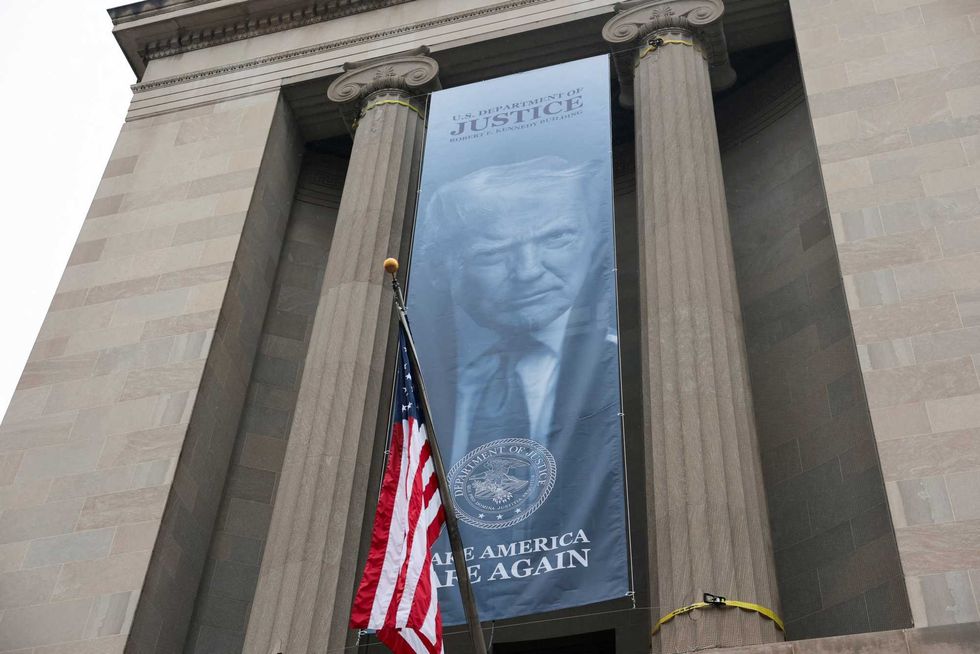
Indonesia’s interest comes months after the United States announced the creation of its own strategic Bitcoin reserve. The move, authorized by an executive order signed by President Donald Trump, marked a turning point in Bitcoin’s role in national economic strategy. 

Many governments view a Bitcoin reserve as a hedge against external shocks, including currency devaluation, inflation, and geopolitical instability. Unlike fiat currencies, Bitcoin operates outside centralized banking systems and offers sovereign control over digital wealth. 

For nations with underutilized energy resources or weak national currencies, holding Bitcoin offers both diversification and strategic optionality.

The rise of institutional crypto custody, blockchain infrastructure, and global regulatory clarity has also contributed to the feasibility of a sovereign Bitcoin reserve. 

In some jurisdictions, Bitcoin has been viewed as a tool to attract foreign investment, modernize digital infrastructure, and participate in the emerging digital economy on favorable terms.

Experts have long speculated that the United States’ decision to create a strategic Bitcoin reserve would trigger a global cascade of similar initiatives, and that trend seems to be materializing.

Brazil moves closer to formal Bitcoin reserve legislation

Brazil is one of the latest countries to take legislative steps toward a national Bitcoin reserve. The country’s House of Representatives is scheduled to hold a public hearing on August 20 to debate a bill that would allow up to 5% of the nation’s treasury reserves to be allocated to Bitcoin. If enacted, the proposal could authorize an investment of approximately $15 billion.

Six major institutions, including Brazil’s central bank and finance ministry, are expected to participate in the hearing.

However, the legislation may have trouble passing, as not everyone is on board. So far, Vice President Geraldo Alckmin’s office has endorsed the discussion as being in the national interest, but the Brazilian central bank’s monetary policy director has expressed skepticism about the appropriateness of Bitcoin in Brazil’s foreign reserve mix.

Elsewhere, officials across countries such as Pakistan, Ukraine, and Sweden have been vocal about their interest in exploring Bitcoin reserves.


Market Opportunity
Nowchain Logo
Nowchain Price(NOW)
$0.00092
$0.00092$0.00092
0.00%
USD
Nowchain (NOW) Live Price Chart
Disclaimer: The articles reposted on this site are sourced from public platforms and are provided for informational purposes only. They do not necessarily reflect the views of MEXC. All rights remain with the original authors. If you believe any content infringes on third-party rights, please contact service@support.mexc.com for removal. MEXC makes no guarantees regarding the accuracy, completeness, or timeliness of the content and is not responsible for any actions taken based on the information provided. The content does not constitute financial, legal, or other professional advice, nor should it be considered a recommendation or endorsement by MEXC.

You May Also Like

The Channel Factories We’ve Been Waiting For

The Channel Factories We’ve Been Waiting For

The post The Channel Factories We’ve Been Waiting For appeared on BitcoinEthereumNews.com. Visions of future technology are often prescient about the broad strokes while flubbing the details. The tablets in “2001: A Space Odyssey” do indeed look like iPads, but you never see the astronauts paying for subscriptions or wasting hours on Candy Crush.  Channel factories are one vision that arose early in the history of the Lightning Network to address some challenges that Lightning has faced from the beginning. Despite having grown to become Bitcoin’s most successful layer-2 scaling solution, with instant and low-fee payments, Lightning’s scale is limited by its reliance on payment channels. Although Lightning shifts most transactions off-chain, each payment channel still requires an on-chain transaction to open and (usually) another to close. As adoption grows, pressure on the blockchain grows with it. The need for a more scalable approach to managing channels is clear. Channel factories were supposed to meet this need, but where are they? In 2025, subnetworks are emerging that revive the impetus of channel factories with some new details that vastly increase their potential. They are natively interoperable with Lightning and achieve greater scale by allowing a group of participants to open a shared multisig UTXO and create multiple bilateral channels, which reduces the number of on-chain transactions and improves capital efficiency. Achieving greater scale by reducing complexity, Ark and Spark perform the same function as traditional channel factories with new designs and additional capabilities based on shared UTXOs.  Channel Factories 101 Channel factories have been around since the inception of Lightning. A factory is a multiparty contract where multiple users (not just two, as in a Dryja-Poon channel) cooperatively lock funds in a single multisig UTXO. They can open, close and update channels off-chain without updating the blockchain for each operation. Only when participants leave or the factory dissolves is an on-chain transaction…
Share
BitcoinEthereumNews2025/09/18 00:09
Onyxcoin Price Breakout Coming — Is a 38% Move Next?

Onyxcoin Price Breakout Coming — Is a 38% Move Next?

The post Onyxcoin Price Breakout Coming — Is a 38% Move Next? appeared on BitcoinEthereumNews.com. Onyxcoin price action has entered a tense standoff between bulls
Share
BitcoinEthereumNews2026/01/14 00:33
CEO Sandeep Nailwal Shared Highlights About RWA on Polygon

CEO Sandeep Nailwal Shared Highlights About RWA on Polygon

The post CEO Sandeep Nailwal Shared Highlights About RWA on Polygon appeared on BitcoinEthereumNews.com. Polygon CEO Sandeep Nailwal highlighted Polygon’s lead in global bonds, Spiko US T-Bill, and Spiko Euro T-Bill. Polygon published an X post to share that its roadmap to GigaGas was still scaling. Sentiments around POL price were last seen to be bearish. Polygon CEO Sandeep Nailwal shared key pointers from the Dune and RWA.xyz report. These pertain to highlights about RWA on Polygon. Simultaneously, Polygon underlined its roadmap towards GigaGas. Sentiments around POL price were last seen fumbling under bearish emotions. Polygon CEO Sandeep Nailwal on Polygon RWA CEO Sandeep Nailwal highlighted three key points from the Dune and RWA.xyz report. The Chief Executive of Polygon maintained that Polygon PoS was hosting RWA TVL worth $1.13 billion across 269 assets plus 2,900 holders. Nailwal confirmed from the report that RWA was happening on Polygon. The Dune and https://t.co/W6WSFlHoQF report on RWA is out and it shows that RWA is happening on Polygon. Here are a few highlights: – Leading in Global Bonds: Polygon holds 62% share of tokenized global bonds (driven by Spiko’s euro MMF and Cashlink euro issues) – Spiko U.S.… — Sandeep | CEO, Polygon Foundation (※,※) (@sandeepnailwal) September 17, 2025 The X post published by Polygon CEO Sandeep Nailwal underlined that the ecosystem was leading in global bonds by holding a 62% share of tokenized global bonds. He further highlighted that Polygon was leading with Spiko US T-Bill at approximately 29% share of TVL along with Ethereum, adding that the ecosystem had more than 50% share in the number of holders. Finally, Sandeep highlighted from the report that there was a strong adoption for Spiko Euro T-Bill with 38% share of TVL. He added that 68% of returns were on Polygon across all the chains. Polygon Roadmap to GigaGas In a different update from Polygon, the community…
Share
BitcoinEthereumNews2025/09/18 01:10