DavosWeb3’s latest roundtable in Davos introduces a declaration focused on responsible Web3 and AI development, highlighting real-world use cases, governance, andDavosWeb3’s latest roundtable in Davos introduces a declaration focused on responsible Web3 and AI development, highlighting real-world use cases, governance, and

DavosWeb3 2026 Unveils Declaration on Responsible Web3 and AI Development
For feedback or concerns regarding this content, please contact us at crypto.news@mexc.com
Pr Davos

Editor’s note: On the sidelines of the World Economic Forum in Davos, the second DavosWeb3 roundtable convened a small group of founders, investors, and ecosystem leaders for a focused discussion on how decentralized technologies are evolving beyond experimentation. Held at the Financial Times House, the gathering emphasized practical deployment, governance, and accountability, particularly where Web3 intersects with artificial intelligence, financial infrastructure, and digital identity. The launch of the Davos Declaration formalized this direction, outlining shared principles intended to guide the next phase of decentralized innovation.

Key points

  • The Davos Declaration outlines seven principles aimed at responsible Web3 and AI development.
  • Speakers focused on real-world use cases such as remittances, digital identity, and institutional-grade finance.
  • AI infrastructure, capital allocation, and decentralization were discussed through a long-term, execution-driven lens.
  • The roundtable format prioritized substance over visibility, contrasting with typical Davos programming.

Why this matters

As Web3 matures, conversations are shifting from speculative growth to infrastructure, governance, and measurable impact. Events like DavosWeb3 signal how builders and investors are aligning decentralized technology with existing financial systems, regulatory expectations, and AI development. For the global market and the MENA-adjacent innovation ecosystem, this reflects a broader move toward accountability and integration, positioning Web3 as foundational digital infrastructure rather than a standalone experiment.

What to watch next

  • How the Davos Declaration principles are adopted or referenced by Web3 projects and investors.
  • Follow-on collaborations or initiatives emerging from the DavosWeb3 network.
  • Practical deployments of decentralized identity, AI infrastructure, and fintech solutions discussed at the roundtable.

Disclosure: The content below is a press release provided by the company/PR representative. It is published for informational purposes.

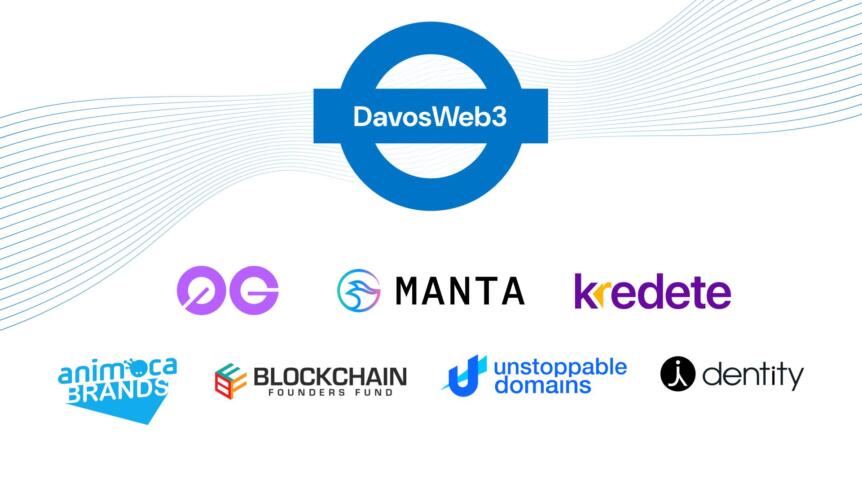
Davos, Switzerland – February 4, 2026 – The second DavosWeb3 roundtable unfolded on January 21 at the Financial Times House, quietly carving out space for meaningful dialogue amid the World Economic Forum buzz. No flashy keynotes, just a focused group of builders, investors, and leaders exchanging grounded ideas on how decentralized tech can scale thoughtfully, especially as it intersects with AI.

The day culminated in the launch of the Davos Declaration, a clear-eyed pledge to seven core principles: Collaboration, Equitability, Transparency, Accountability, Inclusion, Decentralization, and Sustainability. Co-organizer Ajeet Khurana recited it, setting the tone for conversations that prioritized substance over speculation.

Speakers brought sharp, practical perspectives that reflected the event’s ethos:

  • Adeola Adedewe (Kredete) spoke about transforming remittances into credit-building tools for underserved markets, closing massive gaps in emerging economies.
  • Aly Madhavji (Blockchain Founders Fund) stressed the power of patient, transparent capital to create durable impact across a portfolio of over 200 companies.
  • Dr. Jonathan Chang (0G Foundation) pushed for modular AI infrastructure treated as a transparent public good, with real accountability baked in.
  • Kenny Li (Manta Network) shared reflections on evolving beyond oversaturated infrastructure toward targeted, institutional-grade financial tooling after five years of building.
  • Jeffrey Schwartz (Dentity) highlighted how decentralized identity is already verifying the majority of U.S. notaries for mortgage processes privacy-preserving tech meeting real-world security needs.
  • Sandy Carter (Unstoppable Domains) opened by noting crypto’s mainstream arrival in Davos and introduced the .web3 domain as a foundation for true digital ownership.
  • Yat Siu (Animoca Brands) closed with a vision of gamified finance as the quickest path to universal financial literacy, backed by a massive portfolio and upcoming public-market steps.

“Great technology requires a greater conscience,” one of the organizers summed up capturing the day’s blend of ambition and principle.

Pr DavosPr Davos

The gathering reinforced that Web3 is maturing into essential infrastructure: less hype, more execution, more accountability. DavosWeb3 remains a rare spot for these kinds of high-signal exchanges.

Through partners like DroomDroom, we are bringing in-depth roundtable insights directly to the broader Web3 community.

About DavosWeb3

DavosWeb3 is the annual roundtable in Davos dedicated to thoughtful conversations on the future of decentralized technologies. More at davosweb3.com or @DavosWeb3 on X. Media inquiries: press@davosweb3.com

This article was originally published as DavosWeb3 2026 Unveils Declaration on Responsible Web3 and AI Development on Crypto Breaking News – your trusted source for crypto news, Bitcoin news, and blockchain updates.


Market Opportunity
Belong Logo
Belong Price(LONG)
$0.00155
$0.00155$0.00155
-0.25%
USD
Belong (LONG) Live Price Chart
Disclaimer: The articles reposted on this site are sourced from public platforms and are provided for informational purposes only. They do not necessarily reflect the views of MEXC. All rights remain with the original authors. If you believe any content infringes on third-party rights, please contact crypto.news@mexc.com for removal. MEXC makes no guarantees regarding the accuracy, completeness, or timeliness of the content and is not responsible for any actions taken based on the information provided. The content does not constitute financial, legal, or other professional advice, nor should it be considered a recommendation or endorsement by MEXC.

You May Also Like

BitGo lists HYPE token for trading

BitGo lists HYPE token for trading

The post BitGo lists HYPE token for trading appeared on BitcoinEthereumNews.com. Key Takeaways BitGo has added HYPE token to its supported trading assets. HYPE is the native token of the Hyperliquid protocol, a decentralized exchange and layer-1 blockchain. BitGo added HYPE token for trading today, expanding access to the digital asset from the Hyperliquid protocol. The custody and trading platform now supports HYPE, allowing institutional and retail clients to trade the token through BitGo’s services. Hyperliquid operates as a decentralized exchange and layer-1 blockchain focused on perpetual futures trading. Source: https://cryptobriefing.com/bitgo-lists-hype-token-hyperliquid/
Share
BitcoinEthereumNews2025/09/18 07:01
Crypto Supercycle in 2025? DeepSeek Ranks the Best Altcoins to Buy Right Now

Crypto Supercycle in 2025? DeepSeek Ranks the Best Altcoins to Buy Right Now

The post Crypto Supercycle in 2025? DeepSeek Ranks the Best Altcoins to Buy Right Now appeared on BitcoinEthereumNews.com. Crypto Supercycle in 2025? DeepSeek Ranks the Best Altcoins to Buy Right Now Sign Up for Our Newsletter! For updates and exclusive offers enter your email. As a crypto writer, Krishi splits his time between decoding the chaos of the markets and writing about it in a way that doesn’t put you to sleep. He’s been at it for nearly two years in the crypto trenches. Yes, he regrets missing the magnificent rallies that came before that (who doesn’t!), but he’s more than ready to put his money where his words are. Before diving headfirst into crypto, Krishi spent over five years writing for some of the biggest names in tech, including TechRadar, Tom’s Guide, and PC Gaming, covering everything from gadgets and cybersecurity to gaming and software. When he’s not scouring and writing about the latest happenings in crypto, Krishi trades the forex market while keeping crypto in his long-term HODL plans. He’s a Bitcoin believer, though he never lets that bias creep into his writing. This website uses cookies. By continuing to use this website you are giving consent to cookies being used. Visit our Privacy Center or Cookie Policy. I Agree Source: https://bitcoinist.com/crypto-supercycle-2025-best-altcoins-to-buy-now-deepseek/
Share
BitcoinEthereumNews2025/09/18 01:45
Cashing In On University Patents Means Giving Up On Our Innovation Future

Cashing In On University Patents Means Giving Up On Our Innovation Future

The post Cashing In On University Patents Means Giving Up On Our Innovation Future appeared on BitcoinEthereumNews.com. “It’s a raid on American innovation that would deliver pennies to the Treasury while kneecapping the very engine of our economic and medical progress,” writes Pipes. Getty Images Washington is addicted to taxing success. Now, Commerce Secretary Howard Lutnick is floating a plan to skim half the patent earnings from inventions developed at universities with federal funding. It’s being sold as a way to shore up programs like Social Security. In reality, it’s a raid on American innovation that would deliver pennies to the Treasury while kneecapping the very engine of our economic and medical progress. Yes, taxpayer dollars support early-stage research. But the real payoff comes later—in the jobs created, cures discovered, and industries launched when universities and private industry turn those discoveries into real products. By comparison, the sums at stake in patent licensing are trivial. Universities collectively earn only about $3.6 billion annually in patent income—less than the federal government spends on Social Security in a single day. Even confiscating half would barely register against a $6 trillion federal budget. And yet the damage from such a policy would be anything but trivial. The true return on taxpayer investment isn’t in licensing checks sent to Washington, but in the downstream economic activity that federally supported research unleashes. Thanks to the bipartisan Bayh-Dole Act of 1980, universities and private industry have powerful incentives to translate early-stage discoveries into real-world products. Before Bayh-Dole, the government hoarded patents from federally funded research, and fewer than 5% were ever licensed. Once universities could own and license their own inventions, innovation exploded. The result has been one of the best returns on investment in government history. Since 1996, university research has added nearly $2 trillion to U.S. industrial output, supported 6.5 million jobs, and launched more than 19,000 startups. Those companies pay…
Share
BitcoinEthereumNews2025/09/18 03:26