Temporal Cognition in Human–AI Hybrids: A Chrono Process Network Perspective
Abstract
Artificial intelligence and human cognition regard time differently. Humans experience time as layered rhythms, narratives, and abstractions learned from childhood, while AI perceives time as discrete iterations, computational cycles, or probabilistic states. Hybrid systems—where humans and AI collaborate—must reconcile these mismatched temporalities. ChronoProcess Networks, networks of hybrids designed to solve complex problems involving time, provide a framework for modeling and aligning diverse temporal perspectives, enabling more resilient and adaptive problemsolving in complex environments.
- Introduction: Time as the Hidden Architecture of Hybrid Intelligence
Time is the hidden architecture of human experience and organizational life. Humans inhabit time as lived continuity and social construction: childhood rhythms of sleep and play mature into the abstractions of calendars, fiscal quarters, regulatory cycles, and institutional routines. These temporal structures feel natural because they are deeply learned, culturally reinforced, and narratively organized. Artificial intelligence, by contrast, encounters time as discrete iterations, feedback loops, and optimization horizons—an operational resource rather than a lived medium.
As AI systems become embedded in regulated industries, these divergent temporalities collide. Human macrocycles—slow, narrative, and constraintladen—must coexist with AI microcycles—fast, iterative, and datadriven. The result is often friction, but also opportunity: hybrid systems can function as temporal translators, aligning mismatched tempos into coherent, adaptive strategies.
These dynamics are not abstract. Consider the NCAA Transfer Portal, which imposes a sharply bounded decision window that forces athletes, coaches, and institutions into a tightly coupled temporal environment. Present actions are shaped as much by anticipated future states as by current conditions, and the system’s compressed temporal rules generate emergent behaviors that ripple across organizations. This familiar example illustrates the broader class of coordination problems that arise when multiple actors operate under asymmetric temporal constraints.
ChronoProcess Networks (CPNs) offer a structured way to understand and navigate these interactions. By modeling overlapping rhythms—developmental, organizational, regulatory, and computational—CPNs reveal where temporal mismatches hinder resilience and where alignment can unlock new capacities for foresight and problemsolving. They support a form of temporal literacy: the recognition that humans, AI systems, and hybrids inhabit time differently, and that responsible AI adoption requires making these distinctions explicit.
Finally, we argue that hybrid temporal competence is not merely emergent. It is a trainable profile for AI systems. By embedding AI agents within CPNs, we create a structured temporal environment in which they can learn to align with human pacing, anticipate future states, internalize constraintsensitive timing, and participate in the coevolution of hybrid temporal intelligence.
- Chrono Process Networks: Beyond Hybrid Time
A ChronoProcess Network models overlapping rhythms—regulatory cycles, operational routines, developmental layers, and computational iterations—within complex systems. Unlike a timeline, it treats time as a network of interconnected processes, each with its own tempo and constraints.
Hybrid systems are often described as negotiations between human macrocycles and AI microcycles. Humans bring narrative continuity, embodied rhythms, and regulatory pacing, while AI contributes discrete iterations, rapid feedback loops, and computational precision. In this view, hybrids function as translators bridging mismatched tempos.
CPNs reveal something deeper. They do not merely reconcile human and AI time; they create a distinct temporal framework that emerges only through interaction. This hybrid temporal mode is not reducible to human lived time or AI computational time. It represents a new way of perceiving and using time that is unique to hybrid intelligence.
Several features distinguish this mode of time:
- Multilayered temporality: CPNs model overlapping rhythms without collapsing them into a single scale.
- Relational meaning: Time is understood through connections between cycles and how events align or misalign across them.
- Adaptive flexibility: Networks can shift emphasis between human narrative horizons and AI feedback loops.
- Strategic foresight: Mapping overlaps reveal where mismatches cause friction and where alignment unlocks resilience.
In this sense, CPNs embody a new temporal literacy. Hybrids operating within these networks can understand time not as compromise but as synthesis, enabling more resilient and creative problemsolving.
- Human Temporal Cognition
Human understanding of time is learned, layered, and shaped by developmental experience. From infancy’s rhythms to adulthood’s abstractions, humans construct time as both lived continuity and social convention. This layered trajectory distinguishes human temporal cognition from the discrete cycles of artificial intelligence.
Adults often forget the developmental leap from lived rhythms to standardized time. Decisionmaking reflects multiple layers simultaneously: embodied cycles such as fatigue and attention, narrative horizons such as career arcs, and abstract units such as deadlines and fiscal quarters. Time is thus personal, institutional, and narrative all at once.
Human temporal cognition is layered: rhythms learned in childhood, abstractions formalized in adulthood, and collective cycles institutionalized in organizations. This explains why humans perceive time as continuity and narrative rather than discrete iterations. It also explains why human time often clashes with AI’s computational cycles and why hybrids must navigate these differences carefully.
- AI Temporal Cognition
Artificial intelligence does not inhabit time as humans do. It has no lived continuity, no developmental trajectory, and no embodied rhythms. Instead, AI processes time as discrete computational events. While humans construct time through memory, anticipation, and social convention, AI treats time as throughput measured in iterations, cycles, and optimization horizons.
AI systems operate in steps: training epochs, inference cycles, and feedback loops. Each cycle is independent, with no intrinsic narrative linking one iteration to the next. Time is fragmented into discrete units rather than experienced as flow. AI compresses time by processing vast amounts of data in microseconds, reducing longterm human analysis to rapid computation.
AI can also process multiple temporal streams simultaneously. Parallel computation allows AI to inhabit many “nows” at once, unconstrained by sequential attention. With probabilistic models, AI may increasingly perceive time as nonsequential probabilities, evaluating multiple possible futures simultaneously. This diverges sharply from human narrative continuity.
AI does not feel duration. It lacks memory shaped by emotion, anticipation grounded in culture, or embodied rhythms. Time for AI is functional rather than experiential. This distinction explains why hybrids struggle: human macrocycles collide with AI microcycles, and narrative continuity clashes with computational iteration. CPNs provide a framework for reconciling these mismatches and for cultivating a new temporal literacy.
- Hybrid Systems and Temporal Tensions
When humans and AI collaborate, their divergent temporal frameworks collide. Hybrids are often imagined as simple integrations—humans providing judgment and AI providing speed. Yet beneath this collaboration lies a deeper challenge: the mismatch of temporal cognition.
Human macrocycles, shaped by developmental layering and organizational narratives, must coexist with AI microcycles defined by discrete iterations and compressed throughput. This creates friction but also opportunity. Hybrids can leverage CPNs to anticipate where mismatched tempos will cause breakdowns and design interventions that align cycles before friction escalates.
Hybrids are not compromises between human and AI time. Within CPNs, they can develop a distinct temporal literacy—an ability to perceive and act across multiple overlapping rhythms simultaneously. This literacy enables organizations to move beyond reactive alignment toward proactive temporal strategy.
- Chrono Process Networks as a Framework
CPNs provide a structured way to model and align the diverse temporalities that coexist in complex systems. Unlike schedules, which impose a single rhythm, CPNs treat time as a web of overlapping processes, each with its own tempo and constraints. This makes visible the hidden architecture of time in human, AI, and hybrid systems.
CPNs cultivate a new literacy: the ability to perceive time not as a single flow but as a system of interacting rhythms. This empowers hybrids to act strategically across multiple temporal layers rather than being constrained by either human or AI time alone. It transforms time from a hidden constraint into a design variable.
CPNs are not simply tools for synchronization. They represent a distinct temporal framework that allows hybrids to understand and use time differently. By modeling overlapping rhythms, revealing mismatches, and cultivating temporal literacy, CPNs provide organizations with a powerful lens for responsible AI adoption.
- Training AI into Hybrid Temporal Competence
CPNs do more than coordinate human and AI activity across time. They create the conditions under which a third temporal mode emerges—one that is neither human narrative time nor AI computational time but a synchronized, anticipatory, constraintaware temporal stance unique to hybrids.
This hybrid temporal mode is not merely emergent. It can serve as a training target for AI systems. By embedding AI agents within CPNs, we expose them to the temporal dynamics that characterize hybrid cognition, including alignment with human rhythms, anticipatory structuring of future states, sensitivity to pacing, and multihorizon reasoning.
These competencies can be learned through repeated participation in CPNstructured workflows. A CPN provides explicit temporal constraints, implicit temporal cues, and crossnode synchronization pressures. Through exposure to these patterns, AI systems can internalize hybrid temporal norms and develop competence aligned with human collaborators.
For this training to succeed, humans must recognize that their temporal behavior is part of the learning signal. Their pacing, framing, and sequencing influence how the AI learns temporal norms. Their articulation of expectations helps shape the AI’s internal temporal model. Their consistency affects the stability of learned patterns.
This transforms the hybrid from a passive pairing into a coevolving temporal system. Both human and AI adapt toward a shared temporal stance. Hybrid temporal competence becomes a trainable profile, and CPNs become developmental environments for cultivating AI systems capable of operating within shared temporal worlds.
- Conclusion
Humans, AI systems, hybrids, and hybrids embedded within CPNs each embody distinct conceptions of time. Humans experience time as lived rhythm and narrative, AI systems process time as sequences of states, hybrids negotiate between these modes, and CPNs integrate multiple temporalities into a coherent framework.
Problems involving time—whether in regulated industries, organizational decisionmaking, or complex infrastructures—cannot be solved by privileging one temporal mode alone. Attempts to impose human narrative, AI sequence, or hybrid compromise often falter when faced with the layered cycles of real systems.
ChronoProcess Networks offer a more resilient solution. By modeling the interplay of diverse temporal conceptions, CPNs enable organizations to align short feedback loops with long regulatory cycles, synchronize human judgment with machine precision, and create adaptive strategies that endure across shifting horizons.
The central thesis is clear: timebound problems are best solved through chronoprocess networks. This insight reframes temporal cognition and provides a practical pathway for responsible AI adoption in complex environments. The future of decisionmaking lies not in choosing between human or machine time but in designing systems that honor their differences and harness their complementarities.


You May Also Like

PMI-ACP Exam Preparation: How to Use a Simulator and Practice Questions Effectively
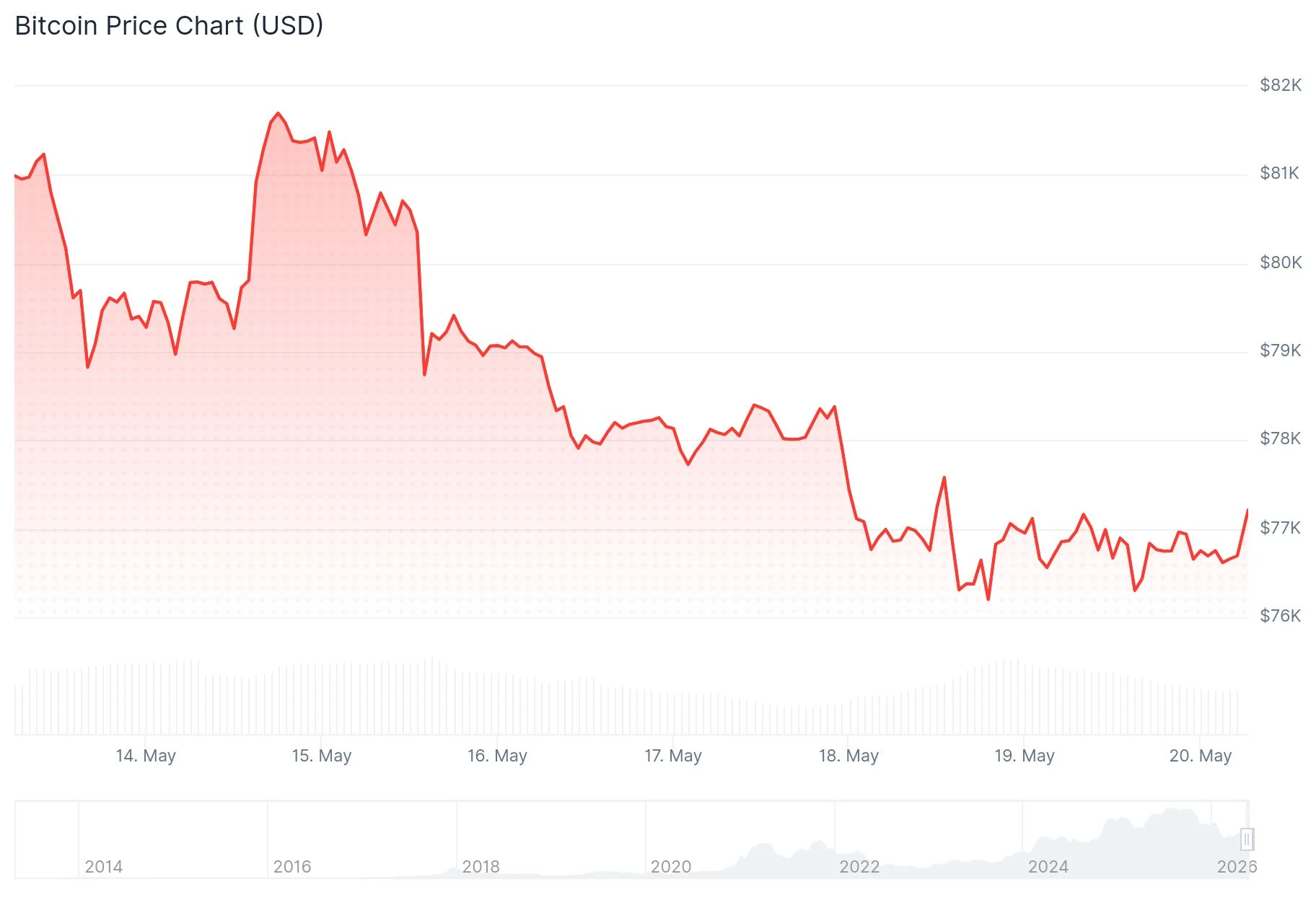
Bitcoin (BTC) Hovers Above $77K Amid Iran Diplomacy and Rising Treasury Yields