

CME Bitcoin Futures Gap: The $730 Market Disconnect That Reveals Critical Trading Dynamics
BitcoinWorld
CME Bitcoin Futures Gap: The $730 Market Disconnect That Reveals Critical Trading Dynamics
Chicago, March 2025 – The CME Group’s Bitcoin futures market opened today with a significant $730 price gap, creating immediate attention across global trading desks. This market phenomenon reveals the fundamental tension between traditional financial hours and cryptocurrency’s continuous operation. Market participants now closely monitor whether this substantial gap will fill, potentially signaling broader market movements.
Understanding the CME Bitcoin Futures Gap Phenomenon
The Chicago Mercantile Exchange maintains traditional trading hours, closing on weekends while Bitcoin’s spot market operates 24/7. Consequently, this structural difference creates predictable gaps between Friday’s closing price and Monday’s opening price. Today’s $730 gap represents one of the more substantial disconnects observed in recent months, reflecting significant weekend volatility in the underlying spot market.
Market analysts consistently track these gaps because they often provide trading opportunities. Specifically, historical data shows that approximately 85% of CME Bitcoin futures gaps eventually fill within two weeks. However, the timing and manner of gap filling can reveal important market sentiment shifts. Meanwhile, institutional traders use these gaps to assess weekend risk exposure and adjust their hedging strategies accordingly.
Mechanics of Futures Gap Formation and Filling
Futures gaps form through a straightforward mechanism. When the CME closes on Friday afternoon, its last traded price becomes the official closing price. During the weekend, Bitcoin continues trading on global spot exchanges. Subsequently, significant price movements create a disconnect. When CME reopens on Monday, its futures must adjust to reflect current spot prices, thus creating the observable gap on price charts.
Several factors influence gap size significantly. First, weekend news events frequently drive spot market volatility. Second, institutional trading activity in Asian and European markets during CME’s closure contributes to price discovery. Third, macroeconomic announcements over weekends can create substantial price movements. Finally, liquidity conditions during weekend trading hours often differ from weekday patterns, potentially amplifying price swings.
| Date | Gap Size | Fill Time | Market Context |
|---|---|---|---|
| March 10 | $730 | Pending | Weekend regulatory announcements |
| March 3 | $420 | 2 days | Moderate weekend trading |
| February 24 | $610 | 5 days | ETF inflow announcements |
| February 17 | $290 | 1 day | Low volatility weekend |
Expert Analysis: Trading Implications and Strategies
Professional traders approach CME gaps with systematic methodologies. According to derivatives specialists, gap trading strategies typically involve monitoring several key indicators. First, traders assess the gap’s size relative to recent volatility ranges. Second, they analyze volume patterns during the gap formation period. Third, market participants evaluate broader technical support and resistance levels. Finally, traders consider macroeconomic context and upcoming scheduled events.
Institutional trading desks often implement specific gap-filling strategies. These approaches generally include:
- Mean reversion plays: Positioning for price movement back toward the gap
- Momentum continuation trades: Betting on continued movement in the gap direction
- Volatility strategies: Using options to capitalize on expected price swings
- Arbitrage opportunities: Exploiting price differences between futures and spot markets
Market Structure Evolution and Regulatory Context
The CME Bitcoin futures market has evolved substantially since its 2017 launch. Initially, gaps were smaller and less frequent due to lower overall volatility. However, as institutional participation increased, weekend trading activity grew significantly. Consequently, gap sizes have generally increased alongside market maturation. Regulatory developments have also influenced this dynamic, particularly regarding weekend risk management requirements for institutional participants.
Market infrastructure continues developing to address these structural differences. Several proposals have emerged for extended trading hours or weekend sessions. Meanwhile, alternative derivatives products have launched with different settlement mechanisms. Despite these developments, the CME’s traditional schedule persists, maintaining the gap phenomenon as a consistent market feature. This structural characteristic provides valuable insights into market sentiment and risk assessment practices.
Historical Precedents and Comparative Analysis
Examining historical gap patterns reveals important market evolution trends. During Bitcoin’s early futures trading, gaps frequently exceeded $1,000 during high-volatility periods. However, as market liquidity improved and institutional participation increased, gap sizes generally decreased relative to overall price levels. The current $730 gap represents approximately 1% of Bitcoin’s price, which aligns with historical averages during moderate volatility periods.
Comparative analysis with traditional commodity futures provides additional context. Similar gap phenomena occur in other markets with discontinuous trading, though cryptocurrency gaps tend to be larger proportionally. This difference primarily stems from cryptocurrency’s global 24/7 nature versus traditional markets’ regional trading hours. Understanding these comparative dynamics helps traders develop more effective gap-trading methodologies and risk management approaches.
Risk Management Considerations for Institutional Traders
Professional market participants implement specific risk protocols for gap scenarios. First, position sizing accounts for potential gap risk, particularly for weekend holdings. Second, stop-loss orders often require adjustment before weekend closures. Third, margin requirements may increase for positions held across weekends. Fourth, volatility models incorporate historical gap data for more accurate risk assessment. These practices have become standard across institutional cryptocurrency trading desks.
Regulatory frameworks have adapted to address gap-related risks. Banking institutions now require specific reporting for weekend exposure. Meanwhile, risk management guidelines explicitly mention gap risk assessment. Additionally, clearing houses have implemented enhanced margin requirements for positions held across trading discontinuities. These developments reflect the financial system’s ongoing adaptation to cryptocurrency market characteristics and their unique risk profiles.
Conclusion
The CME Bitcoin futures gap phenomenon continues providing valuable market insights despite structural market evolution. Today’s $730 gap highlights ongoing volatility and the persistent disconnect between traditional and cryptocurrency market hours. Market participants will monitor gap-filling patterns closely, as they often signal broader market direction. Understanding CME Bitcoin futures gap dynamics remains essential for informed trading decisions and effective risk management in evolving cryptocurrency markets.
FAQs
Q1: What exactly causes CME Bitcoin futures gaps?
CME Bitcoin futures gaps occur because the exchange closes on weekends while Bitcoin’s spot market trades continuously. When significant price movements happen during this closure, Monday’s opening price creates a visible gap from Friday’s close.
Q2: How often do these futures gaps typically fill?
Historical data indicates approximately 85% of CME Bitcoin futures gaps fill within two weeks. However, fill timing varies based on market conditions, gap size, and broader volatility patterns.
Q3: Do professional traders use specific strategies for gap scenarios?
Yes, institutional traders employ various gap strategies including mean reversion plays, momentum continuation trades, volatility strategies using options, and arbitrage between futures and spot markets.
Q4: How has gap trading evolved with market maturation?
As institutional participation increased, gap sizes relative to price have generally decreased. Trading strategies have become more sophisticated, incorporating advanced risk management and quantitative analysis techniques.
Q5: Are there regulatory considerations for gap risk?
Financial institutions must report weekend exposure, and risk management guidelines specifically address gap risk. Clearing houses have implemented enhanced margin requirements for positions held across trading discontinuities.
This post CME Bitcoin Futures Gap: The $730 Market Disconnect That Reveals Critical Trading Dynamics first appeared on BitcoinWorld.


You May Also Like
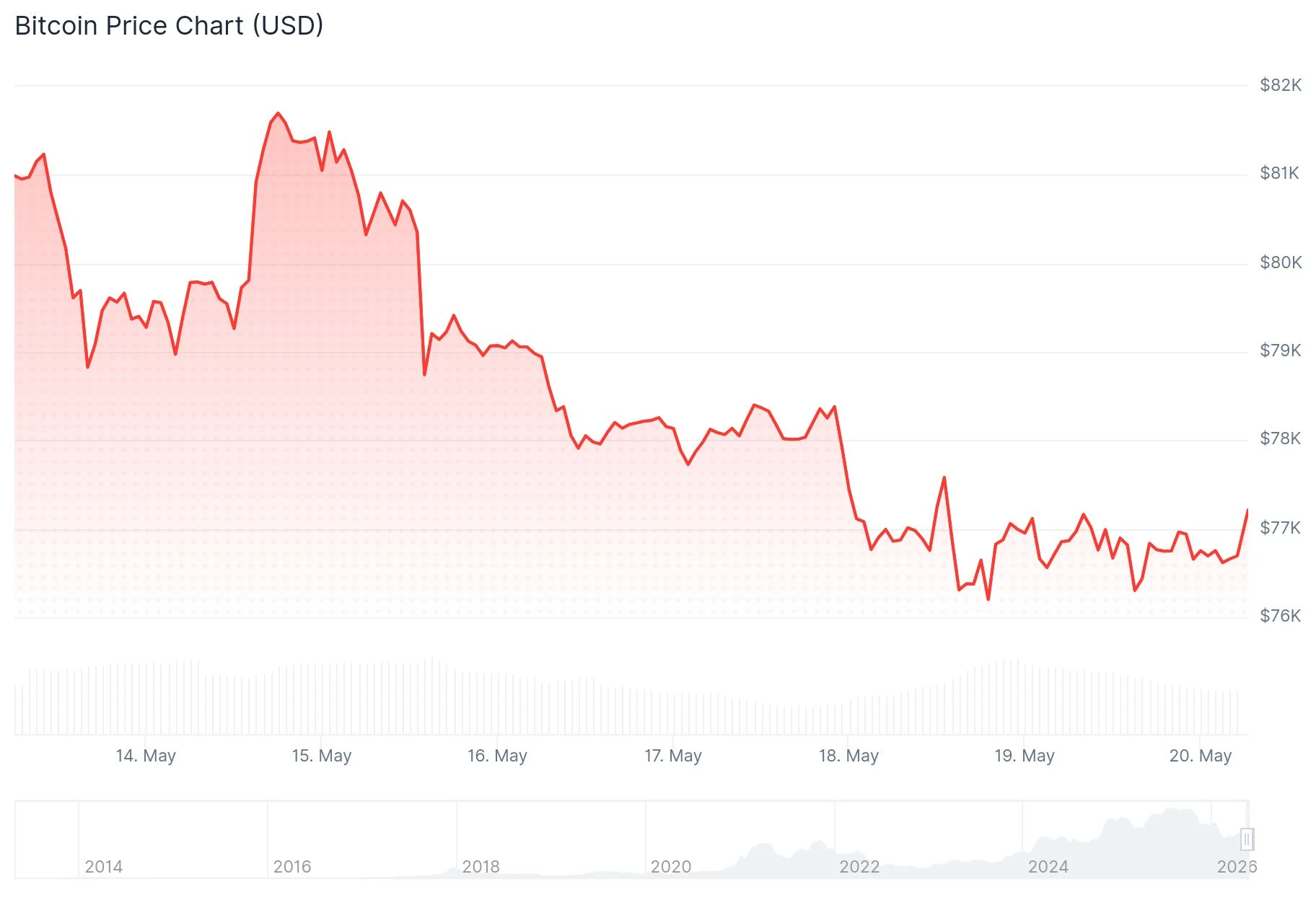
Bitcoin (BTC) Hovers Above $77K Amid Iran Diplomacy and Rising Treasury Yields

Beyond Cleaning: What Else You Must Check Before Moving Out




